 Back
19. Systematics and the Classification of Life: Understanding Biological Diversity
Study Guide - Smart Notes
 Tailored notes based on your materials, expanded with key definitions, examples, and context.
Systematics: Seeking Order Amidst Diversity
Introduction to Systematics
Systematics is the scientific discipline focused on classifying organisms and determining their evolutionary relationships. It helps biologists organize the immense diversity of life by grouping organisms based on shared characteristics and ancestry, ultimately constructing evolutionary trees that reflect these relationships.
Systematics: The science of organizing the history of life, emphasizing biological diversity and evolutionary relationships.
Goal: To discover how organisms are related and organize this information using evolutionary trees (phylogenies).
Importance: Organization saves time, energy, and enhances understanding of life's complexity.
Evolutionary Trees (Phylogenies)
Evolutionary trees, or phylogenies, are branching diagrams that depict hypotheses about the evolutionary relationships among species. These trees help classify species into groups within groups, reflecting their shared ancestry.
Phylogeny: The evolutionary history of a species or group of species.
Clade: A group of organisms that includes an ancestor and all its descendants (monophyletic group).
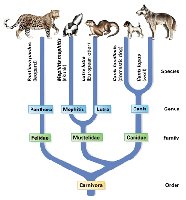
Taxonomy: Naming and Classifying Organisms
Principles of Taxonomy
Taxonomy is the branch of biology concerned with naming and classifying organisms. Each named group is called a taxon (plural: taxa). Modern taxonomy was established by Carl Linnaeus, who introduced the two-part scientific naming system (binomial nomenclature).
Taxon: A named group of organisms (e.g., species, genus).
Binomial Nomenclature: Each species is given a two-part Latin name: the genus (capitalized) and the species (lowercase), both italicized or underlined (e.g., Homo sapiens).
Genus: A group of closely related species.
Species: Populations of organisms that can potentially interbreed under natural conditions.
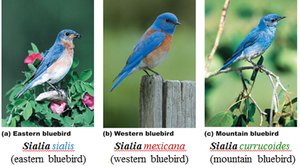
The Importance of Scientific Names
Scientific names provide a universal system for identifying organisms, eliminating confusion caused by common names that vary by language and region.
Each scientific name is unique and recognized worldwide.
Example: Felis catus is the scientific name for the domestic cat, regardless of local language.
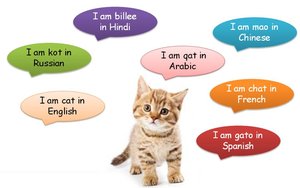
Rules for Scientific Naming
Scientific names are always italicized or underlined.
The genus name is capitalized; the species name is lowercase.
The species name is always paired with the genus name (e.g., Homo sapiens).
The Linnaean Hierarchy
Linnaeus developed a hierarchical system of classification with eight major taxonomic ranks, forming a nested structure from the most inclusive to the least inclusive.
Taxonomic Ranks: Domain → Kingdom → Phylum → Class → Order → Family → Genus → Species
Modern Systematics and Phylogeny
From Morphology to Molecular Data
Modern classification emphasizes evolutionary descent, using molecular data such as DNA sequences to reconstruct phylogenies. This approach has revolutionized our understanding of evolutionary relationships.
DNA sequence similarities are used to infer relatedness among organisms.
Chromosomal structure can also reflect evolutionary relationships, as seen in the similarities between humans and chimpanzees.
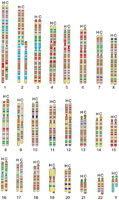
Cladistics and the Decline of Ranks
Systematists now focus on naming clades—groups of related species sharing a common ancestor—rather than strictly adhering to Linnaean ranks. Clades can be nested within larger clades, forming a hierarchy based on shared derived traits (synapomorphies).
Monophyletic group (clade): Includes all descendants of a common ancestor.
Paraphyletic group: Includes some, but not all, descendants of a common ancestor.
Synapomorphy: A shared, derived trait indicating common ancestry.
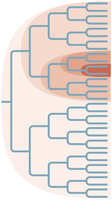
Taxonomic Ranks in Modern Systematics
While taxonomic ranks add information about the size and inclusiveness of groups, their use is declining as evolutionary trees provide more accurate representations of relationships. The terms "taxonomic group," "kingdom," and "domain" are still used for convenience.
The Domains of Life
From Five Kingdoms to Three Domains
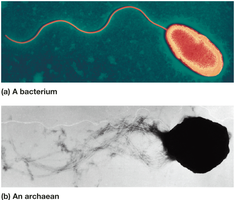
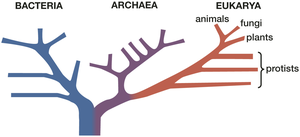
Historically, life was classified into five kingdoms. Advances in molecular biology, particularly the study of ribosomal RNA, led to the recognition of three fundamental domains: Bacteria, Archaea, and Eukarya.
Bacteria: Prokaryotic organisms with unique cell wall chemistry and RNA polymerase structure.
Archaea: Prokaryotes distinct from bacteria at the molecular level.
Eukarya: All organisms with eukaryotic cells, including plants, animals, fungi, and protists.
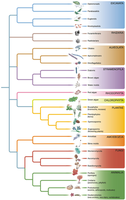
Evolutionary Tree of Eukaryotes
Eukarya includes a wide diversity of organisms, from single-celled protists to complex multicellular plants, fungi, and animals.
Changing Classifications and the Species Concept
Why Do Classifications Change?
Classifications are hypotheses about evolutionary relationships and are revised as new data become available. Changes are more frequent at the species level, often due to new genetic information.
Example: The African elephant was split into two species (savanna and forest elephants) based on genetic analysis.
Challenges in Defining Species
The biological species concept, which defines species based on the ability to interbreed, is difficult to apply to asexual organisms and some other groups. Alternative definitions, such as the phylogenetic species concept, have been proposed but are still debated.
Biological species concept: Species are groups of interbreeding natural populations.
Phylogenetic species concept: Species are the smallest groups sharing a common ancestor and unique characteristics.
Biodiversity: How Many Species Exist?
Estimating Earth's Biodiversity
Scientists estimate that about 1.6 million species have been named, but the actual number may be as high as 8.7 million. Most new species are discovered in tropical regions, and many remain unknown, especially among prokaryotes and protists.
About 5% of named species are prokaryotes and protists, 20% are plants and fungi, and the rest are animals.
DNA analysis reveals vast, undiscovered diversity, especially among bacteria.
The Importance of Conservation
Rapid destruction of habitats, such as tropical rain forests, leads to the loss of species before they are even discovered. This loss of biodiversity is a significant concern for conservation biology.
Summary Table: Major Taxonomic Ranks
Rank | Description | Example (Human) |
|---|---|---|
Domain | Largest, most inclusive group | Eukarya |
Kingdom | Major groups within domains | Animalia |
Phylum | Groups within kingdoms | Chordata |
Class | Groups within phyla | Mammalia |
Order | Groups within classes | Primates |
Family | Groups within orders | Hominidae |
Genus | Groups within families | Homo |
Species | Smallest, least inclusive group | Homo sapiens |
Key Terms and Concepts
Systematics: Study of the diversity of organisms and their evolutionary relationships.
Taxonomy: Science of naming and classifying organisms.
Phylogeny: Evolutionary history of a group of organisms.
Clade: Group consisting of an ancestor and all its descendants.
Domain: Highest taxonomic rank, above kingdom.
Biodiversity: The variety of life in the world or in a particular habitat.
