 Back
Systematics: Seeking Order Amid Diversity – Study Notes for General Biology
Study Guide - Smart Notes
 Tailored notes based on your materials, expanded with key definitions, examples, and context.
Systematics: Seeking Order Amid Diversity
Introduction to Systematics
Systematics is the branch of biology dedicated to organizing the diversity of life and understanding evolutionary relationships among organisms. The main goal is to discover how organisms are related and to represent this information through evolutionary trees, also known as phylogenies.
Systematics: The science of organizing the history of life, biological diversity, and evolutionary relationships.
Phylogeny: The evolutionary history and relationships among species or groups of species.
Evolutionary tree: A branching diagram that illustrates relationships among species.
Organization saves time, energy, and lives by grouping similar entities together.
Taxonomy: Naming and Classifying Organisms
Taxonomy is the branch of biology concerned with naming and classifying organisms. Modern taxonomy was established by Carolus Linnaeus, who introduced the two-part scientific naming system.
Taxon: A named species or group of species.
Genus: A group of closely related species.
Species: Populations of organisms that can potentially interbreed under natural conditions.
Binomial nomenclature: The two-part scientific name (genus and species) for each organism, e.g., Felis catus for the domestic cat.
Scientific names are italicized or underlined, with the genus capitalized and the species lowercase.
The Linnaean Classification System
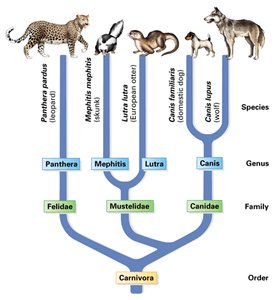
The Linnaean system organizes species into a hierarchy of categories based on resemblance. The eight major taxonomic ranks are:
Domain (most inclusive)
Kingdom
Phylum
Class
Order
Family
Genus
Species (least inclusive)
Modern Classification and Evolutionary Relationships
Modern classification emphasizes evolutionary descent, reflecting common ancestry. Molecular genetics, especially DNA sequence analysis, has revolutionized the study of evolutionary relationships.
Classification now focuses on reconstructing phylogeny.
Systematists use molecular similarities, such as DNA sequences, to determine relatedness.
Chromosomal similarities can also indicate close evolutionary relationships.
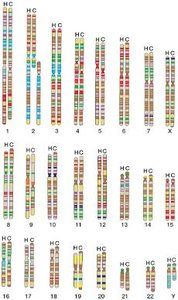
Clades and Nested Hierarchies
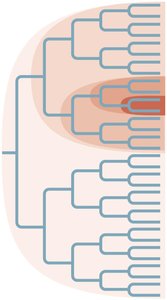
Systematists increasingly build evolutionary trees and name groups of related species called clades. Clades include all descendants of a common ancestor (monophyletic groups), and can be nested within larger clades.
Clade: A group of organisms that includes all descendants of a common ancestor.
Monophyletic group: Includes all descendants of a single ancestor.
Paraphyletic group: Includes some, but not all, descendants.
Synapomorphies: Shared, derived traits used to establish evolutionary relationships.
Domains of Life
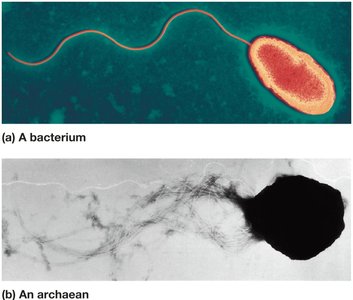
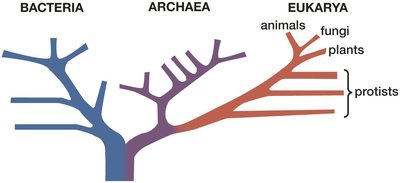
Advances in molecular biology led to the recognition of three domains of life: Bacteria, Archaea, and Eukarya. This replaced the older five-kingdom system.
Bacteria: Prokaryotic organisms with unique cell wall chemistry and RNA polymerase structure.
Archaea: Prokaryotes distinct from bacteria at the molecular level.
Eukarya: Organisms with eukaryotic cells, including plants, animals, fungi, and protists.
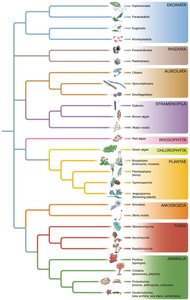
Changing Classifications and Species Concepts
Classification systems are revised as new data become available. Species designations change frequently, especially with new genetic information. The biological species concept is sometimes difficult to apply, especially for asexual organisms.
Biological species concept: Defines species based on potential interbreeding.
Phylogenetic species concept: Defines species as the smallest group descended from a common ancestor, sharing defining characteristics.
Classification changes reflect new discoveries and improved understanding of evolutionary relationships.
Biodiversity and the Number of Species
Biodiversity refers to the number and variety of species on Earth. Scientists estimate about 8.7 million species exist, though only 1.6 million have been named. Most new species are discovered in tropical regions, and many remain undocumented.
About 15,000 new species are named annually.
Prokaryotes and protists make up about 5% of named species; plants and fungi about 20%; the rest are animals.
DNA analysis reveals much undiscovered diversity, especially among prokaryotes.
Destruction of habitats, such as tropical rain forests, threatens unknown species.
Summary Table: Taxonomic Ranks and Domains
Rank | Description |
|---|---|
Domain | Largest, most inclusive group |
Kingdom | Major group within a domain |
Phylum | Group within a kingdom |
Class | Group within a phylum |
Order | Group within a class |
Family | Group within an order |
Genus | Group within a family |
Species | Smallest, least inclusive group |
Domain | Key Features |
|---|---|
Bacteria | Prokaryotic, unique cell wall and RNA polymerase |
Archaea | Prokaryotic, distinct molecular features |
Eukarya | Eukaryotic cells, includes plants, animals, fungi, protists |
Key Equations and Concepts
DNA sequence similarity is used to determine evolutionary relationships. For example, if two DNA sequences differ by at least 30%, they may be considered separate species.
Phylogenetic tree construction relies on shared derived traits (synapomorphies).
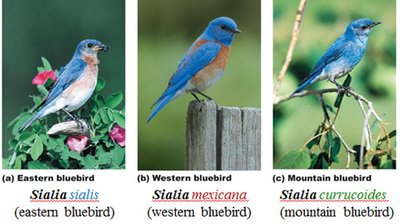
Example: The genus Sialia includes three species of bluebirds, each with unique characteristics but closely related genetically and morphologically.
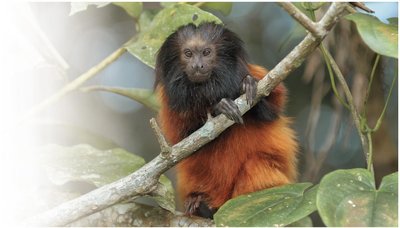
Example: The black-faced lion tamarin was discovered in Brazil, highlighting the importance of preserving biodiversity.
