 Back
T Cell Immunity: Structure, Function, and Activation in the Adaptive Immune System (PP 3)
Study Guide - Smart Notes
 Tailored notes based on your materials, expanded with key definitions, examples, and context.
T Cell Immunity and the Adaptive Immune System
Overview of T Cells and Their Types
T cells, or T lymphocytes, are a central component of the adaptive immune system. They are responsible for cell-mediated immunity and play diverse roles in immune defense, regulation, and memory. T cells originate from the thymus and are classified into several subsets based on their function and surface markers.
T Helper Cells (Th, CD4+): Coordinate immune responses by activating other immune cells.
Cytotoxic T Cells (Tc, CD8+): Destroy infected or cancerous cells.
Regulatory T Cells (Treg): Suppress immune responses to prevent autoimmunity.
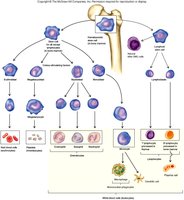
T Cell Development and Maturation
T cells develop from hematopoietic stem cells in the bone marrow and mature in the thymus. During maturation, T cells undergo selection processes to ensure self-tolerance and functional competence.
Positive Selection: T cells must recognize self-MHC molecules to survive.
Negative Selection: T cells that strongly bind self-antigens are eliminated to prevent autoimmunity.
Only about 2% of T cells survive these selection processes and become functional immune cells.
T Cell Receptor (TCR) Structure and Diversity
The T cell receptor (TCR) is a membrane-bound protein complex that recognizes antigens presented by MHC molecules. TCR diversity is generated by gene rearrangement, allowing the immune system to recognize a vast array of antigens.
Variable Region: Recognizes specific antigen epitopes.
Constant Region: Structural support for the receptor.
Gene Rearrangement: Creates approximately 1.3 million different TCRs.
Antigen Recognition and Presentation
T cells cannot directly recognize pathogens; instead, they recognize antigen fragments presented by Major Histocompatibility Complex (MHC) molecules on the surface of cells.
MHC-I: Present on all nucleated cells; presents intracellular antigens to CD8+ cytotoxic T cells.
MHC-II: Present on professional antigen-presenting cells (APCs) such as dendritic cells, macrophages, and B cells; presents extracellular antigens to CD4+ helper T cells.
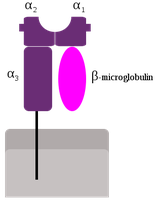
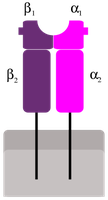
Professional Antigen Presenting Cells (APCs)
APCs are specialized cells that process and present antigens to T cells, initiating adaptive immune responses.
Dendritic Cells: Most efficient APCs; activate naive T cells.
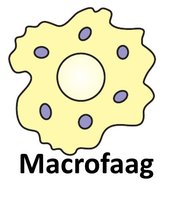
Macrophages: Present antigens and participate in phagocytosis.
B Cells: Present antigens and produce antibodies.

Activation of T Helper Cells (CD4+)
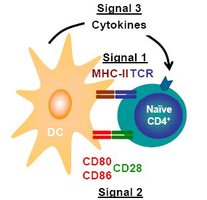
The activation of T helper cells requires three distinct signals:
Signal 1: Antigen presentation by MHC-II to the TCR.
Signal 2: Co-stimulatory interaction between CD80/86 on APCs and CD28 on T cells.
Signal 3: Cytokines released by APCs determine the differentiation pathway of T helper cells.
T Helper Cell Subsets and Functions
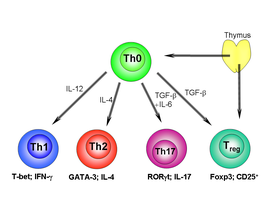
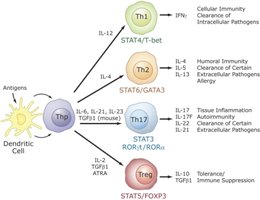
Activated T helper cells differentiate into distinct subsets, each with specialized functions:
Th1: Promote cellular immunity against intracellular pathogens (viruses, bacteria); produce IFN-γ.
Th2: Support humoral immunity and defense against parasites; produce IL-4.
Th17: Mediate responses against extracellular bacteria and fungi; produce IL-17.
Treg: Suppress immune responses and maintain tolerance; produce IL-10 and TGF-β.
Cytotoxic T Cells (CD8+): Mechanism of Action
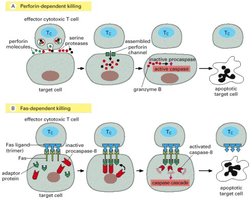
Cytotoxic T cells recognize and kill infected or cancerous cells by detecting antigens presented by MHC-I molecules. They use two main mechanisms to induce apoptosis in target cells:
Perforin/Granzyme Pathway: Perforin forms pores in the target cell membrane, allowing granzymes to enter and trigger apoptosis.
Fas Ligand Pathway: Fas ligand on T cells binds to Fas receptor on target cells, activating caspases and inducing apoptosis.
Comparison of MHC-I and MHC-II
MHC molecules are essential for antigen presentation and T cell activation. The following table summarizes their key differences:
Feature | MHC-I | MHC-II |
|---|---|---|
Expression | All nucleated cells | APCs (dendritic cells, macrophages, B cells) |
Antigen Source | Intracellular (viral, tumor) | Extracellular (bacterial, fungal) |
Recognized by | CD8+ cytotoxic T cells | CD4+ helper T cells |
Antigen vs. Epitope
An antigen is any molecule capable of inducing an immune response. An epitope is the specific part of the antigen recognized by the TCR or antibody.
Antigen: Whole protein or molecule.
Epitope: Short peptide fragment processed and presented by MHC.
Summary of T Cell Selection in the Thymus
T cell selection ensures self-tolerance and functional competence:
Positive Selection: T cells must recognize self-MHC to survive.
Negative Selection: T cells that bind self-antigens are eliminated.
Only a small fraction of T cells become mature and functional.
Key Terms and Definitions
Adaptive Immunity: Immune response that is specific and has memory.
Antigen Presenting Cell (APC): Cell that processes and presents antigens to T cells.
Major Histocompatibility Complex (MHC): Molecules that display antigen fragments on cell surfaces.
Cytokines: Signaling proteins that regulate immune responses.
Cluster of Differentiation (CD): Surface markers used to identify immune cell subsets.
Relevant Equations and Concepts
TCR Diversity: Number of possible TCRs generated by gene rearrangement: Where are the numbers of gene segments for each TCR region.
Additional info: Some advanced details about T cell subsets and cytokine signaling are not covered in standard textbooks and require extra reading.
