 Back
BackThe Biosphere and Ecosystem: Structure, Function, and Interactions
Study Guide - Smart Notes
 Tailored notes based on your materials, expanded with key definitions, examples, and context.
Chapter III: Biosphere and the Ecosystem
Introduction
The biosphere encompasses all living organisms and their interactions with the physical environment on Earth. Ecosystems, as functional units of the biosphere, are composed of both living (biotic) and non-living (abiotic) components that interact to sustain life. Understanding the structure, function, and interrelationships within ecosystems is fundamental to the study of ecology.
Levels of Ecological Organization
Hierarchy of Life
Organism: An individual living entity, such as an animal, plant, or microorganism, capable of growth and response to the environment.
Population: A group of individuals of the same species living in a specific geographic area.
Community: Multiple populations of different species coexisting in the same area at the same time.
Ecosystem: The interaction of biotic and abiotic factors within a defined area.
Biome: Large regions characterized by specific climate, vegetation, and geographic location, containing multiple ecosystems.
Biosphere: The global sum of all ecosystems, representing the zone of life on Earth.
Components of Ecosystems
Biotic and Abiotic Factors
Biotic Components: Living organisms, including producers, consumers, and decomposers.
Abiotic Components: Non-living elements such as water, nutrients, light, temperature, and humidity.
Classification of Organisms by Nutrition
Autotrophs: Self-nourishing organisms (e.g., plants) that produce organic compounds using sunlight through photosynthesis.
Heterotrophs: Organisms that obtain energy by consuming other organisms.
Biophages: Feed on living organisms.
Saprophages: Feed on dead organic matter.
Structural Classification
Producers: Typically plants that synthesize food via photosynthesis.
Consumers: Animals that feed on plants and other animals.
Decomposers: Microorganisms that break down dead organic matter.
Essential Elements in Ecosystems
Sixteen essential elements include: Nitrogen (N), Oxygen (O), Hydrogen (H), Carbon (C), Potassium (K), Calcium (Ca), Magnesium (Mg), Sulfur (S), Iron (Fe), Copper (Cu), Phosphorus (P), Chlorine (Cl), Boron (B), Zinc (Zn), Manganese (Mn), and Molybdenum (Mo).
Types of Ecosystems
Terrestrial Ecosystems
Forest ecosystems
Grassland ecosystems
Tundra ecosystems
Desert ecosystems
Aquatic Ecosystems
Freshwater ecosystems
Marine ecosystems
Functions of Ecosystems
Key Functions
Energy Flow: Movement of energy through the ecosystem's structural elements.
Food Chains and Food Webs: Pathways of energy transfer among organisms.
Nutrient Cycling: Transformation and recycling of nutrients within the ecosystem.
Homeostasis: Regulation of populations and environmental balance.
Nutrient Cycling
Overview
Earth is a closed system for matter, meaning nutrients are recycled through various biogeochemical cycles. Key cycles include the water, carbon, nitrogen, oxygen, and phosphorus cycles, which are essential for sustaining life.
Development and Evolution of Ecosystems
Evolutionary Processes
Evolution of Life: The origin and development of living organisms over time.
Evolution of Species: Long-term changes leading to the diversity of species observed today.
Ecosystem Services
Categories of Ecosystem Services
Provisioning Services: Supply of food, water, and raw materials.
Regulating Services: Climate regulation, disease control, and water purification.
Cultural Services: Recreational, aesthetic, and spiritual benefits.
Supporting Services: Nutrient cycling, soil formation, and primary production.
These services contribute to human security, health, and well-being.
Interrelationships: Food Chains and Food Webs
Feeding Relationships
Organisms interact through feeding relationships, transferring energy and nutrients. These interactions are represented as food chains and food webs.
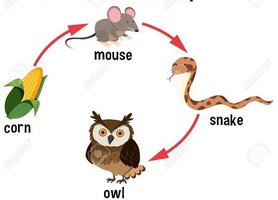
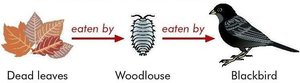
Food Chains
A food chain is a linear sequence showing who eats whom in an ecosystem. There are two main types:
Grazing Food Chain: Begins with producers (plants) and proceeds through herbivores to carnivores.
Detritus Food Chain: Begins with dead organic matter, which is consumed by decomposers and detritivores.
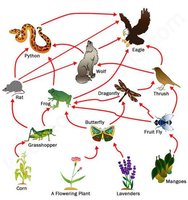
Food Webs
A food web is a complex network of interconnected food chains, illustrating the multiple feeding relationships that exist in an ecosystem. Food webs more accurately represent the diversity of feeding interactions in nature.
Photosynthesis Equation
Photosynthesis is the process by which autotrophs convert sunlight into chemical energy:
Summary Table: Components of an Ecosystem
Component | Description | Example |
|---|---|---|
Producers | Autotrophic organisms that synthesize food from inorganic substances | Plants, algae |
Consumers | Heterotrophic organisms that feed on other organisms | Herbivores, carnivores, omnivores |
Decomposers | Break down dead organic matter | Bacteria, fungi |
Abiotic Factors | Non-living environmental components | Water, sunlight, minerals |
References
Botkin, D. B., & Keller, E. A. (2000). Environmental Science: Earth a Living Planet.
Gurevitch, J., Scheiner, S. M., & Fox, G. A. (2006). The Ecology of Plants.
OpenStax. (2020). The Scope of Ecology.
Britannica Ecology: https://www.britannica.com/science/ecology
National Geographic Biome: https://www.nationalgeographic.org/encyclopedia/biome/
