 Back
BackThe Brain: Structure, Function, and Disorders (Lecture 11)
Study Guide - Smart Notes
 Tailored notes based on your materials, expanded with key definitions, examples, and context.
The Brain: Structure, Function, and Disorders
Mapping Brain Areas
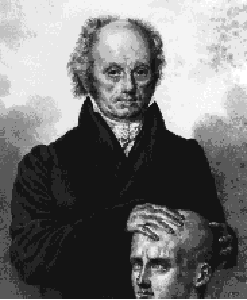
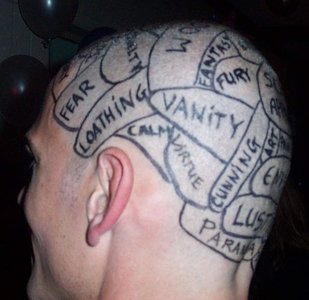
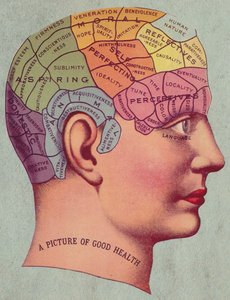
The human brain is a complex organ responsible for sensory perception, motor control, language, memory, and consciousness. Early attempts to map the brain, such as phrenology, incorrectly assigned mental faculties to specific regions of the skull, but modern neuroscience uses anatomical and functional studies to understand brain organization.
Phrenology: An outdated theory by Franz Joseph Gall that proposed the brain was divided into organs responsible for different traits, inferred from skull shape.
Modern Mapping: Brain regions are now mapped based on structure and function, using imaging and lesion studies.
Major Brain Regions and Their Functions
The brain is divided into several major regions, each with specialized functions:
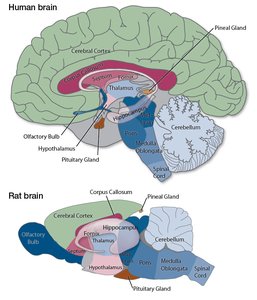
Medulla & Pons (Hindbrain): Control vital functions such as breathing and circulation.
Cerebellum: Coordinates motor commands and balance.
Diencephalon (Forebrain core): Includes the thalamus (sensory relay), hypothalamus (homeostasis), hippocampus (memory), and posterior pituitary (hormone release).
Telencephalon (Cerebrum): Largest part in humans; responsible for sensory perception, learning, memory, and conscious behavior.
 e
e
Cerebral Cortex: Higher-Order Processing
The cerebral cortex is involved in complex functions such as perception, thought, and voluntary movement. Different regions have specialized roles:
Temporal Lobes: Recognition, identification, and naming of objects. Damage can cause agnosia (inability to identify objects).
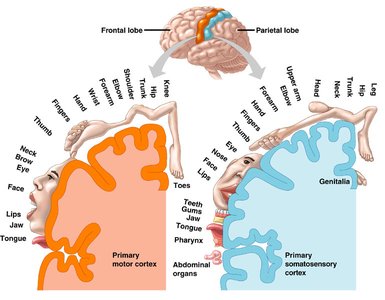
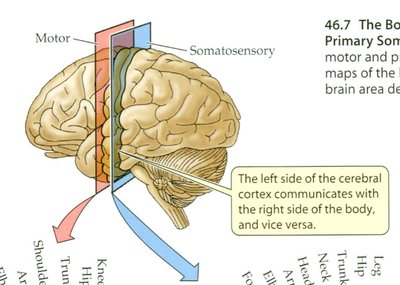
Motor Cortex: Controls voluntary muscle movements; areas with fine motor control (e.g., hands, face) have larger cortical representation.
Somatosensory Cortex: Receives touch and pressure information; body regions with fine touch discrimination (e.g., lips, fingers) have larger representation.
Neural Plasticity and Sensory Representation
Neural plasticity refers to the brain's ability to reorganize itself by forming new neural connections. This is evident in the sensory and motor cortices, where the representation of body parts can change with experience or injury.
Example: Amputation of a finger in monkeys leads to reassignment of the corresponding cortical area to adjacent fingers.
Specialized Sensory Systems: The Star-Nosed Mole
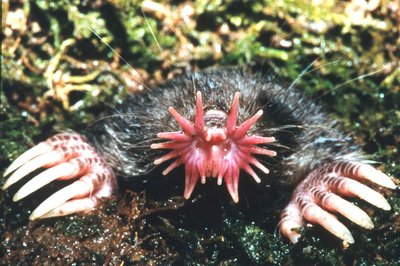
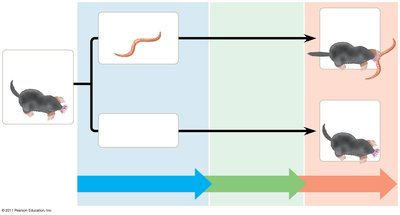
The star-nosed mole has a highly specialized sensory system with a large cortical area devoted to its tactile nose, demonstrating the principle of cortical magnification for important sensory inputs.
Language Areas of the Cortex
Language processing involves several interconnected regions, primarily in the left hemisphere for most people:
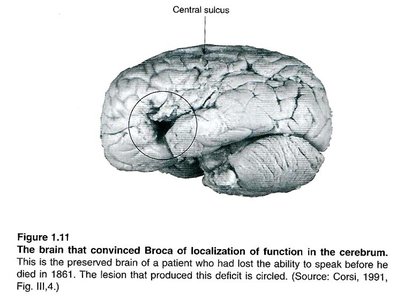
Broca's Area: Speech production; damage causes non-fluent, telegraphic speech (Broca's aphasia).
Wernicke's Area: Language comprehension; damage causes fluent but nonsensical speech (Wernicke's aphasia).
Flow of Information: Repeating a spoken word involves auditory cortex → Wernicke's area → Broca's area → motor cortex. Repeating a written word involves visual cortex → Wernicke's area → Broca's area → motor cortex.
Left/Right Lateralization and Split Brain Studies
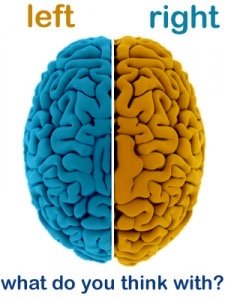
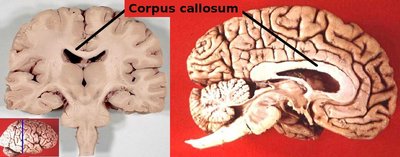
The brain exhibits lateralization, where certain functions are more dominant in one hemisphere. The left hemisphere typically controls language and the right controls spatial abilities. The two hemispheres communicate via the corpus callosum.
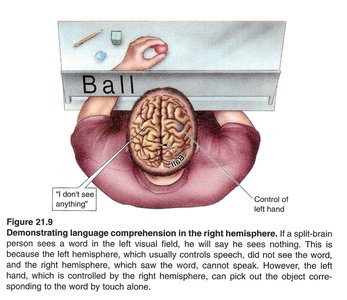
Split Brain: Surgical cutting of the corpus callosum (to treat epilepsy) prevents direct communication between hemispheres, revealing specialized functions.
Visual Fields: Each hemisphere processes sensory input from the opposite side of the body and visual field.
Learning and Memory: Synaptic Plasticity
Learning involves changes at synapses, known as synaptic plasticity. Repeated activity can strengthen synaptic connections, a process called long-term potentiation (LTP), especially at glutamatergic synapses.
LTP Mechanism: Involves recruitment of AMPA and NMDA receptors, increased neurotransmitter release, and receptor phosphorylation.
Memory Types: Short-term memory relies on the hippocampus; long-term memory is stored in the cerebral cortex.
Neural Plasticity: Memory formation and skill learning involve the strengthening and remodeling of synaptic networks.
Poisons and Anaesthetics Affecting the Nervous System
Certain toxins and drugs can disrupt neural signaling:
Tetrodotoxin: Blocks voltage-gated Na+ channels, preventing action potentials and causing paralysis.
Anaesthetics: Drugs like novocaine and lidocaine block action potentials locally, used for pain control.
Diseases and Disorders of the Nervous System
Several neurological diseases are linked to disruptions in action potentials or neurotransmitter systems:
Multiple Sclerosis (MS): Autoimmune attack on myelin sheaths, impairing nerve conduction.
Parkinson's Disease: Degeneration of dopamine neurons in the substantia nigra, causing motor symptoms; treated with L-DOPA and dopamine agonists.
Depression: Associated with serotonin imbalance; treated with SSRIs that increase serotonin signaling.
Schizophrenia: Linked to dopamine and glutamate systems; antipsychotic drugs often block dopamine receptors.
The Brain as a Computer: Psychoactive Drugs and Reality
The brain processes sensory input, integrates information, and generates motor output, similar to a computer. Psychoactive drugs alter synaptic transmission, affecting perception, mood, and consciousness. The nature of reality is shaped by brain chemistry and neural activity.
Examples: Cocaine inhibits dopamine reuptake; LSD acts as a serotonin agonist; amphetamines increase dopamine release.
Consciousness: Experiences such as meditation and spiritual states are linked to changes in brain activity.
Summary Table: Major Brain Regions and Functions
Region | Main Function(s) |
|---|---|
Medulla & Pons | Vital functions (breathing, circulation) |
Cerebellum | Motor coordination, balance |
Diencephalon | Sensory relay, homeostasis, memory |
Telencephalon (Cerebrum) | Sensory perception, learning, memory, consciousness |
Broca's Area | Speech production |
Wernicke's Area | Language comprehension |
Key Terms and Concepts
Neural Plasticity: The brain's ability to reorganize and form new connections.
Long-Term Potentiation (LTP): Strengthening of synapses based on recent patterns of activity.
Corpus Callosum: Major fiber tract connecting the two cerebral hemispheres.
Neurotransmitter: Chemical messenger that transmits signals across synapses.
Example Exam Questions
Multiple Choice: Which brain region is primarily responsible for speech production? (Answer: Broca's Area)
Short Answer: Explain how split-brain studies have contributed to our understanding of lateralization in the brain.
