 Back
The Cell Cycle and Cell Division: Structure, Regulation, and Implications
Study Guide - Smart Notes
 Tailored notes based on your materials, expanded with key definitions, examples, and context.
The Cell Cycle
Overview: The Key Roles of Cell Division
Cell division is fundamental to the continuity of life, enabling organisms to grow, develop, and repair tissues. Multicellular organisms rely on cell division for development from a fertilized cell, growth, and repair. Some organisms, such as the Komodo Dragon, can reproduce asexually through parthenogenesis, where offspring develop from unfertilized eggs and inherit genes only from the mother.
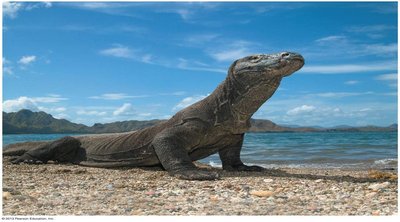
Asexual reproduction: Single-celled organisms reproduce by simple cell division without fertilization.
Sexual reproduction: Requires fertilization and involves meiosis, a special type of cell division.
Cell division: Results in genetically identical daughter cells (except in meiosis).
Cellular Organization of Genetic Material
Chromosomes and Chromatin
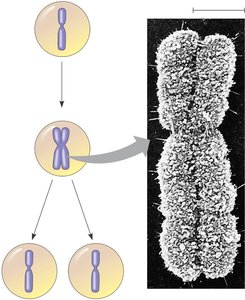
DNA molecules are packaged into chromosomes, which consist of chromatin—a complex of DNA and protein. Chromatin condenses during cell division to form visible chromosomes. In animals, somatic cells have two sets of chromosomes, while gametes have one set.
Chromosome duplication: DNA is replicated before cell division, resulting in two sister chromatids joined at the centromere.
Sister chromatids: Separate during cell division to ensure each daughter cell receives a complete set of chromosomes.
Phases of the Cell Cycle
Interphase and Mitotic Phase
The cell cycle consists of interphase and the mitotic phase. Interphase is subdivided into G1 (growth), S (DNA synthesis), and G2 (preparation for mitosis). The mitotic phase includes mitosis (nuclear division) and cytokinesis (cytoplasmic division).
G1 phase: Cell grows and performs normal functions.
S phase: DNA is replicated.
G2 phase: Cell prepares for mitosis.
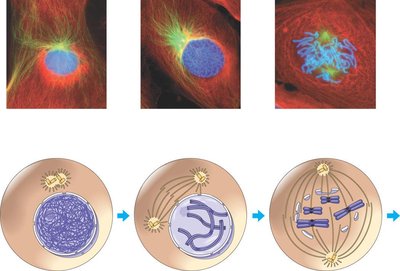
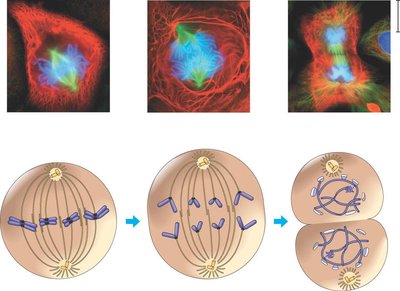
Mitosis: Consists of five distinct phases: prophase, prometaphase, metaphase, anaphase, and telophase.
Cytokinesis: Division of the cytoplasm.
The Mitotic Spindle: Structure and Function
Mitotic Spindle and Chromosome Movement
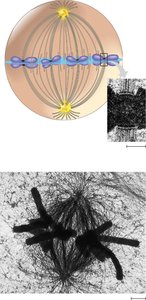
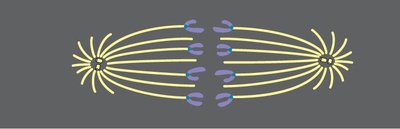
The mitotic spindle is an apparatus of microtubules that controls chromosome movement during mitosis. It forms during prophase and consists of spindle microtubules, asters, and centrosomes. The kinetochore is a protein structure at the centromere that attaches chromosomes to spindle microtubules.
Kinetochore microtubules: Attach to kinetochores and move chromosomes to the metaphase plate.
Nonkinetochore microtubules: Overlap and push against each other, elongating the cell.
Cytokinesis: Animal vs. Plant Cells
Mechanisms of Cytokinesis
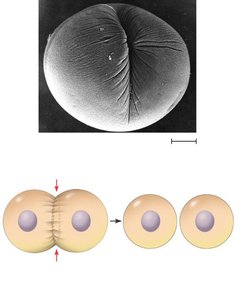
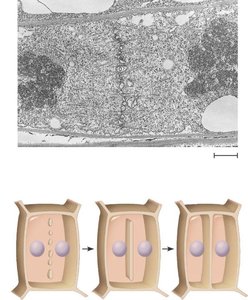
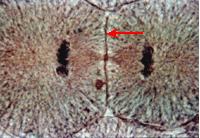
Cytokinesis differs between animal and plant cells. In animal cells, cytokinesis occurs by cleavage, forming a cleavage furrow. In plant cells, a cell plate forms, which eventually becomes the new cell wall.
Cleavage furrow: Contractile ring of microfilaments pinches the cell in two.
Cell plate: Vesicles fuse to form a cell plate, which develops into a new cell wall.
Mitosis in Plant and Animal Cells
Microscopic Observations
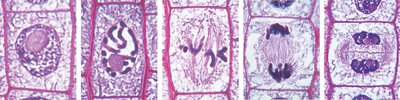
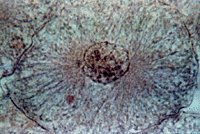
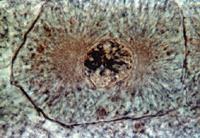
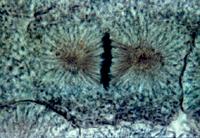
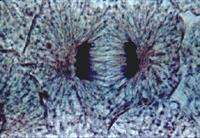
Mitosis can be observed in various cell types, such as onion root tip cells and whitefish blastula. The stages of mitosis are visible under the microscope, showing chromatin condensation, chromosome alignment, and separation.
Binary Fission in Prokaryotes
Cell Division in Bacteria
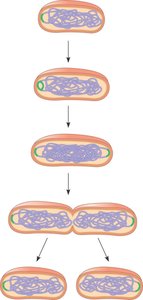
Prokaryotes divide by binary fission, a simpler process than mitosis. The bacterial chromosome replicates, and the two daughter chromosomes move apart as the cell elongates. The plasma membrane grows inward, and a new cell wall is deposited, resulting in two daughter cells.
Origin of replication: Site where chromosome replication begins.
Binary fission: Produces genetically identical daughter cells.
Evolution of Mitosis
Intermediate Cell Division Types
Mitosis likely evolved from bacterial cell division, as prokaryotes preceded eukaryotes. Certain protists exhibit cell division types intermediate between binary fission and mitosis.
Regulation of the Cell Cycle
Cell Cycle Control System
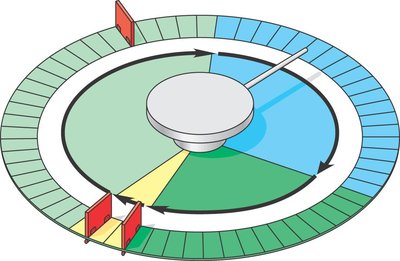
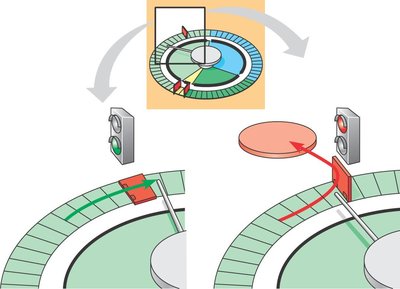
The cell cycle is regulated by a molecular control system, which acts like a clock. The frequency of cell division varies with cell type, and checkpoints ensure proper progression. Three major checkpoints exist: G1, G2, and M.
G1 checkpoint: Restriction point; cells may enter a nondividing state (G0) if they do not receive a go-ahead signal.
G2 checkpoint: Ensures DNA replication is complete.
M checkpoint: Ensures chromosomes are properly attached to the spindle.
Cyclins and Cyclin-Dependent Kinases (Cdks)
Molecular Regulation of the Cell Cycle
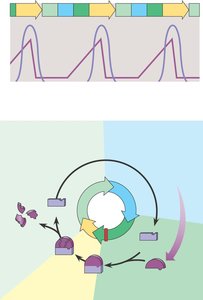
Cyclins and Cdks are regulatory proteins that control the cell cycle. Protein kinases activate or inactivate proteins by phosphorylation. Cyclin levels fluctuate during the cell cycle, and Cdks are activated when bound to cyclins. The maturation promoting factor (MPF) is a Cdk-cyclin complex that initiates mitosis.
MPF: Promotes mitosis by phosphorylating proteins; activity peaks during metaphase.
Phosphorylation cascade: Series of protein activations that drive cell cycle events.
Cell Division and Cancer
Density-Dependent Inhibition and Anchorage Dependence
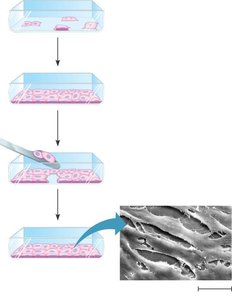
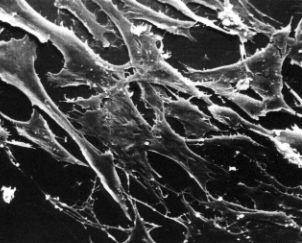
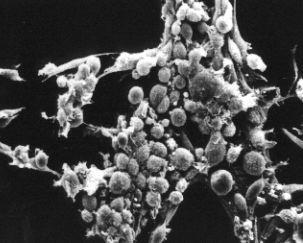
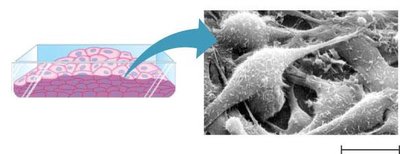
Normal cells exhibit density-dependent inhibition and anchorage dependence, stopping division when crowded or unattached. Cancer cells lack these controls, leading to uncontrolled division and tumor formation.
Density-dependent inhibition: Cells stop dividing when a single layer is formed.
Anchorage dependence: Cells must be attached to a substratum to divide.
Cancer Cells and Tumor Formation
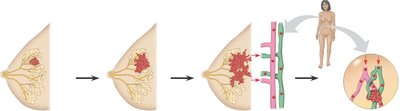
Cancer cells do not respond to normal regulatory mechanisms and can form tumors. Malignant tumors invade surrounding tissues and can metastasize, spreading cancer cells to other parts of the body.
Malignant tumors: Invade tissues and can export cells to form secondary tumors.
Metastasis: Spread of cancer cells through lymph and blood vessels.
Summary Table: Comparison of Cell Division Types
Type | Organism | Process | Outcome |
|---|---|---|---|
Asexual (Mitosis) | Eukaryotes | Somatic cell division | Genetically identical cells |
Sexual (Meiosis) | Eukaryotes | Gamete formation | Genetically diverse cells |
Binary Fission | Prokaryotes | Chromosome replication and division | Genetically identical cells |
Key Terms: Chromatin, Chromosome, Sister Chromatid, Centromere, Kinetochore, Mitotic Spindle, Cyclin, Cdk, MPF, Density-dependent inhibition, Anchorage dependence, Metastasis.
Important Equations:
Cell cycle progression:
MPF activation:
Phosphorylation:
Additional info: The notes expand on brief points with academic context, definitions, and examples to ensure completeness and clarity for exam preparation.
