 Back
BackThe Cell Cycle and Mitosis: Structure, Function, and Process
Study Guide - Smart Notes
 Tailored notes based on your materials, expanded with key definitions, examples, and context.
The Cell Cycle and Mitosis
Introduction to Cell Division
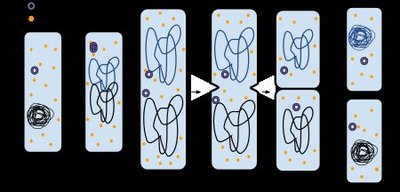
Cell division is a fundamental process in biology, essential for reproduction in unicellular organisms and for development, growth, and repair in multicellular organisms. The cell cycle describes the ordered sequence of events that a cell undergoes as it grows and divides.
Unicellular Organisms: Cell division serves as a means of reproduction, commonly through binary fission in prokaryotes.
Multicellular Organisms: Cell division enables development from a single cell, growth by increasing cell number, and repair of damaged tissues.
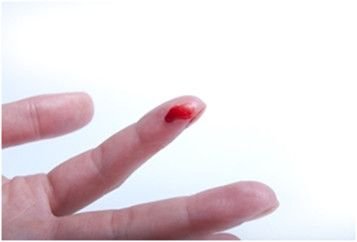
Example: Healing a cut on the skin involves cell division to replace lost or damaged cells.
The Cell Cycle: Phases and Regulation
Main Phases of the Cell Cycle
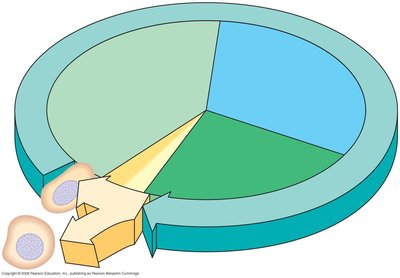
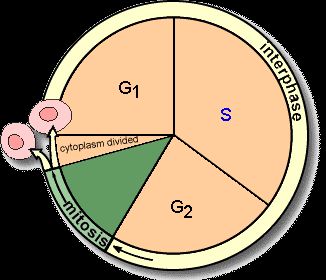
The cell cycle consists of two major phases: Interphase and the Mitotic (M) Phase. Interphase is the period of cell growth and DNA replication, while the M phase includes mitosis and cytokinesis.
Interphase: Occupies about 90% of the cell cycle. Subdivided into G1 (first gap), S (synthesis), and G2 (second gap) phases.
Mitotic (M) Phase: Includes mitosis (division of the nucleus) and cytokinesis (division of the cytoplasm), accounting for about 10% of the cycle.
Subphases of Interphase
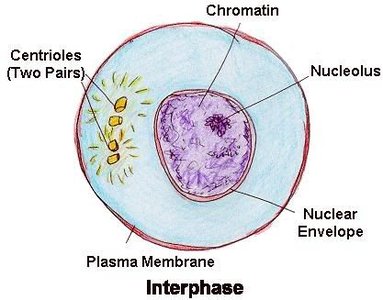
During interphase, the cell prepares for division by growing and replicating its DNA.
G1 Phase (First Gap): Cell grows and carries out normal metabolic functions.
S Phase (Synthesis): DNA is replicated, resulting in duplicated chromosomes.
G2 Phase (Second Gap): Further cell growth and preparation for mitosis.
Chromatin: During interphase, DNA is in the form of uncondensed chromatin, making individual chromosomes invisible under a light microscope.
Mitosis: The Process of Nuclear Division
Overview of Mitosis (PMAT)
Mitosis is the process by which a eukaryotic cell separates its duplicated chromosomes into two identical sets. It is divided into four main stages: Prophase, Metaphase, Anaphase, and Telophase (PMAT).
Prophase: Chromatin condenses into visible chromosomes, each consisting of two sister chromatids joined at a centromere. The mitotic spindle begins to form as centrosomes move to opposite poles, and the nuclear envelope disintegrates.
Metaphase: Chromosomes align at the metaphase plate (cell equator). Spindle fibers attach to kinetochores at the centromeres.
Anaphase: Sister chromatids separate and are pulled toward opposite poles by shortening spindle fibers and motor proteins.
Telophase: Nuclear envelopes reform around the two sets of chromosomes, which decondense back into chromatin.

Prophase
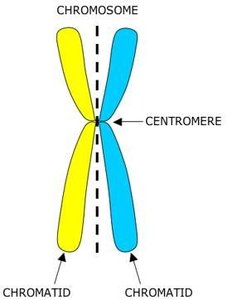
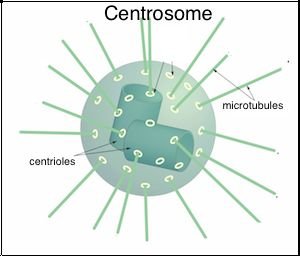
Prophase is characterized by the condensation of chromatin into discrete chromosomes, each composed of two identical sister chromatids joined at a centromere. Centrosomes begin to organize the mitotic spindle and migrate to opposite poles of the cell. The nuclear envelope breaks down, allowing spindle fibers to interact with chromosomes.
Sister Chromatids: Identical copies of a chromosome, connected by a centromere.
Centromere: The region where sister chromatids are most closely attached.
Mitotic Spindle: A structure made of microtubules that orchestrates chromosome movement.


Metaphase
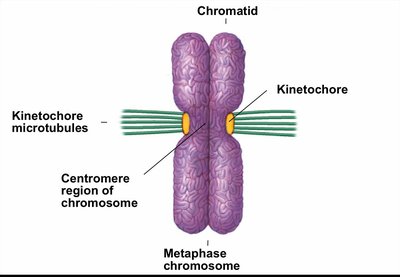
During metaphase, chromosomes are aligned at the metaphase plate, an imaginary plane equidistant from the two spindle poles. Each chromosome's kinetochore is attached to spindle fibers from opposite poles, ensuring accurate segregation.
Kinetochore: A protein complex at the centromere that serves as the attachment site for spindle microtubules.
Metaphase Plate: The central plane where chromosomes align during metaphase.

Anaphase
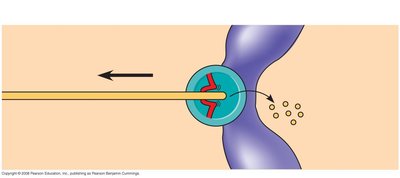
Anaphase begins when the centromeres split, allowing sister chromatids to separate and move toward opposite poles. This movement is driven by the shortening of spindle microtubules and the action of motor proteins.
Separation of Chromatids: Each chromatid becomes an independent chromosome.
Mechanism: Microtubules depolymerize at the kinetochore, and motor proteins help pull chromatids apart.

Telophase
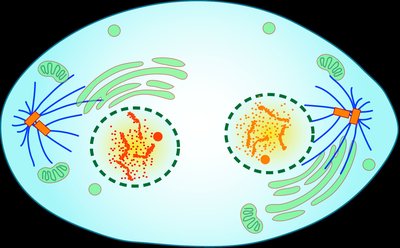
In telophase, the separated chromosomes reach the poles, and new nuclear envelopes form around each set. Chromosomes decondense back into chromatin, marking the end of nuclear division.
Nuclear Envelope Reformation: Ensures each daughter cell receives a complete set of genetic material.
Chromatin Decondensation: Chromosomes return to their less condensed, functional state.
Cytokinesis: Division of the Cytoplasm
Cytokinesis in Animal and Plant Cells
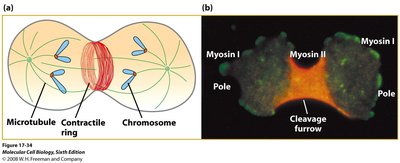
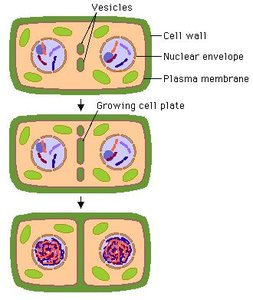
Cytokinesis is the process that divides the cytoplasm, resulting in two separate daughter cells. The mechanism differs between animal and plant cells.
Animal Cells: A contractile ring of actin and myosin proteins forms a cleavage furrow, pinching the cell in two.
Plant Cells: Vesicles from the Golgi apparatus coalesce at the center of the cell to form a cell plate, which develops into a new cell wall separating the daughter cells.

Summary Table: Stages of Mitosis
The following table summarizes the key events of each stage of mitosis:
Stage | Main Events |
|---|---|
Prophase | Chromatin condenses, spindle forms, nuclear envelope breaks down |
Metaphase | Chromosomes align at metaphase plate, spindle fibers attach to kinetochores |
Anaphase | Sister chromatids separate and move to opposite poles |
Telophase | Nuclear envelopes reform, chromosomes decondense |
Cytokinesis | Cytoplasm divides, resulting in two daughter cells |
Key Terms and Concepts
Chromatin: The complex of DNA and proteins that forms chromosomes within the nucleus.
Chromosome: A threadlike structure of nucleic acids and protein, carrying genetic information.
Sister Chromatids: Two identical copies of a chromosome connected by a centromere.
Centromere: The region of a chromosome where the two sister chromatids are joined.
Kinetochore: Protein structure on chromatids where spindle fibers attach during cell division.
Mitotic Spindle: Structure made of microtubules that segregates chromosomes during mitosis.
Cytokinesis: Division of the cytoplasm to form two separate daughter cells.
Equations and Additional Information
DNA Replication: Occurs during the S phase of interphase, ensuring each daughter cell receives an identical set of chromosomes.
Cell Cycle Regulation: The cell cycle is tightly regulated by checkpoints (G1, G2, M) to ensure proper division and prevent errors such as cancer.
Example Equation: The number of chromosomes remains constant through mitosis:
Additional info: Errors in mitosis can lead to aneuploidy, a condition where cells have an abnormal number of chromosomes, which is often associated with diseases such as cancer.
