 Back
The Cell Cycle and Mitosis: Structure, Function, and Regulation
Study Guide - Smart Notes
 Tailored notes based on your materials, expanded with key definitions, examples, and context.
The Cell Cycle and Mitosis
Overview of the Cell Cycle
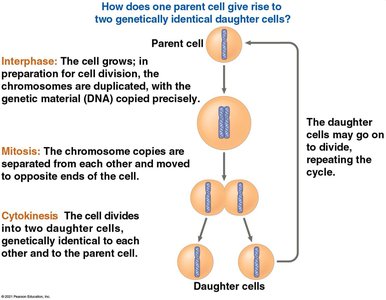
The cell cycle is a fundamental process in eukaryotic cells, enabling growth, tissue repair, and reproduction. It consists of a series of phases that prepare the cell for division and ensure accurate distribution of genetic material.
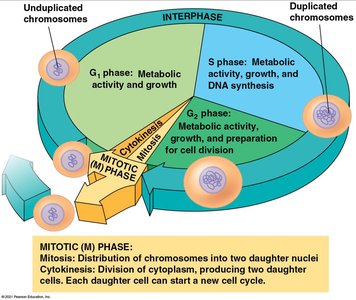
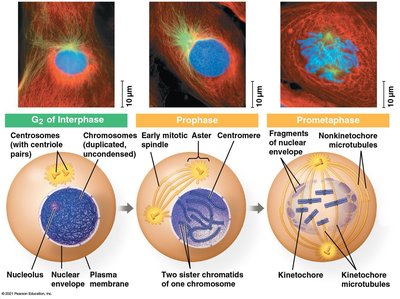
Interphase: The cell grows, duplicates its DNA, and prepares for division. It includes G1 (growth), S (DNA synthesis), and G2 (preparation for mitosis) phases.
Mitotic (M) Phase: Includes mitosis (division of the nucleus) and cytokinesis (division of the cytoplasm).
Result: Two genetically identical daughter cells are produced.
Cellular Organization of Genetic Material
Eukaryotic cells contain multiple DNA molecules organized into chromosomes. The structure and packaging of DNA are essential for accurate division.
Genome: All the DNA in a cell.
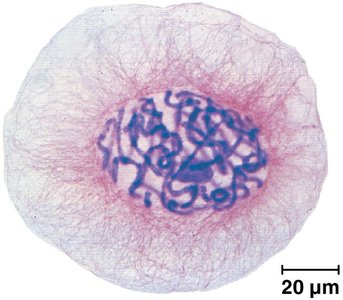
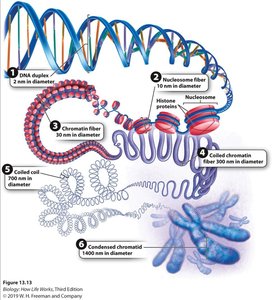
Chromosome: Condensed DNA molecules and protein complexes.
Chromatin: Uncondensed DNA-protein complex.
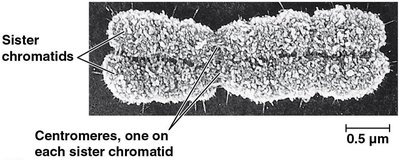
Chromatid: Each copy of a duplicated chromosome.
Chromosome Replication and Structure
Chromosomes are replicated during the S phase of interphase, resulting in two sister chromatids joined at the centromere.
Replication: Each chromosome is copied, forming two identical sister chromatids.
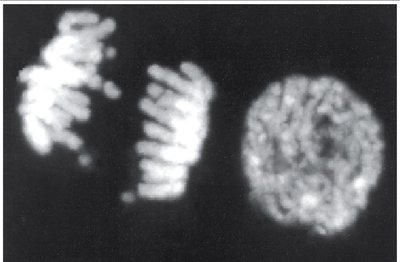
Condensation: Chromosomes condense to facilitate accurate segregation during mitosis.
Homologous Chromosomes, Alleles, and Loci
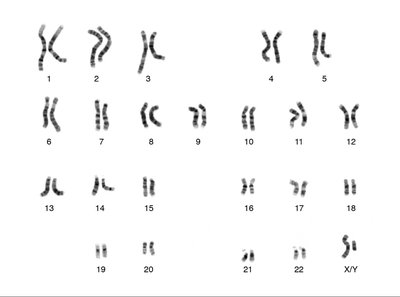
Homologous chromosomes are pairs that carry the same genes but may have different versions (alleles).
Homologous Chromosomes: One inherited from each parent; same genes, possibly different alleles.
Allele: Variant form of a gene.
Locus: Specific location of a gene on a chromosome.
Haploid and Diploid Cells
Cells can be classified based on their chromosome number.
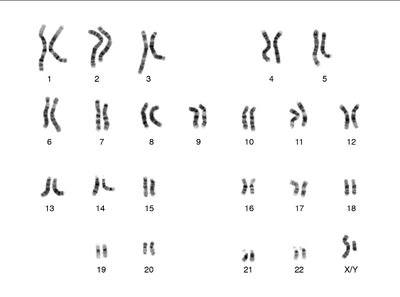
Diploid (2n): Two sets of chromosomes; typical of somatic cells.
Haploid (n): One set of chromosomes; typical of gametes.
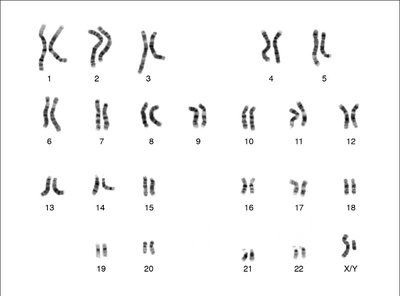
Human Example: Somatic cells have 46 chromosomes; gametes have 23.
Phases of the Cell Cycle
The cell cycle is divided into distinct phases, each with specific functions.
G1 Phase: Metabolic activity and growth.
S Phase: DNA synthesis and chromosome duplication.
G2 Phase: Preparation for cell division.
M Phase: Mitosis and cytokinesis.
Mitosis: Steps and Key Concepts
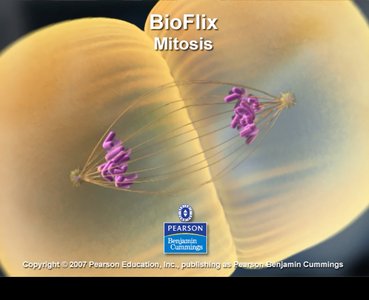
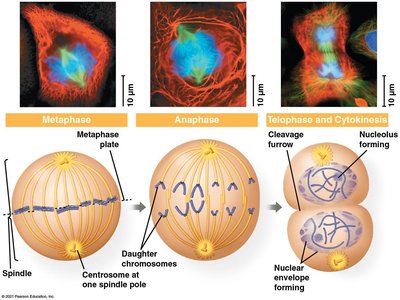
Mitosis is the process by which a cell divides its nucleus and distributes identical genetic material to two daughter cells.
Step 1: Replicate each chromosome, keeping the copies together as sister chromatids.
Step 2: Line up chromosomes along the middle of the cell (metaphase plate).
Step 3: Separate sister chromatids and distribute a full set to each daughter cell.
Result: Two genetically identical daughter cells.
Key Functions of Mitosis
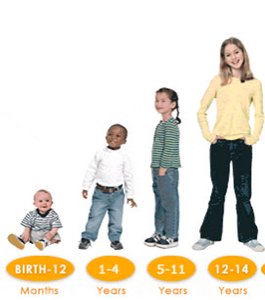
Mitosis is essential for organismal growth, tissue repair, and renewal.
Growth: Enables multicellular organisms to increase in size.
Tissue Repair: Replaces damaged or dead cells.
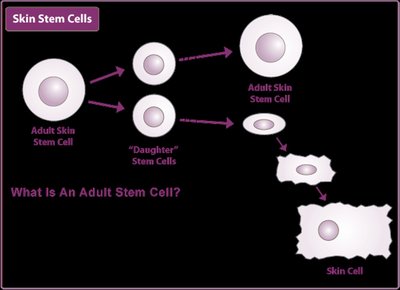
Renewal: Maintains tissues through stem cell division.

Stem Cells and Specialized Cells
Stem Cells: Retain the ability to divide via mitosis and differentiate into specialized cells.
Specialized Cells: Perform specific functions but typically lose the ability to divide.
Chromosome Duplication and Distribution
Accurate duplication and segregation of chromosomes are critical for genetic stability.
Chromosome Duplication: Occurs during S phase; each chromosome forms two sister chromatids.
Distribution: During mitosis, sister chromatids are separated and allocated to daughter cells.
Errors: Mistakes in copying or separating DNA can cause mutations.
Regulation of the Cell Cycle
The cell cycle is tightly regulated by molecular control systems to ensure proper division.
Checkpoints: Specific points where the cell cycle can be halted until conditions are favorable.
G1 Checkpoint: Most important; determines if the cell will proceed with division.
G0 Phase: Non-dividing state entered if the cell does not receive a go-ahead signal.
Internal and External Signals
Cell division is influenced by both internal and external signals.
Internal Signals: Ensure chromosomes are properly attached before anaphase.
External Signals: Growth factors released by other cells stimulate division; crowded cells stop dividing.
Cyclins and Cyclin-Dependent Kinases (Cdks)
Cyclins: Proteins whose levels fluctuate during the cell cycle.
Cdk: Enzymes always present but only active when bound to cyclin; regulate cell cycle progression.
When Cell Division Goes Wrong: Cancer and Aneuploidy
Errors in cell cycle regulation can lead to diseases such as cancer and aneuploidy.
Cancer: Uncontrolled cell division due to abnormal cell cycle control and DNA changes.
Aneuploidy: Abnormal number of chromosomes in a cell.
Key Concepts: Accurate cell signaling, DNA replication, and error repair are essential to prevent mutations and cancer.
Summary Table: Cell Cycle Regulation and Errors
Process | Normal Function | Error Consequence |
|---|---|---|
Cell Cycle Regulation | Ensures proper timing and division | Cancer, uncontrolled growth |
DNA Replication | Accurate copying of genetic material | Mutations, genetic instability |
Chromosome Segregation | Equal distribution to daughter cells | Aneuploidy, developmental defects |
Key Equations and Concepts
Chromosome Number: Diploid cells: ; Haploid cells:
DNA Replication:
Example:
Human somatic cell: chromosomes
Human gamete: chromosomes
Additional info:
Stem cells are essential for tissue maintenance and repair throughout life.
Cell cycle checkpoints are critical for preventing the propagation of damaged DNA.
