 Back
The Cell Cycle and Mitosis: Structured Study Notes for General Biology
Study Guide - Smart Notes
 Tailored notes based on your materials, expanded with key definitions, examples, and context.
The Cell Cycle
Overview of the Cell Cycle
The cell cycle is the series of events that cells undergo as they grow and divide. It is fundamental to the growth, development, and maintenance of all living organisms. - Cell cycle: The life of a cell from its formation to its division into two daughter cells. - Genome: The complete set of genetic material in a cell. - Chromosome: A structure made of DNA and proteins that contains genetic information. - Chromatin: The complex of DNA and proteins that forms chromosomes; less condensed during DNA replication. 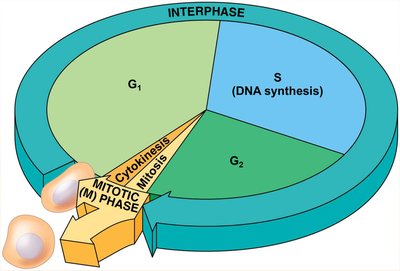
Key Roles of Cell Division
Cell division is essential for several biological processes: - Asexual reproduction: Producing offspring genetically identical to the parent. - Growth & Development: Increasing the size and complexity of organisms. - Tissue Renewal: Repairing and replacing damaged cells. 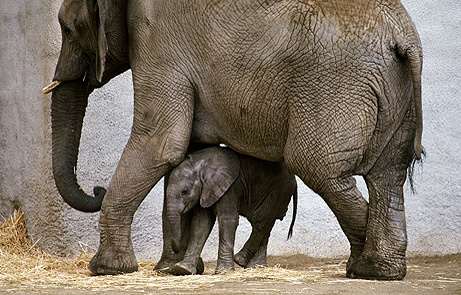
Genetic Material and Chromosomes
Genome vs. Gene
- Genome: All the DNA in a cell. - Gene: A segment of DNA that codes for a specific protein.
Chromosome Number in Eukaryotes
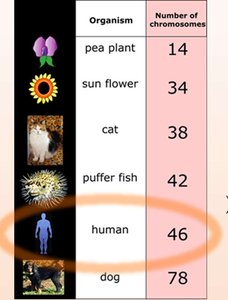
Each eukaryotic species has a characteristic number of chromosomes:
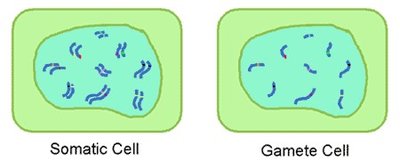
Somatic cells (body cells): Diploid, containing two sets of chromosomes (46 in humans).
Gametes (reproductive cells): Haploid, containing one set of chromosomes (23 in humans).
Chromosome Structure
Chromosomes are made of chromatin, which undergoes various levels of packaging: - Chromatin: DNA and protein complex; less condensed during replication, highly condensed during cell division. - Metaphase chromosome: Highly condensed, supercoiled DNA form during mitosis. 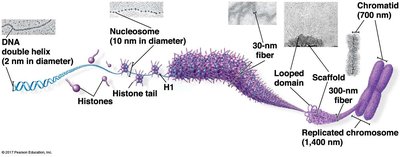
DNA Replication and Cell Division
DNA Replication
Before cell division, the genome is replicated so each daughter cell receives a complete set of DNA. - Parent cell duplicates its DNA, forming two sister chromatids joined at the centromere. - Sister chromatids: Identical copies of a chromosome, attached at the centromere. 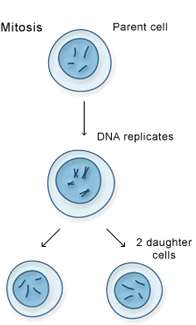

Phases of the Cell Cycle
Interphase
Interphase is the period of cell growth and DNA replication, consisting of three subphases:
G1 phase: Cell growth
S phase: DNA synthesis (replication)
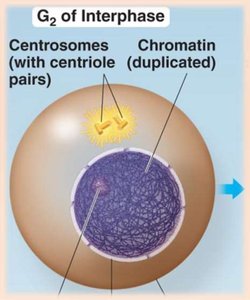
G2 phase: Preparation for mitosis
Mitotic (M) Phase
The M phase includes mitosis and cytokinesis, resulting in two genetically identical daughter cells.
Mitosis
Stages of Mitosis
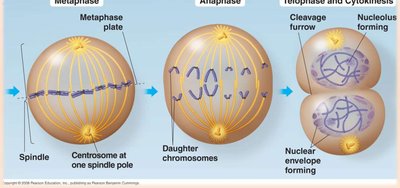
Mitosis is conventionally divided into five stages, collectively remembered as PMAT:
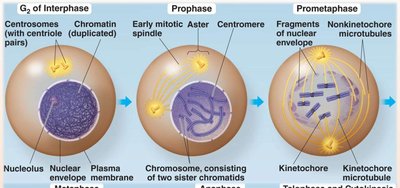
Prophase: Chromosomes condense, spindle forms.
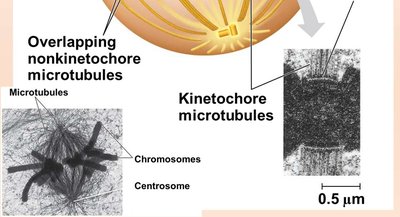
Prometaphase: Nuclear envelope fragments, spindle microtubules attach to kinetochores.
Metaphase: Chromosomes align at the metaphase plate.
Anaphase: Sister chromatids separate and move to opposite poles.
Telophase: Nuclear envelope reforms, chromosomes decondense.
The Mitotic Spindle
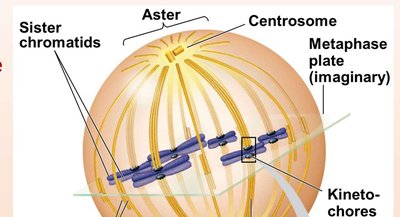
The mitotic spindle is a structure made of microtubules that organizes and separates chromosomes during mitosis. - Centrosome: Microtubule organizing center; replicates and migrates to opposite poles. - Aster: Radial array of short microtubules extending from each centrosome. - Kinetochores: Protein complexes at centromeres where spindle microtubules attach. - Metaphase plate: Imaginary plane where chromosomes align during metaphase. 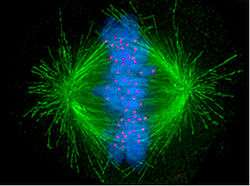
Cytokinesis
Cytokinesis in Animal and Plant Cells
Cytokinesis is the division of the cytoplasm, following mitosis. - In animal cells, cytokinesis occurs by cleavage, forming a cleavage furrow that pinches the cell in two. - In plant cells, a cell plate forms, eventually becoming the new cell wall.
Key Definitions and Concepts
Definitions
Genome: All genetic material in a cell.
Chromosome: DNA-protein structure carrying genetic information.
Chromatin: DNA-protein complex forming chromosomes.
Gamete: Reproductive cell (sperm or egg), haploid.
Somatic cell: Body cell, diploid.
Sister chromatid: Identical copy of a chromosome, joined at the centromere.
Centromere: Region where sister chromatids are most closely attached.
Structural Organization of Genomes
- Prokaryotic genome: Usually a single circular DNA molecule. - Eukaryotic genome: Multiple linear chromosomes.
Summary Table: Chromosome Numbers in Various Organisms
Organism | Number of Chromosomes |
|---|---|
Pea plant | 14 |
Sun flower | 34 |
Cat | 38 |
Puffer fish | 42 |
Human | 46 |
Dog | 78 |
Additional info:
- The process of binary fission in bacteria is a simpler form of cell division, involving the replication of a single circular chromosome and division of the cell. - Chromosome number does not change after replication; instead, each chromosome consists of two sister chromatids. - The mitotic spindle ensures equal distribution of chromosomes to daughter cells. ----------------------------------------
