 Back
The Cell Cycle and Molecular Biology of Cancer
Study Guide - Smart Notes
 Tailored notes based on your materials, expanded with key definitions, examples, and context.
The Cell Cycle
Overview of Cell Division
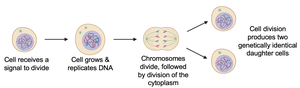
Cell division is a fundamental process that enables organisms to reproduce, grow, and repair tissues. It ensures the continuity of life by distributing identical genetic material to daughter cells.
Cell division produces genetically identical daughter cells through mitosis.
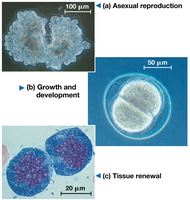
Functions include reproduction in single-celled organisms, growth and development in multicellular organisms, and tissue renewal.
Chromosomes, chromatids, and chromatin are key structures involved in genetic material organization and distribution.
Cellular Organization of Genetic Material
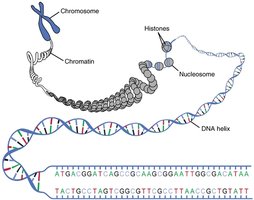
The genetic material in cells is organized into chromosomes, which are composed of chromatin—a complex of DNA and proteins.
Genome: All DNA in a cell; prokaryotes typically have a single DNA molecule, eukaryotes have multiple.
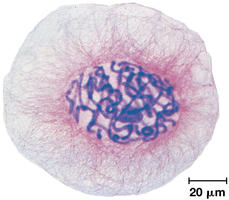
Chromatin: DNA-protein complex that condenses into chromosomes during cell division.
Somatic cells: Non-reproductive cells with two sets of chromosomes.
Gametes: Reproductive cells (sperm and eggs) with half the chromosome number of somatic cells.
Chromosome Structure and Replication
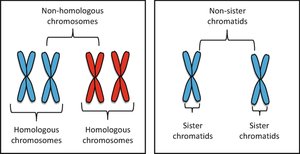
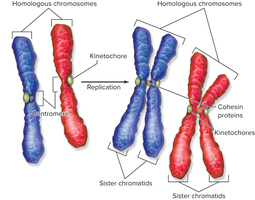
Chromosomes are duplicated before cell division, resulting in two sister chromatids joined at the centromere.
Sister chromatids: Identical copies of a chromosome joined together.
Centromere: Region where chromatids are most closely attached.
During cell division, sister chromatids separate and become individual chromosomes.
Phases of the Cell Cycle
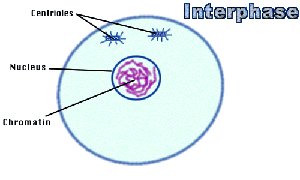
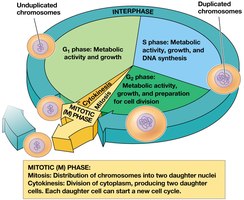
The cell cycle consists of interphase and the mitotic (M) phase. Interphase is subdivided into G1, S, and G2 phases, where the cell grows and DNA is replicated.
Interphase: G1 (growth), S (DNA synthesis), G2 (preparation for division).
M phase: Mitosis (nuclear division) and cytokinesis (cytoplasmic division).
Mitosis vs. Meiosis
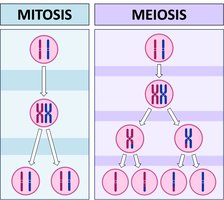
Mitosis produces two genetically identical cells, while meiosis produces four non-identical gametes with half the chromosome number.
Mitosis: Used for growth, repair, and asexual reproduction.
Meiosis: Used for sexual reproduction, generating genetic diversity.
The Mitotic Spindle
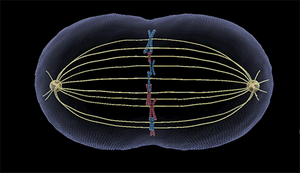
The mitotic spindle is a structure made of microtubules that controls chromosome movement during mitosis.
Centrosomes: Microtubule-organizing centers that replicate and migrate to opposite poles.
Kinetochore: Protein complex at the centromere where spindle microtubules attach.
Cell Cycle Regulation
Checkpoints and Control System
The cell cycle is regulated by checkpoints that ensure proper division. Key regulatory proteins include cyclins and cyclin-dependent kinases (Cdks).
G1 checkpoint: Determines if cell proceeds to division or enters G0 (non-dividing state).
G2 checkpoint: Confirms DNA replication and cell readiness for division.
M checkpoint: Ensures all chromosomes are properly attached to spindle before anaphase.
Cyclins: Proteins with fluctuating concentrations that regulate Cdks.
Cdks: Kinases that must bind cyclins to be active.
MPF: Cyclin-Cdk complex that triggers entry into M phase.
Molecular Biology of Cancer
Genetic Changes Leading to Cancer
Cancer results from mutations that disrupt normal cell cycle control.
Proto-oncogenes: Genes that stimulate normal cell growth and division.
Oncogenes: Mutated proto-oncogenes that cause excessive cell division.
Tumor-suppressor genes: Inhibit cell division; mutations can lead to cancer.
Ras proto-oncogene: Mutations produce hyperactive Ras protein, stimulating cell division.
p53 gene: Tumor suppressor that prevents cells with damaged DNA from dividing; mutations lead to uncontrolled growth.
Multistep Model of Cancer Development
Multiple mutations are required for cancer to develop, often involving both oncogenes and tumor-suppressor genes.
Incidence increases with age due to accumulation of mutations.
Inherited mutations (e.g., BRCA1/BRCA2) can predispose individuals to certain cancers.
Summary Table: Cell Cycle Phases
Phase | Main Events |
|---|---|
G1 | Cell growth, organelle duplication |
S | DNA replication |
G2 | Preparation for mitosis, protein synthesis |
Mitosis | Nuclear division (prophase, prometaphase, metaphase, anaphase, telophase) |
Cytokinesis | Division of cytoplasm |
Summary Table: Cancer-Related Genes
Gene Type | Normal Function | Effect of Mutation |
|---|---|---|
Proto-oncogene | Stimulates cell division | Becomes oncogene, causes excessive division |
Tumor-suppressor gene | Inhibits cell division, repairs DNA | Loss of function, uncontrolled growth |
p53 | DNA repair, apoptosis | Loss of function, cells with damaged DNA survive |
Additional info:
Cell cycle regulation is crucial for preventing cancer and maintaining healthy tissue function.
Understanding the molecular mechanisms of cell division and cancer can inform targeted therapies and personalized medicine.
