 Back
The Cell Cycle and Molecular Biology of Cancer: Study Notes
Study Guide - Smart Notes
 Tailored notes based on your materials, expanded with key definitions, examples, and context.
The Cell Cycle
Overview of Cell Division
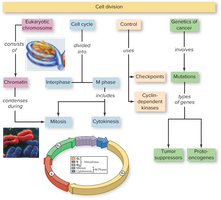
Cell division is a fundamental process in biology, enabling reproduction, growth, and tissue repair in multicellular organisms. The cell cycle is tightly regulated to ensure accurate transmission of genetic material.
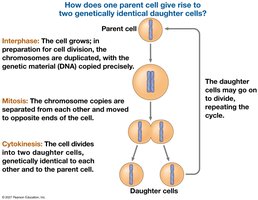
Cell division allows a single cell to give rise to two genetically identical daughter cells.
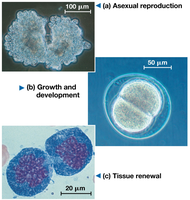
It is essential for reproduction in single-celled organisms, growth and development in multicellular organisms, and tissue renewal.
Cell Cycle Phases
The cell cycle consists of two main phases:
Interphase: The cell grows, replicates its DNA, and prepares for division. It includes G1 (growth), S (DNA synthesis), and G2 (preparation for mitosis).
Mitotic (M) phase: Includes mitosis (division of the nucleus) and cytokinesis (division of the cytoplasm).
Interphase
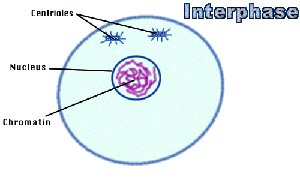
During interphase, the cell undergoes growth and DNA replication. Chromatin is visible in the nucleus, and centrioles replicate in preparation for mitosis.
G1 phase: Cell grows and synthesizes proteins.
S phase: DNA is replicated.
G2 phase: Cell prepares for mitosis by synthesizing microtubules and other components.
Mitosis
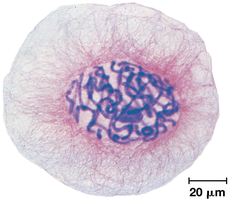
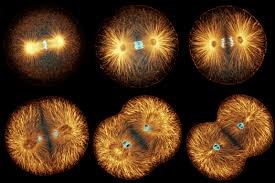
Mitosis is conventionally divided into five stages:
Prophase: Chromosomes condense, spindle apparatus forms, nuclear envelope breaks down.
Prometaphase: Microtubules attach to kinetochores, chromosomes begin to move.
Metaphase: Chromosomes align at the metaphase plate.
Anaphase: Sister chromatids separate and move to opposite poles.
Telophase: Nuclear envelope reforms, chromosomes decondense.
Cytokinesis
In animal cells, cytokinesis occurs by cleavage, forming a cleavage furrow.
In plant cells, a cell plate forms to divide the cytoplasm.
Chromosome Structure and Replication
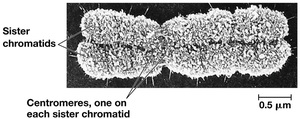
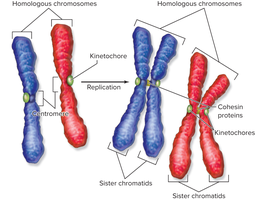
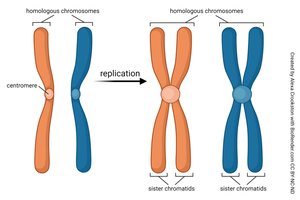
Chromosomes are composed of DNA and protein (chromatin). Each duplicated chromosome consists of two sister chromatids joined at the centromere.
Homologous chromosomes are pairs of chromosomes with the same genes but possibly different alleles.
Sister chromatids are identical copies formed by DNA replication.
Centromere is the region where chromatids are joined.
Regulation of the Cell Cycle
Cell Cycle Control System
The cell cycle is regulated by checkpoints, cyclins, and cyclin-dependent kinases (Cdks).
Checkpoints ensure the cell is ready to proceed to the next phase (G1, G2, and M checkpoints).
Cyclins are proteins whose levels fluctuate during the cell cycle.
Cyclin-dependent kinases (Cdks) are enzymes that, when bound to cyclins, regulate cell cycle progression.
MPF (Maturation-Promoting Factor) is a cyclin-Cdk complex that triggers entry into mitosis.
Molecular Biology of Cancer
Genetic Changes Leading to Cancer
Cancer results from mutations that disrupt normal cell cycle control.
Proto-oncogenes are normal genes that promote cell growth; mutations convert them to oncogenes, which drive excessive cell division.
Tumor-suppressor genes inhibit cell division; mutations in these genes remove growth inhibition.
Mutations in ras proto-oncogene and p53 tumor-suppressor gene are common in human cancers.
Multistep Model of Cancer Development
Multiple mutations are required for a cell to become cancerous.
Inherited mutations (e.g., in BRCA1 or BRCA2) can predispose individuals to certain cancers.
Summary Table: Key Terms in Cell Cycle and Cancer
Term | Definition | Role in Cell Cycle/Cancer |
|---|---|---|
Chromatin | DNA-protein complex | Condenses to form chromosomes |
Chromosome | Condensed DNA structure | Contains genetic material |
Sister Chromatids | Identical copies of a chromosome | Separated during mitosis |
Centromere | Region joining chromatids | Attachment site for spindle |
Cyclin | Regulatory protein | Controls cell cycle progression |
Cdk | Enzyme activated by cyclin | Phosphorylates target proteins |
MPF | Cyclin-Cdk complex | Triggers mitosis |
Proto-oncogene | Normal growth gene | Mutation leads to oncogene |
Tumor-suppressor gene | Inhibits cell division | Mutation removes inhibition |
Key Equations and Concepts
DNA Replication
During S phase, DNA is replicated so that each chromosome consists of two sister chromatids.
Chromosome number remains constant in mitosis, but is halved in meiosis.
Cell Cycle Checkpoints
G1 checkpoint:
G2 checkpoint:
M checkpoint:
Cancer Genetics
Oncogene activation:
Tumor suppressor loss:
Conclusion
Understanding the cell cycle and its regulation is essential for comprehending how cells divide, how genetic material is faithfully transmitted, and how disruptions in these processes can lead to diseases such as cancer. Cell division is central to life, and its molecular control is a key area of research in biology and medicine.
