 Back
The Cell Cycle and Molecular Biology of Cancer: Study Notes
Study Guide - Smart Notes
 Tailored notes based on your materials, expanded with key definitions, examples, and context.
The Cell Cycle
Overview of Cell Division
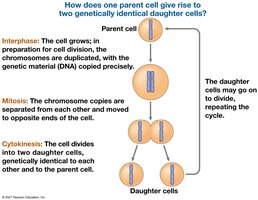
Cell division is a fundamental process in biology, enabling reproduction, growth, and repair in organisms. It ensures the accurate distribution of genetic material to daughter cells, maintaining genetic continuity across generations.
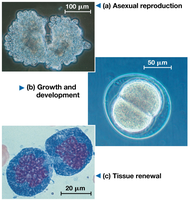
Cell division occurs in both single-celled and multicellular organisms.
In multicellular eukaryotes, cell division is essential for embryonic development, tissue renewal, and repair.
Cell division is highly accurate in passing DNA from one generation to the next.
Key processes: Mitosis (nuclear division) and Cytokinesis (cytoplasmic division).
Cellular Organization of Genetic Material
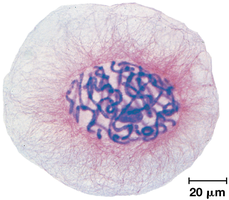
The genetic material in cells is organized into chromosomes, which are composed of DNA and associated proteins. The structure and number of chromosomes differ between prokaryotes and eukaryotes.
Genome: All DNA in a cell; can be a single DNA molecule (prokaryotes) or multiple DNA molecules (eukaryotes).
Chromosomes: DNA molecules packaged with proteins; carry genes.
Chromatin: Complex of DNA and protein in eukaryotic chromosomes; condenses during cell division.
Somatic cells: Nonreproductive cells with two sets of chromosomes.
Gametes: Reproductive cells (sperm and eggs) with half the chromosome number of somatic cells.
Chromosome Replication and Structure
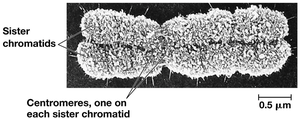
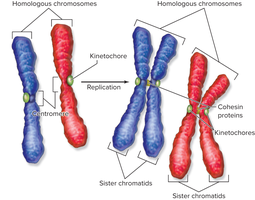
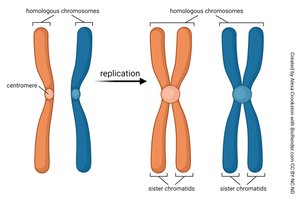
Before cell division, chromosomes are replicated, resulting in two sister chromatids joined at the centromere. During division, chromatids separate, ensuring each daughter cell receives a complete set of chromosomes.
Sister chromatids: Joined copies of the original chromosome.
Centromere: Region where chromatids are most closely attached.
After separation, chromatids are considered individual chromosomes.
Phases of the Cell Cycle
Interphase
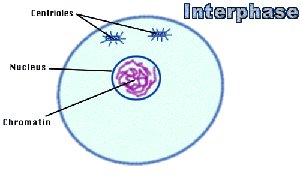
Interphase is the longest phase of the cell cycle, during which the cell grows, replicates its DNA, and prepares for division. It consists of three subphases: G1, S, and G2.
G1 phase: Cell growth and preparation for DNA replication.
S phase: DNA replication; chromosomes are duplicated.
G2 phase: Further growth; chromosomes condense; centrioles replicate; tubulin synthesis.
Mitosis and Cytokinesis
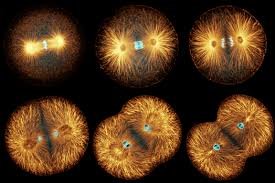
Mitosis is conventionally divided into five stages: prophase, prometaphase, metaphase, anaphase, and telophase. Cytokinesis follows mitosis, dividing the cytoplasm and completing cell division.
Prophase: Chromosomes condense; spindle apparatus assembles; nuclear envelope breaks down.
Prometaphase: Nuclear envelope disassembles; microtubules attach to kinetochores; chromosomes begin to move.
Metaphase: Chromosomes align at the metaphase plate.
Anaphase: Centromeres split; sister chromatids are pulled to opposite poles.
Telophase: Spindle disassembles; nuclear envelope reforms; chromosomes uncoil.
Cytokinesis: Division of cytoplasm; cleavage furrow in animals, cell plate in plants.
Regulation of the Cell Cycle
Cell Cycle Control System
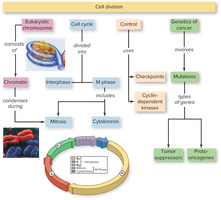
The cell cycle is regulated by a molecular control system involving checkpoints, cyclins, and cyclin-dependent kinases (Cdks). These mechanisms ensure proper cell division and prevent errors.
Checkpoints: G1, G2, and M checkpoints monitor cell cycle progression.
Cyclins: Proteins with cyclically fluctuating concentrations.
Cyclin-dependent kinases (Cdks): Enzymes activated by cyclins; regulate cell cycle transitions.
MPF (Maturation-Promoting Factor): Cyclin-Cdk complex that triggers entry into M phase.
Molecular Biology of Cancer
Genetic Changes Leading to Cancer
Cancer results from genetic changes that disrupt normal cell cycle control. Mutations in proto-oncogenes, oncogenes, and tumor-suppressor genes play key roles in cancer development.
Proto-oncogenes: Genes that stimulate normal cell growth and division.
Oncogenes: Mutated proto-oncogenes that promote excessive cell division.
Tumor-suppressor genes: Genes that inhibit cell division; mutations can lead to cancer.
Ras proto-oncogene: Mutations can cause hyperactive Ras protein and increased cell division.
p53 tumor suppressor gene: Mutations prevent suppression of cell cycle, leading to uncontrolled growth.
Multiple mutations are typically required for cancer development; inherited alleles can predispose individuals to certain cancers.
Summary Table: Key Terms in Cell Cycle and Cancer
Term | Definition | Role in Cell Cycle/Cancer |
|---|---|---|
Chromosome | DNA molecule with associated proteins | Genetic material distribution |
Chromatid | One of two identical halves of a duplicated chromosome | Ensures accurate segregation |
Centromere | Region joining sister chromatids | Attachment site for spindle fibers |
Cyclin | Regulatory protein | Controls cell cycle progression |
Cdk | Cyclin-dependent kinase | Enzyme regulating cell cycle |
Proto-oncogene | Normal gene promoting cell growth | Mutation can lead to cancer |
Tumor-suppressor gene | Gene inhibiting cell division | Mutation can lead to cancer |
Key Equations and Concepts
DNA Replication:
Chromosome Number in Humans: (somatic cells), (gametes)
Cell Cycle Phases:
Additional info: These notes expand on the original content by providing definitions, examples, and a summary table for key terms. Images included are directly relevant to the explanation of cell cycle stages, chromosome structure, and cell cycle regulation.
