 Back
The Cell Cycle and Molecular Biology of Cancer: Study Notes
Study Guide - Smart Notes
 Tailored notes based on your materials, expanded with key definitions, examples, and context.
The Cell Cycle
Overview of Cell Division
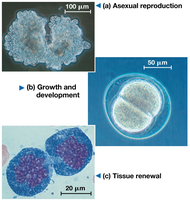
Cell division is a fundamental process in biology, enabling reproduction, growth, and repair in organisms. It ensures the accurate distribution of genetic material to daughter cells. - Cell division is essential for: 1. Reproduction in single-celled organisms 2. Growth and development in multicellular organisms 3. Tissue renewal and repair in mature organisms - The process is highly regulated and accurate, maintaining genetic continuity across generations. 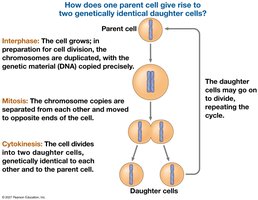
Cellular Organization of Genetic Material
Genetic material is organized differently in prokaryotes and eukaryotes. - Genome: All DNA in a cell; can be a single DNA molecule (prokaryotes) or multiple DNA molecules (eukaryotes). - Chromosomes: DNA molecules packaged with proteins; carry genes. - Chromatin: Complex of DNA and protein in eukaryotic chromosomes; condenses during cell division. - Somatic cells: Non-reproductive cells with two sets of chromosomes. - Gametes: Reproductive cells (sperm and eggs) with half the chromosome number. 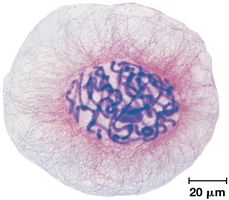
Chromosome Structure and Replication
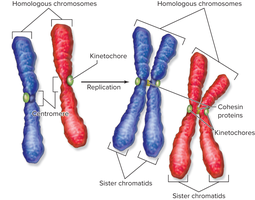
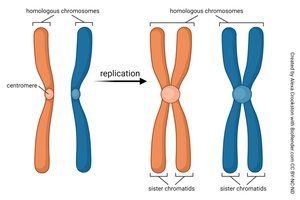
Chromosomes duplicate before cell division, forming sister chromatids joined at the centromere. - Sister chromatids: Identical copies of a chromosome, joined by cohesin proteins. - Centromere: Region where chromatids are most closely attached. - During cell division, sister chromatids separate and become individual chromosomes. 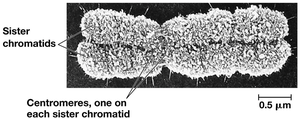
Phases of the Cell Cycle
Interphase
Interphase is the longest phase, comprising G1, S, and G2 phases. - G1 phase: Cell growth and preparation for DNA replication. - S phase: DNA replication; chromosomes are duplicated. - G2 phase: Further growth, preparation for mitosis, and synthesis of proteins. 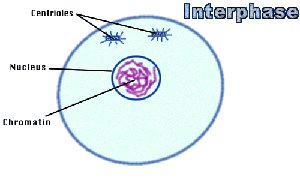
Mitotic (M) Phase
The M phase includes mitosis and cytokinesis. - Mitosis: Division of the nucleus and genetic material. - Cytokinesis: Division of the cytoplasm, forming two daughter cells.
Stages of Mitosis
1. Prophase: Chromosomes condense, spindle apparatus forms, nuclear envelope breaks down. 2. Prometaphase: Microtubules attach to kinetochores, chromosomes begin moving. 3. Metaphase: Chromosomes align at the metaphase plate. 4. Anaphase: Sister chromatids separate and move to opposite poles. 5. Telophase: Nuclear envelope reforms, chromosomes decondense. 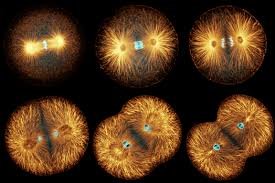
Regulation of the Cell Cycle
Cell Cycle Control System
The cell cycle is regulated by checkpoints and signaling molecules. - Checkpoints: G1, G2, and M checkpoints ensure proper progression. - Cyclins: Proteins with cyclically fluctuating concentrations. - Cyclin-dependent kinases (Cdks): Enzymes activated by cyclins; regulate cell cycle transitions. - MPF (Maturation-promoting factor): Cyclin-Cdk complex that triggers entry into M phase.
Checkpoint Functions
- G1 checkpoint: Ensures cell is ready for DNA synthesis; cells may enter G0 (non-dividing state) if not. - G2 checkpoint: Ensures DNA is replicated and undamaged. - M checkpoint: Ensures all chromatids are properly attached to spindle microtubules.
Molecular Biology of Cancer
Genetic Changes Leading to Cancer
Cancer arises from mutations affecting cell cycle control. - Proto-oncogenes: Normal genes that stimulate cell growth; mutations convert them to oncogenes (cancer-causing). - Tumor-suppressor genes: Inhibit cell division; mutations reduce their function, contributing to cancer. - Ras proto-oncogene: Mutations lead to hyperactive Ras protein and increased cell division. - p53 tumor suppressor gene: Mutations prevent suppression of cell cycle, allowing damaged cells to proliferate.
Multistep Model of Cancer Development
- Multiple mutations are required for cancer; incidence increases with age. - Cancer cells often have active oncogenes and mutated tumor-suppressor genes.
Inherited Predisposition
- Individuals may inherit oncogenes or mutant alleles of tumor-suppressor genes (e.g., BRCA1/BRCA2 in breast cancer).
Summary Table: Cell Cycle and Cancer Regulation
Component | Function | Role in Cancer |
|---|---|---|
Proto-oncogene | Stimulates cell growth | Mutation leads to oncogene, causing uncontrolled growth |
Tumor-suppressor gene | Inhibits cell division, repairs DNA | Mutation reduces inhibition, allowing cancer |
Cyclin/Cdk | Regulates cell cycle transitions | Dysregulation can promote cancer |
Checkpoints | Ensure proper cell cycle progression | Loss leads to genomic instability |
Key Equations
DNA Replication and Chromosome Number
- If a cell has n chromosomes, after DNA replication it has 2n chromatids.
Cell Cycle Regulation
- MPF activity is proportional to cyclin concentration:
Concept Map: Cell Cycle and Cancer
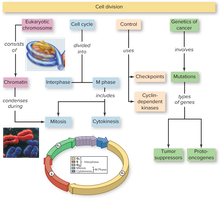
Example
- Example: A mutation in the p53 gene prevents a cell from undergoing apoptosis after DNA damage, increasing the risk of cancer development. Additional info: The cell cycle is tightly regulated to prevent uncontrolled cell division, which is the hallmark of cancer. Understanding these mechanisms is crucial for developing targeted therapies.
