 Back
BackThe Cell Cycle: Mechanisms and Regulation
Study Guide - Smart Notes
 Tailored notes based on your materials, expanded with key definitions, examples, and context.
Chapter 12: The Cell Cycle
Introduction to the Cell Cycle
The cell cycle is the series of events that cells go through as they grow and divide. This process is fundamental for reproduction, growth, and repair in all living organisms. The continuity of life depends on the accurate duplication and distribution of genetic material to daughter cells.
Roles of Cell Division:
Reproduction: Unicellular organisms reproduce by cell division.
Growth: Multicellular organisms grow by increasing their cell number.
Repair: Damaged tissues are repaired by cell division.
12.1 Genetically Identical Daughter Cells
Genome Organization and Chromosome Structure
During cell division, a cell duplicates its DNA, allocates the two copies to opposite ends, and splits into two genetically identical daughter cells. The genome is the complete set of genetic information in a cell.
Prokaryotic Genome: Typically consists of a single, circular DNA molecule and several smaller DNA plasmids.
Eukaryotic Genome: Composed of multiple linear DNA molecules wrapped around histone proteins, forming chromatin.
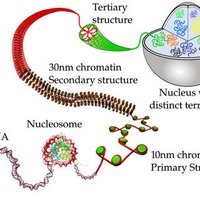
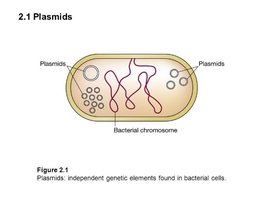
Chromosomes: DNA molecules are packaged into chromosomes. Each species has a characteristic chromosome number (e.g., humans have 46 in somatic cells, 23 in gametes).
Chromatin: The complex of DNA and proteins that forms chromosomes. In nondividing cells, chromatin is long and thin; before division, it condenses into visible chromosomes.
Sister Chromatids: Each duplicated chromosome consists of two identical sister chromatids joined at the centromere. Once separated, they are considered individual chromosomes.
Common Name | Genus and Species | Diploid Chromosome Number |
|---|---|---|
Buffalo | Bison bison | 60 |
Cat | Felis catus | 38 |
Cattle | Bos taurus, B. indicus | 60 |
Dog | Canis familiaris | 78 |
Donkey | Equus asinus | 62 |
Goat | Capra hircus | 60 |
Horse | Equus caballus | 64 |
Human | Homo sapiens | 46 |
Pig | Sus scrofa | 38 |
Sheep | Ovis aries | 54 |
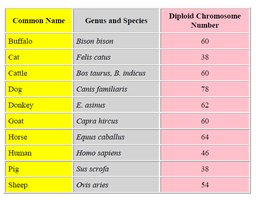
Example: Human somatic cells have 46 chromosomes, while human gametes have 23.
12.2 The Mitotic Cell Cycle
Phases of the Cell Cycle
The cell cycle consists of a long interphase (90%) and a short mitotic (M) phase (10%). Interphase includes G1, S, and G2 subphases, where the cell grows, replicates DNA, and prepares for division. Mitosis is divided into five subphases:
Prophase: Chromatin condenses, nucleoli disappear, mitotic spindle forms, centrosomes move apart.
Prometaphase: Nuclear envelope fragments, spindle microtubules attach to kinetochores, cell elongates.
Metaphase: Chromosomes align at the metaphase plate, centrosomes at opposite poles.
Anaphase: Centromeres divide, sister chromatids separate and move to opposite poles.
Telophase: Daughter nuclei form, chromosomes decondense, cytokinesis begins.
Cytokinesis: In animal cells, a cleavage furrow forms; in plant cells, vesicles form a cell plate that develops into a new cell wall.
Prokaryotic Cell Division: Prokaryotes divide by binary fission, not mitosis. The process involves replication of the circular chromosome, elongation of the cell, and division into two cells.
Evolution of Mitosis: Variations exist in different organisms, such as dinoflagellates and diatoms, indicating evolutionary adaptations of the mitotic process.
12.3 Regulation of the Cell Cycle
Control Mechanisms and Checkpoints
The frequency of cell division varies by cell type and is regulated by chemical signals in the cytoplasm. The cell cycle control system consists of molecules that trigger and coordinate key events. Checkpoints are critical control points where stop and go-ahead signals regulate progression.
Major Checkpoints: G1, G2, and M phases. The G1 checkpoint (restriction point) is crucial; cells that do not pass enter a nondividing G0 phase.
Regulatory Molecules: Protein kinases (cyclin-dependent kinases, Cdks) and cyclins regulate the cell cycle. Cdks are activated by binding to cyclins.
Example: MPF (Maturation-Promoting Factor) triggers the cell's passage into M phase by phosphorylating target proteins.
External Signals: Include growth factors, density-dependent inhibition, and anchorage dependence.
Cancer and the Cell Cycle: Cancer cells escape normal cell cycle controls, dividing uncontrollably and invading tissues. They may form benign (localized) or malignant (invasive, metastatic) tumors. Treatments include surgery, radiation, and chemotherapy.
Transformation: The process by which a normal cell becomes cancerous.
Metastasis: The spread of cancer cells to distant body sites.
Example: Taxol is a chemotherapy drug that disrupts microtubule function, inhibiting mitosis in cancer cells.
