 Back
BackThe Cell Cycle: Mechanisms and Regulation
Study Guide - Smart Notes
 Tailored notes based on your materials, expanded with key definitions, examples, and context.
The Cell Cycle
Introduction to the Cell Cycle
The cell cycle is the series of events that cells go through as they grow and divide. It is fundamental to the continuity of life, enabling organisms to grow, develop, and maintain their tissues. The cell cycle ensures that genetic material is accurately duplicated and distributed to daughter cells.
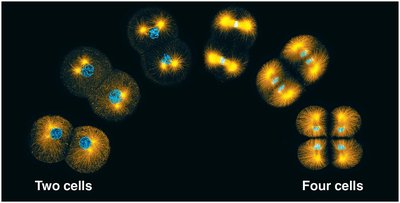
Cell division distinguishes living organisms from nonliving matter by enabling reproduction and growth.
In unicellular organisms, cell division produces new individuals; in multicellular organisms, it supports development, tissue renewal, and repair.
Accurate distribution of genetic material (DNA) is crucial for the fidelity of cell division.
Genetic Material and Chromosome Organization
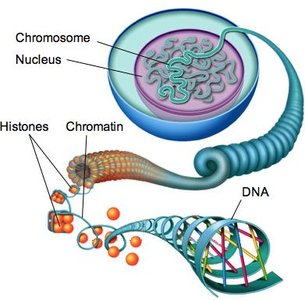
All the DNA in a cell constitutes its genome. In eukaryotes, the genome is organized into multiple linear chromosomes, each carrying many genes. Chromosomes are composed of chromatin, a complex of DNA and proteins (mainly histones) that condenses during cell division.
Somatic cells (non-reproductive) have two sets of chromosomes (diploid), while gametes (sperm and eggs) have one set (haploid).
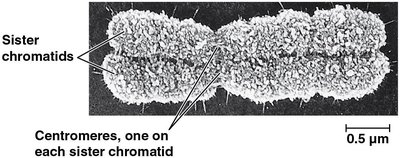
Before division, DNA is replicated, resulting in duplicated chromosomes, each consisting of two sister chromatids joined at a centromere.
Overview of the Cell Cycle
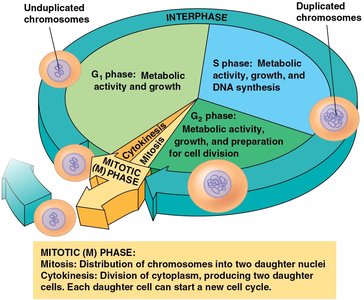
The cell cycle consists of two main phases: interphase and the mitotic (M) phase. Interphase is the period of cell growth and DNA replication, while the M phase includes mitosis (nuclear division) and cytokinesis (cytoplasmic division).
Interphase is subdivided into:
G1 phase (first gap): Cell growth and normal metabolic roles.
S phase (synthesis): DNA replication.
G2 phase (second gap): Preparation for mitosis.
Mitosis is the process by which the nucleus divides, followed by cytokinesis, which divides the cytoplasm.
Mitosis: Mechanisms and Stages
Stages of Mitosis
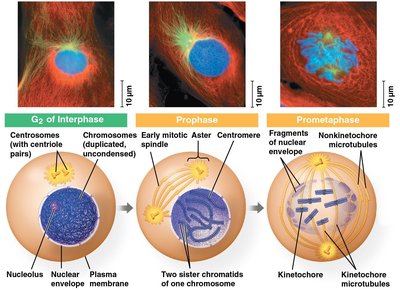
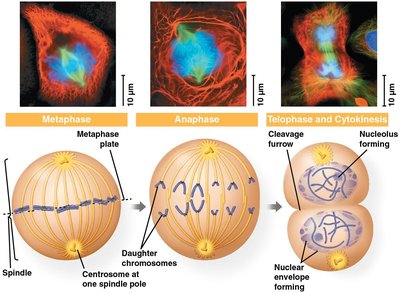
Mitosis is conventionally divided into five stages, each characterized by specific events involving chromosomes and the mitotic spindle.
Prophase: Chromosomes condense, spindle apparatus begins to form.
Prometaphase: Nuclear envelope breaks down, spindle fibers attach to kinetochores.
Metaphase: Chromosomes align at the metaphase plate.
Anaphase: Sister chromatids separate and move toward opposite poles.
Telophase: Nuclear envelopes reform around chromosomes, which decondense.
The Mitotic Spindle and Chromosome Movement
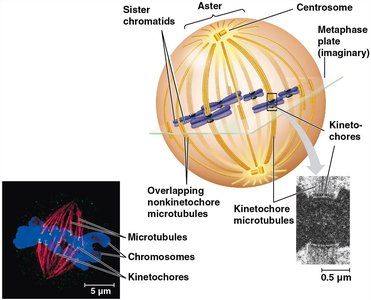
The mitotic spindle is a structure made of microtubules that orchestrates the movement of chromosomes during mitosis. The spindle forms from centrosomes, which migrate to opposite poles of the cell. Each sister chromatid has a kinetochore, a protein complex at the centromere, to which spindle fibers attach.
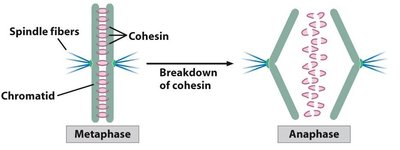
During anaphase, cohesins holding sister chromatids together are cleaved by the enzyme separase, allowing chromatids to move apart.
Microtubules shorten by depolymerizing at their kinetochore ends, pulling chromatids to opposite poles.
Cytokinesis: Division of the Cytoplasm
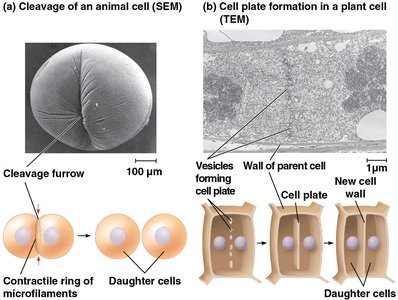
Cytokinesis is the process that divides the cytoplasm, resulting in two genetically identical daughter cells. The mechanism differs between animal and plant cells:
Animal cells: Cytokinesis occurs by cleavage, forming a cleavage furrow that pinches the cell in two.
Plant cells: A cell plate forms, eventually developing into a new cell wall separating the daughter cells.
Cell Division in Prokaryotes: Binary Fission
Binary Fission
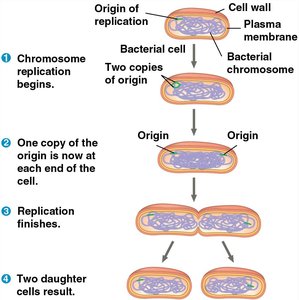
Prokaryotes (bacteria and archaea) reproduce by binary fission, a simpler process than mitosis. The single, circular chromosome replicates, and the two copies move to opposite ends of the cell. The plasma membrane then pinches inward, dividing the cell into two genetically identical daughter cells.
Regulation of the Cell Cycle
Cell Cycle Control System
The eukaryotic cell cycle is regulated by a complex control system involving internal and external signals. This system ensures that critical events occur in the correct sequence and that damaged or incomplete cells do not divide.
Checkpoints at G1, G2, and M phases monitor the cell's progress and integrity.
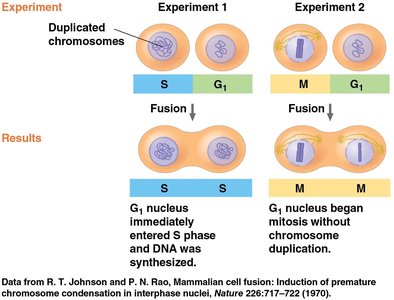
Cyclins and cyclin-dependent kinases (Cdks) are key regulatory proteins. Cdks are only active when bound to cyclins, whose concentrations fluctuate during the cell cycle.
MPF (maturation-promoting factor) is a cyclin-Cdk complex that triggers passage from G2 to M phase.
Checkpoints and External Signals
Checkpoints ensure that the cell only proceeds to the next phase if conditions are favorable. The G1 checkpoint is particularly important; if a cell does not receive a go-ahead signal, it may enter a nondividing state called the G0 phase.
Growth factors are external signals that stimulate cell division.
Density-dependent inhibition and anchorage dependence prevent overcrowding and ensure cells only divide when attached to a suitable surface.
Loss of Cell Cycle Control and Cancer
Cancer cells escape normal cell cycle controls, dividing uncontrollably. They may produce their own growth factors, ignore inhibitory signals, or have defective control systems. Tumors form when abnormal cells proliferate; benign tumors remain localized, while malignant tumors invade tissues and can metastasize to other parts of the body.
Chemotherapy and radiation target rapidly dividing cells, but can also affect normal dividing cells, causing side effects.
Research into cell signaling and molecular mechanisms is leading to more personalized cancer treatments.
Summary Table: Key Differences in Cell Division
Feature | Mitosis (Eukaryotes) | Binary Fission (Prokaryotes) |
|---|---|---|
Chromosome Structure | Multiple, linear | Single, circular |
Spindle Apparatus | Present | Absent |
Stages | Prophase, Prometaphase, Metaphase, Anaphase, Telophase | No distinct stages |
Outcome | Two identical daughter cells | Two identical daughter cells |
