 Back
The Cell Cycle: Mechanisms and Regulation
Study Guide - Smart Notes
 Tailored notes based on your materials, expanded with key definitions, examples, and context.
The Cell Cycle
Overview of the Cell Cycle
The cell cycle is the series of events that cells go through as they grow and divide. It ensures the accurate duplication and distribution of genetic material to daughter cells. Most cell division results in genetically identical daughter cells, except for meiosis, which produces gametes with half the chromosome number of the parent cell.
Genome: All the DNA in a cell; prokaryotes typically have a single DNA molecule, while eukaryotes have multiple.
Chromatin: Complex of DNA and histone proteins that condenses to form chromosomes during cell division.
Somatic cells: Non-reproductive cells, diploid (two sets of chromosomes).
Gametes: Reproductive cells (sperm and eggs), haploid (one set of chromosomes).
Eukaryotic cell division consists of mitosis (division of the nucleus) and cytokinesis (division of the cytoplasm).
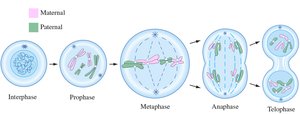
Phases of the Cell Cycle
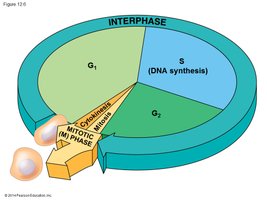
The cell cycle is divided into two main phases: Interphase and the Mitotic (M) phase. Interphase is the period of cell growth and DNA replication, while the M phase includes mitosis and cytokinesis.
G1 phase: Cell growth and preparation for DNA synthesis.
S phase: DNA synthesis and chromosome replication.
G2 phase: Further growth and preparation for mitosis.
M phase: Mitosis and cytokinesis.
Chromosome Structure and Replication
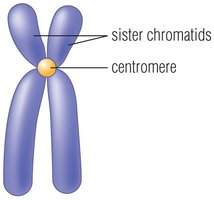
During the S phase, each chromosome is replicated to produce two sister chromatids joined at a region called the centromere. These chromatids are separated during mitosis to ensure each daughter cell receives an identical set of chromosomes.
Sister chromatids: Identical copies of a chromosome connected by a centromere.
Centromere: The region where sister chromatids are most closely attached.
Mitosis: Mechanisms and Stages
Stages of Mitosis
Mitosis is divided into several stages, each characterized by specific events that ensure the accurate segregation of chromosomes.
Prophase: Chromatin condenses into visible chromosomes; spindle apparatus begins to form; centrosomes move apart.
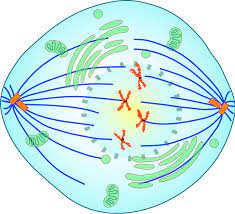
Prometaphase: Nuclear envelope fragments; spindle microtubules attach to kinetochores on chromosomes.
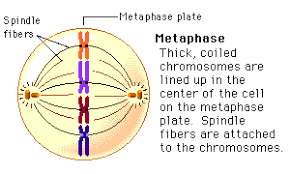
Metaphase: Chromosomes align at the metaphase plate, attached to spindle fibers from opposite poles.
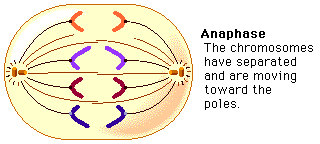
Anaphase: Sister chromatids are separated and pulled toward opposite poles by spindle fibers.
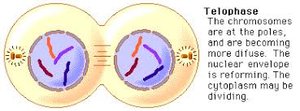
Telophase: Chromosomes decondense; nuclear envelopes reform around the two sets of chromosomes.
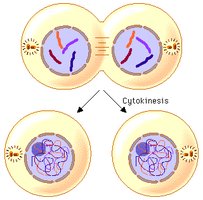
Cytokinesis: Division of the cytoplasm, resulting in two genetically identical daughter cells.
Cytokinesis in Animal and Plant Cells
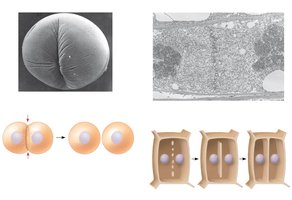
Cytokinesis differs between animal and plant cells. In animal cells, a cleavage furrow forms, pinching the cell in two. In plant cells, vesicles form a cell plate that develops into a new cell wall, separating the daughter cells.
Cleavage furrow: Indentation formed by the contractile ring in animal cells.
Cell plate: Structure formed in plant cells that leads to the development of a new cell wall.
Regulation of the Cell Cycle
Cell Cycle Control System
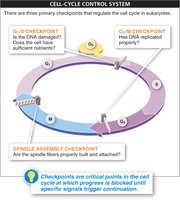
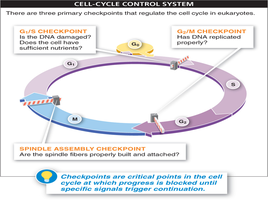
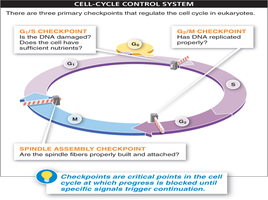
The cell cycle is regulated by a molecular control system with checkpoints that ensure each phase is completed accurately before the next begins. These checkpoints are critical for maintaining genomic integrity and preventing uncontrolled cell division.
G1/S checkpoint: Assesses DNA damage and cell growth; cells may enter a non-dividing state (G0) if conditions are not met.
G2/M checkpoint: Ensures DNA replication is complete and undamaged before mitosis.
Spindle assembly checkpoint: Verifies that all chromosomes are properly attached to the spindle before anaphase.
Molecular Mechanisms: Cyclins and Cdks
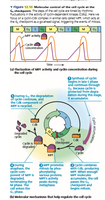
Two main types of regulatory proteins control the cell cycle: cyclins and cyclin-dependent kinases (Cdks). The activity of Cdks depends on their association with cyclins, which fluctuate in concentration throughout the cell cycle. The maturation-promoting factor (MPF) is a cyclin-Cdk complex that triggers the cell's passage from G2 into M phase.
Cyclins: Proteins whose levels rise and fall with the cell cycle.
Cyclin-dependent kinases (Cdks): Enzymes that, when bound to cyclins, phosphorylate target proteins to advance the cell cycle.
MPF: Cyclin-Cdk complex that promotes mitosis.
External Regulation and Cancer
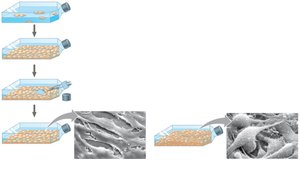
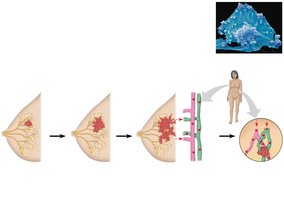
External factors such as growth factors, density-dependent inhibition, and anchorage dependence also regulate cell division. Cancer cells often lose these regulatory mechanisms, leading to uncontrolled growth and tumor formation.
Growth factors: Proteins that stimulate cell division.
Density-dependent inhibition: Cells stop dividing when crowded.
Anchorage dependence: Cells must be attached to a substrate to divide.
Cancer cells: Do not respond to normal regulatory signals, may form tumors, and can metastasize to other tissues.
Summary Table: Key Events in the Cell Cycle
Phase | Main Events |
|---|---|
G1 | Cell growth, preparation for DNA synthesis |
S | DNA replication, sister chromatid formation |
G2 | Preparation for mitosis, growth continues |
Mitosis | Division of nucleus (prophase, prometaphase, metaphase, anaphase, telophase) |
Cytokinesis | Division of cytoplasm, formation of two daughter cells |
Additional info: The cell cycle is tightly regulated to prevent errors in DNA replication and division, which can lead to diseases such as cancer. Understanding these mechanisms is fundamental for fields such as genetics, developmental biology, and cancer research.
