 Back
The Cell Cycle: Mechanisms and Regulation of Eukaryotic Cell Division
Study Guide - Smart Notes
 Tailored notes based on your materials, expanded with key definitions, examples, and context.
The Cell Cycle
Overview and Importance of Cell Division
The cell cycle is a fundamental process by which cells grow, replicate their DNA, and divide to produce new cells. This process is essential for reproduction, growth, tissue repair, and maintenance in multicellular organisms. Cell division occurs through two main mechanisms: mitosis (for somatic cells) and meiosis (for gametes).
Asexual reproduction: Produces genetically identical offspring from a single parent.
Sexual reproduction: Produces genetically diverse offspring by combining genetic material from two parents.
Functions of cell division: Growth, repair, replacement of cells, and production of gametes.
Phases of the Cell Cycle
Main Stages
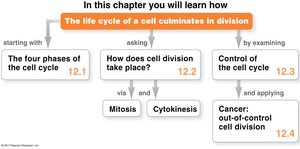
The eukaryotic cell cycle consists of two major phases: Interphase and the Mitotic (M) phase. Interphase is further divided into three subphases, while the M phase includes mitosis and cytokinesis.
Interphase: Period of cell growth and DNA replication.
G1 phase (First gap): Cell grows and synthesizes proteins.
S phase (Synthesis): DNA is replicated.
G2 phase (Second gap): Cell prepares for division.
Mitotic (M) phase: Includes mitosis (nuclear division) and cytokinesis (cytoplasmic division).
Chromosomes and DNA Replication
Structure and Replication
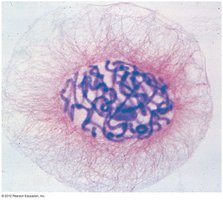
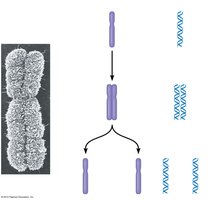
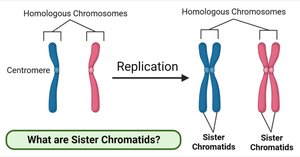
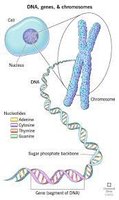
Chromosomes are composed of DNA and proteins (histones) that help maintain their structure and regulate gene activity. Before cell division, each chromosome is duplicated, resulting in two sister chromatids joined at a region called the centromere.
Chromatin: The complex of DNA and proteins in the nucleus.
Sister chromatids: Identical copies of a chromosome, attached at the centromere.
Gene: A segment of DNA that codes for a specific RNA and, consequently, a protein.
Events of the Cell Cycle
Interphase
During interphase, the cell grows, duplicates its DNA, and prepares for division. The nucleoli are visible, and centrosomes are duplicated.
G1 phase: Cell increases in size and prepares for DNA synthesis.
S phase: DNA replication occurs, resulting in duplicated chromosomes.
G2 phase: Final preparations for mitosis, including further growth and protein synthesis.
Mitotic Phase (M Phase)
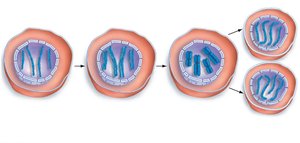
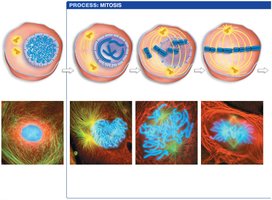
The M phase consists of mitosis and cytokinesis. Mitosis is divided into five subphases:
Prophase: Chromosomes condense, spindle apparatus forms.
Prometaphase: Nuclear envelope breaks down, spindle fibers attach to kinetochores.
Metaphase: Chromosomes align at the metaphase plate.
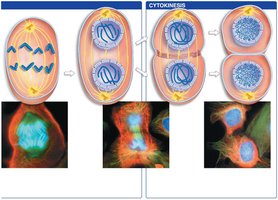
Anaphase: Sister chromatids separate and move to opposite poles.
Telophase: Nuclear envelopes reform, chromosomes decondense.
Cytokinesis
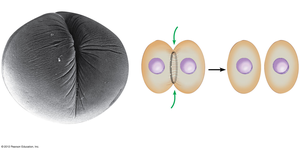
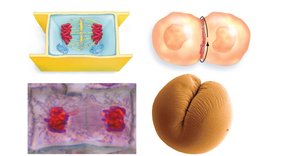
Cytokinesis is the division of the cytoplasm, resulting in two daughter cells. The process differs between animal and plant cells:
Animal cells: A cleavage furrow forms, pinching the cell in two via a contractile ring of actin and myosin.
Plant cells: A cell plate forms from vesicles, eventually developing into a new cell wall.
Bacterial Cell Division
Binary Fission
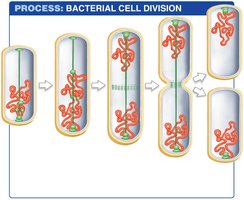
Bacteria divide by a process called binary fission, which is simpler than mitosis. The bacterial chromosome is replicated, and the cell splits into two genetically identical daughter cells.
Steps: DNA replication, chromosome segregation, and division of the cytoplasm.
Regulation of the Cell Cycle
Cell-Cycle Checkpoints
The cell cycle is tightly regulated by checkpoints that ensure proper division. There are four main checkpoints:
G1 checkpoint: Checks for adequate cell size, nutrients, growth signals, and undamaged DNA.
S checkpoint: Ensures DNA is properly replicated.
G2 checkpoint: Confirms successful DNA replication and checks for DNA damage.
M checkpoint: Ensures chromosomes are properly attached to the spindle and segregated.
If a cell fails a checkpoint, it may enter a non-dividing state called G0 or undergo apoptosis (programmed cell death).
Cancer and the Cell Cycle
Uncontrolled Cell Division
Cancer results from the failure of cell-cycle regulation, leading to uncontrolled cell growth and division. Cancer cells often have mutations that:
Activate growth-promoting proteins inappropriately.
Disable tumor suppressor genes that normally inhibit the cell cycle.
These defects allow cancer cells to proliferate, invade tissues, and spread throughout the body (metastasis).
Summary Table: Cell Cycle Phases and Key Events
Phase | Main Events |
|---|---|
G1 | Cell growth, organelle duplication, preparation for DNA synthesis |
S | DNA replication, chromosome duplication |
G2 | Further growth, preparation for mitosis |
Mitosis | Nuclear division (prophase, prometaphase, metaphase, anaphase, telophase) |
Cytokinesis | Division of cytoplasm, formation of two daughter cells |
Key Terms and Concepts
Chromosome: A single DNA molecule with associated proteins, carrying genetic information.
Sister chromatids: Two identical copies of a chromosome, joined at the centromere.
Centromere: Region where sister chromatids are attached.
Mitotic spindle: Structure made of microtubules that separates chromosomes during mitosis.
Kinetochore: Protein complex on the centromere where spindle fibers attach.
Cleavage furrow: Indentation that begins cytokinesis in animal cells.
Cell plate: Structure that forms during cytokinesis in plant cells.
Binary fission: Asexual reproduction in prokaryotes.
Checkpoints: Regulatory points in the cell cycle ensuring proper division.
Tumor suppressor gene: Gene that inhibits cell division and prevents cancer.
Equations and Additional Information
DNA content after S phase: If a cell starts with n chromosomes, after S phase it has 2n chromatids.
Cell cycle duration: Varies by cell type and organism; rapidly dividing cells have shorter G1 phases.
Equation for DNA replication:
Equation for cell number after n divisions:
