 Back
The Cell Cycle: Mechanisms and Regulation
Study Guide - Smart Notes
 Tailored notes based on your materials, expanded with key definitions, examples, and context.
The Cell Cycle
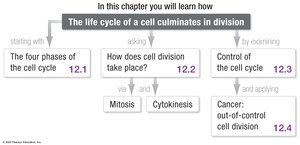
Overview of the Cell Cycle
The cell cycle is the series of events that cells go through as they grow and divide. It ensures that genetic material is accurately replicated and distributed to daughter cells. The cell cycle is fundamental to growth, development, and tissue repair in multicellular organisms.
Mitosis produces genetically identical somatic cells.
Meiosis produces gametes (sperm and eggs) with half the genetic material of the parent cell.
Cytokinesis is the division of the cytoplasm, resulting in two separate cells.
Phases of the Cell Cycle
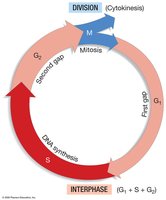
The eukaryotic cell cycle consists of four main phases:
M phase (Mitotic phase): The phase where cell division occurs, including mitosis and cytokinesis.
Interphase: The non-dividing phase, subdivided into:
G1 phase (First gap): Cell grows and performs normal functions.
S phase (Synthesis): DNA is replicated.
G2 phase (Second gap): Cell prepares for mitosis.
Chromosomes and DNA Replication
Structure and Replication of Chromosomes
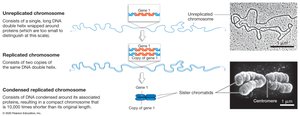
Chromosomes are structures composed of DNA and proteins (histones) that carry genetic information. Before cell division, chromosomes are replicated to ensure each daughter cell receives a complete set of genetic material.
Gene: A segment of DNA that codes for a specific RNA and protein.
Chromatid: Each of the two identical DNA molecules after replication, joined at the centromere.
Sister chromatids: The two chromatids of a replicated chromosome, still attached at the centromere.
Discovery of Gap Phases
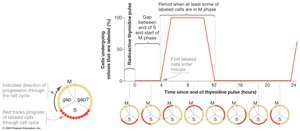
Experiments revealed that the cell cycle includes two gap phases (G1 and G2) where no DNA synthesis occurs. These phases allow the cell to grow and prepare for division.
Mitosis and Cytokinesis
Events of Mitosis
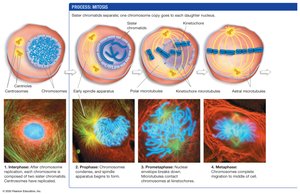
Mitosis is the process by which replicated chromosomes are separated into two new nuclei. It consists of five subphases:
Prophase: Chromosomes condense and spindle apparatus forms.
Prometaphase: Nuclear envelope breaks down; microtubules attach to kinetochores.
Metaphase: Chromosomes align at the metaphase plate.
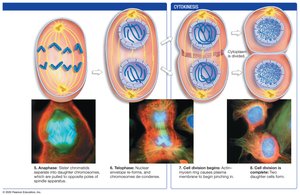
Anaphase: Sister chromatids are pulled apart to opposite poles.
Telophase: New nuclear envelopes form; chromosomes decondense.
Mechanisms of Chromosome Movement
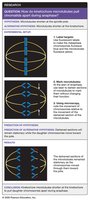
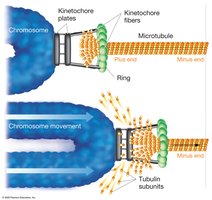
During anaphase, kinetochore microtubules shorten at their plus ends, pulling chromatids toward opposite poles. Motor proteins and the disassembly of microtubules drive this movement.
Cytokinesis
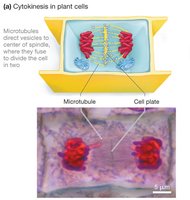
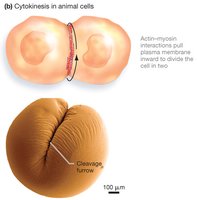
Cytokinesis divides the cytoplasm, resulting in two daughter cells. The process differs between plants and animals:
Plants: Vesicles from the Golgi apparatus form a cell plate that develops into a new cell wall.
Animals: A contractile ring of actin and myosin filaments pinches the cell membrane to form a cleavage furrow.
Bacterial Cell Division
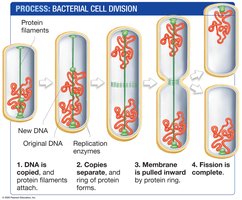
Bacteria divide by binary fission, a process similar to mitosis but simpler. The bacterial chromosome is replicated, and protein filaments help separate the DNA and divide the cell.
Regulation of the Cell Cycle
Cell-Cycle Control and Checkpoints
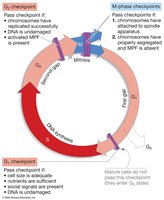
The cell cycle is tightly regulated by checkpoints that ensure each phase is completed correctly before the next begins. Key checkpoints include:
G1 checkpoint: Checks for cell size, nutrients, growth factors, and DNA damage.
G2 checkpoint: Ensures DNA replication is complete and undamaged.
M-phase checkpoints: Ensure proper chromosome attachment and separation.
Molecular Control: Cyclins and Cdks
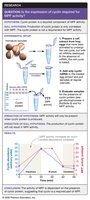
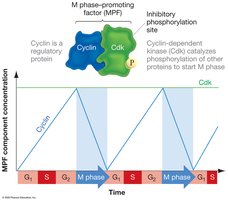
Progression through the cell cycle is regulated by cyclins and cyclin-dependent kinases (Cdks). The M phase-promoting factor (MPF) is a key complex that triggers entry into mitosis.
Cyclin: Regulatory protein whose concentration fluctuates during the cell cycle.
Cdk: Enzyme that is active only when bound to cyclin; phosphorylates target proteins to drive cell cycle events.
Turning MPF On and Off
MPF is activated by removal of an inhibitory phosphate and deactivated by cyclin degradation, illustrating negative feedback and protein destruction as regulatory mechanisms.
Cancer and Loss of Cell-Cycle Control
Cancer: Out-of-Control Cell Division
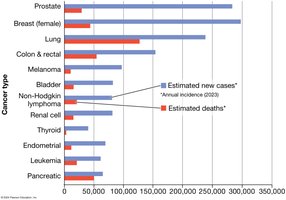
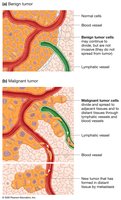
Cancer results from uncontrolled cell division due to failures in cell-cycle checkpoints. Cancer cells may form tumors, invade tissues, and metastasize to other parts of the body.
Malignant tumors: Invasive and can spread (metastasize).
Benign tumors: Noninvasive and do not spread.
Defects in cell-cycle regulation: Can activate growth-promoting proteins or inactivate tumor suppressors (e.g., p53).
Summary Table: Key Structures and Events in Mitosis
Structure | Function |
|---|---|
Chromosome | Contains genetic material (DNA) |
Centromere | Region where sister chromatids are joined |
Kinetochore | Protein complex for microtubule attachment |
Spindle apparatus | Moves chromosomes during mitosis |
Microtubules | Form spindle fibers for chromosome movement |
Actin/myosin ring | Drives cytokinesis in animal cells |
Key Equations and Concepts
Negative feedback in cell cycle regulation:
Apoptosis (programmed cell death): Initiated if DNA damage is irreparable, often mediated by p53 protein.
Additional info: The cell cycle is a highly conserved process across eukaryotes, and its dysregulation is a hallmark of cancer. Understanding these mechanisms is crucial for fields such as developmental biology, cancer research, and regenerative medicine.
