 Back
The Cell Cycle: Mechanisms, Regulation, and Implications for Cell Division
Study Guide - Smart Notes
 Tailored notes based on your materials, expanded with key definitions, examples, and context.
The Cell Cycle
Overview and Importance
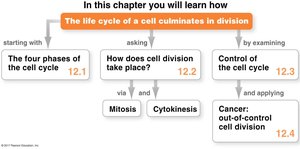
The cell cycle is a fundamental process in biology, enabling the reproduction, growth, repair, and maintenance of all living organisms. It encompasses the sequence of events from the formation of a cell to its division into two daughter cells. Cell division is essential for:
Reproduction in single-celled organisms
Growth of multicellular organisms
Repair and replacement of cells
Production of gametes (sperm and egg)
Types of Reproduction
Asexual reproduction: Offspring are genetically identical to the parent, inheriting all genes from one parent.
Sexual reproduction: Offspring inherit unique sets of genes from two parents, resulting in genetic variation.
Chromosomes and Chromatin
Structure and Function
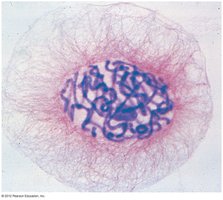
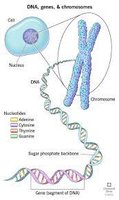
Eukaryotic chromosomes are composed of chromatin, which consists of a single long DNA molecule and associated proteins (histones). Chromatin becomes highly compact and visible under a microscope during cell division.
Chromosome Duplication and Sister Chromatids
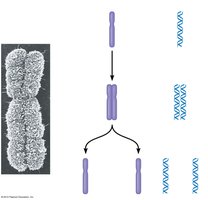
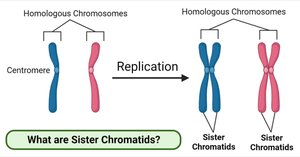
Before cell division, chromosomes are duplicated, forming two identical copies called sister chromatids, joined at the centromere. During division, sister chromatids separate and are distributed to daughter cells.
Genetic Information
A chromosome is a single, long double helix of DNA wrapped around histones. DNA encodes genetic information, and a gene is a segment of DNA that codes for a specific RNA and protein.
Phases of the Cell Cycle
Interphase and Mitotic Phase
The cell cycle consists of two main stages:
Interphase: Non-dividing phase where cell contents are duplicated. Subdivided into:
G1 (First Gap): Cell growth and increase in cytoplasm
S (Synthesis): Duplication of chromosomes
G2 (Second Gap): Growth and preparation for division
Mitotic Phase (M phase): Division phase, including:
Mitosis: Division of the nucleus
Cytokinesis: Division of the cytoplasm
Mitosis: Mechanism of Nuclear Division
Subphases of Mitosis
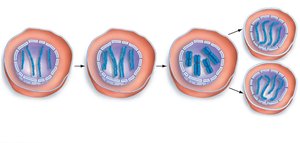
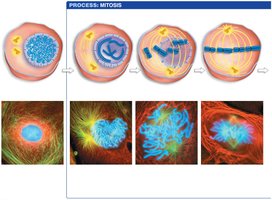
Mitosis is a continuous process divided into five subphases:
Prophase: Chromosomes condense, spindle apparatus forms from centrosomes.
Prometaphase: Nuclear envelope breaks down, spindle microtubules attach to kinetochores.
Metaphase: Chromosomes align at the cell equator, spindle fully formed.
Anaphase: Sister chromatids separate and move to opposite poles.
Telophase: Nuclear envelope reforms, chromosomes decondense, spindle disappears.
Chromosome Movement
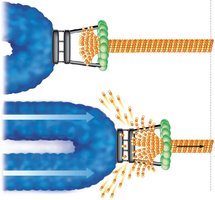
During mitosis, motor proteins and microtubules facilitate the movement of chromosomes. Kinetochore microtubules shorten, pulling chromatids apart.
Cytokinesis: Division of the Cytoplasm
Animal Cells
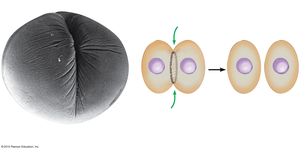
In animal cells, cytokinesis occurs via a cleavage furrow formed by a contracting ring of microfilaments and myosin, which pinches the cell into two.
Plant Cells
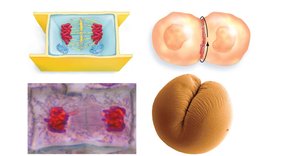
In plant cells, cytokinesis occurs by the formation of a cell plate from vesicles containing cell wall material, which grows outward to divide the cell.
Bacterial Cell Division
Binary Fission
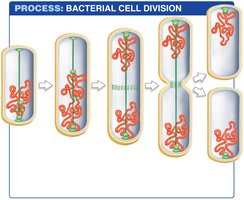
Bacteria divide by binary fission, a process similar to eukaryotic M phase but without a cell cycle. Chromosomes are replicated, separated, and the cytoplasm is divided.
Regulation of the Cell Cycle
Cell-Cycle Checkpoints
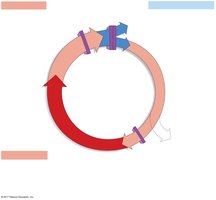
The cell cycle is regulated by checkpoints at critical points:
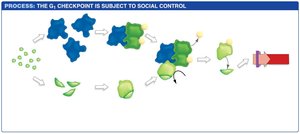
G1 checkpoint: Cell size, nutrients, social signals, and DNA integrity are assessed.
G2 checkpoint: Chromosome replication and DNA integrity are checked.
M-phase checkpoints: Chromosome attachment to spindle and segregation are verified.
Cells that fail to meet checkpoint criteria may enter a non-dividing state called G0.
Cancer: Out-of-Control Cell Division
Mechanisms and Defects
Cancer arises when cell-cycle checkpoints fail, leading to uncontrolled cell growth, invasion of tissues, and metastasis. Cancerous cells may have:
Defects activating growth proteins when not needed
Defects preventing tumor suppressor genes from halting the cell cycle
Summary Table: Cell Cycle Phases and Key Events
Phase | Main Events |
|---|---|
G1 | Cell growth, preparation for DNA synthesis |
S | DNA replication |
G2 | Preparation for mitosis |
Mitosis | Nuclear division (Prophase, Prometaphase, Metaphase, Anaphase, Telophase) |
Cytokinesis | Division of cytoplasm |
Key Terms and Concepts
Chromatin: DNA-protein complex forming chromosomes
Centromere: Region joining sister chromatids
Kinetochore: Protein structure on centromere for spindle attachment
Cleavage furrow: Structure for cytokinesis in animal cells
Cell plate: Structure for cytokinesis in plant cells
Binary fission: Bacterial cell division process
Checkpoints: Regulatory points in cell cycle
Cancer: Disease from failed cell-cycle regulation
Equations and Formulas
Cell cycle regulation often involves protein phosphorylation:
DNA replication:
Chromosome number in humans:
Additional info: Academic context was added to clarify the phases, regulatory mechanisms, and the molecular basis of cancer, as well as to provide definitions and examples for key terms.
