 Back
The Cell Cycle: Mechanisms, Regulation, and Implications for Cell Division
Study Guide - Smart Notes
 Tailored notes based on your materials, expanded with key definitions, examples, and context.
The Cell Cycle and Its Importance
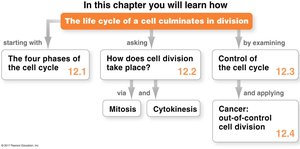
Overview of Cell Division
Cell division is a fundamental process in biology, essential for reproduction, growth, repair, and maintenance of organisms. It enables single-celled organisms to reproduce, multicellular organisms to grow from a fertilized egg, and tissues to repair or replace damaged cells. Cell division also produces gametes for sexual reproduction.
Asexual reproduction: Offspring are genetically identical to the parent, inheriting all genes from one parent.
Sexual reproduction: Offspring inherit unique sets of genes from two parents, resulting in genetic variation.
Chromosomes and Chromatin
Structure and Function
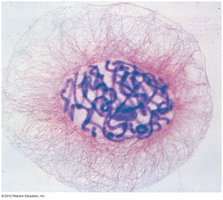
Eukaryotic chromosomes are composed of chromatin, which consists of a long DNA molecule and associated proteins. These proteins help maintain chromosome structure and regulate gene activity. Before cell division, chromatin becomes highly compact and visible under a microscope.
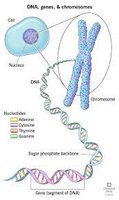
Chromosome: A single, long double helix of DNA wrapped around histone proteins.
Gene: A segment of DNA that codes for a specific RNA and, consequently, a specific protein.
Chromosome Replication
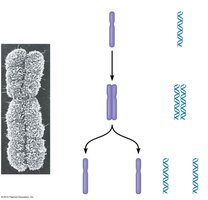
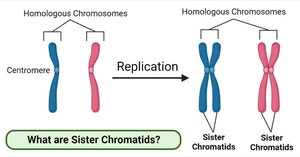
Before mitosis, each chromosome is replicated, resulting in two identical copies called sister chromatids, joined at a region called the centromere. During cell division, sister chromatids separate and are distributed to daughter cells.
The Cell Cycle: Phases and Events
Phases of the Cell Cycle
The cell cycle is an ordered sequence of events from the formation of a cell to its own division. It consists of two main stages:
Interphase: The non-dividing phase, where the cell grows and duplicates its contents.
G1 phase: Growth and increase in cytoplasm.
S phase: Duplication of chromosomes (DNA synthesis).
G2 phase: Growth and preparation for division.
Mitotic phase (M phase): Division phase, including mitosis (nuclear division) and cytokinesis (cytoplasmic division).
Events in Mitosis
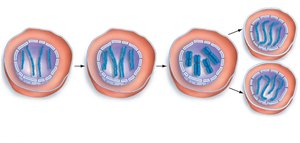
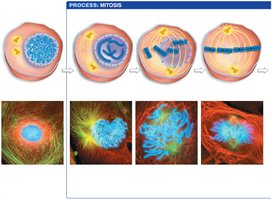
Mitosis is a continuous process divided into five subphases:
Prophase: Chromosomes condense, spindle apparatus begins to form.
Prometaphase: Nuclear envelope breaks down, microtubules attach to kinetochores.
Metaphase: Chromosomes align at the cell equator.
Anaphase: Sister chromatids separate and move to opposite poles.
Telophase: Nuclear envelope reforms, chromosomes decondense.
Cytokinesis
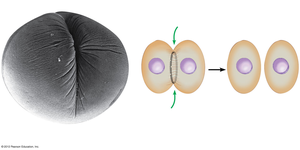
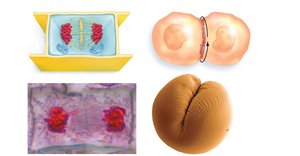
Cytokinesis is the division of the cytoplasm, resulting in two daughter cells. The process differs between animal and plant cells:
Animal cells: Cytokinesis occurs via a cleavage furrow formed by a contracting ring of microfilaments and myosin.
Plant cells: Cytokinesis occurs via a cell plate formed from vesicles containing cell wall material, which grows outward to divide the cell.
Bacterial Cell Division
Binary Fission
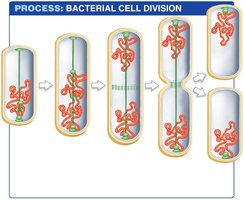
Bacteria divide by binary fission, a process similar to the M phase in eukaryotes but without a formal cell cycle. The bacterial chromosome is replicated, and proteins separate the copies and divide the cytoplasm.
Regulation of the Cell Cycle
Cell-Cycle Checkpoints
The cell cycle is tightly regulated by checkpoints that ensure proper division. There are four main checkpoints:
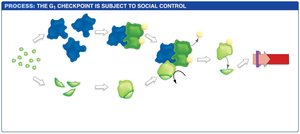
G1 checkpoint: Checks cell size, nutrients, social signals, and DNA integrity.
G2 checkpoint: Ensures chromosomes are replicated, DNA is undamaged, and MPF (Maturation Promoting Factor) is present.
M-phase checkpoints: Ensure chromosomes are attached to the spindle and properly segregated.
Checkpoint | Main Criteria |
|---|---|
G1 | Cell size, nutrients, social signals, DNA undamaged |
G2 | Chromosome replication, DNA undamaged, MPF present |
M-phase | Chromosome attachment to spindle, proper segregation |
Cancer: Out-of-Control Cell Division
Mechanisms and Consequences
Cancer is a group of diseases caused by uncontrolled cell division, invasion of tissues, and spread to other sites. It arises when cell-cycle checkpoints fail, leading to two main types of defects:
Activation of growth proteins when not needed
Failure of tumor suppressor genes to shut down the cell cycle
Summary Table: Cell Cycle Events and Regulation
Phase | Main Event | Key Structures |
|---|---|---|
G1 | Cell growth | Centrosomes, cytoplasm |
S | DNA replication | Chromosomes, nucleus |
G2 | Preparation for division | Chromosomes, centrosomes |
Mitosis | Nuclear division | Spindle, chromosomes |
Cytokinesis | Cytoplasmic division | Cleavage furrow/cell plate |
Additional info: The cell cycle is fundamental to all living organisms, and its regulation is crucial for preventing diseases such as cancer. Understanding the molecular mechanisms and checkpoints provides insight into therapeutic targets for cancer treatment.
