 Back
The Cell Cycle: Mechanisms, Regulation, and Cancer
Study Guide - Smart Notes
 Tailored notes based on your materials, expanded with key definitions, examples, and context.
The Cell Cycle
Overview and Importance
The cell cycle is the series of events that cells undergo to grow and divide. It is fundamental to the development, maintenance, and reproduction of all living organisms. Understanding the cell cycle is crucial for comprehending how cells replicate, how genetic material is distributed, and how errors in these processes can lead to diseases such as cancer.
Phases of the Cell Cycle
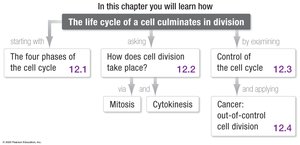
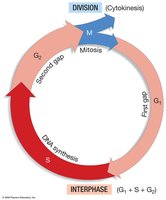
The cell cycle consists of four main phases: G1, S, G2, and M. Interphase includes G1, S, and G2, where the cell grows, replicates DNA, and prepares for division. The M phase includes mitosis and cytokinesis, where the cell divides its nucleus and cytoplasm.
G1 Phase: Cell grows and performs its normal functions.
S Phase: DNA synthesis occurs, chromosomes are replicated.
G2 Phase: Cell prepares for mitosis.
M Phase: Mitosis (nuclear division) and cytokinesis (cytoplasmic division).
Chromosomes and Their Replication
Structure and Function
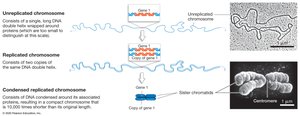
Chromosomes are long, double helices of DNA wrapped around histone proteins. Genes are regions of DNA that code for specific RNA and proteins. Before cell division, chromosomes are replicated, resulting in two identical sister chromatids joined at the centromere.
Chromatin: DNA-histone complex in a relaxed state during interphase.
Sister Chromatids: Identical copies of a chromosome, attached at the centromere.
Cell Cycle Regulation
Gap Phases and Checkpoints
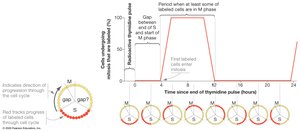
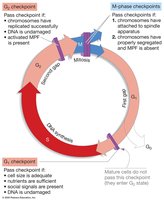
Two gap phases, G1 and G2, allow cells to grow and prepare for division. Cell cycle checkpoints ensure that cells only proceed to the next phase if conditions are favorable and DNA is undamaged.
G1 Checkpoint: Checks cell size, nutrients, signals, and DNA damage.
G2 Checkpoint: Ensures DNA replication is complete and undamaged.
M-Phase Checkpoints: Ensure proper chromosome attachment and separation.
Mitosis and Cytokinesis
Events in Mitosis
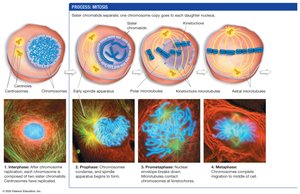
Mitosis is a continuous process divided into five subphases: prophase, prometaphase, metaphase, anaphase, and telophase. It ensures equal distribution of genetic material to daughter cells.
Prophase: Chromosomes condense, spindle apparatus forms.
Prometaphase: Nuclear envelope breaks down, microtubules attach to kinetochores.
Metaphase: Chromosomes align at the metaphase plate.
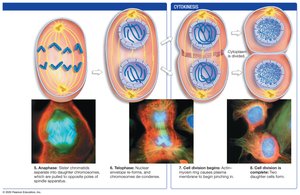
Anaphase: Sister chromatids separate and move to opposite poles.
Telophase: Nuclear envelope reforms, chromosomes decondense.
Mechanisms of Chromosome Movement
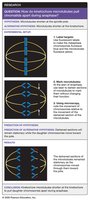
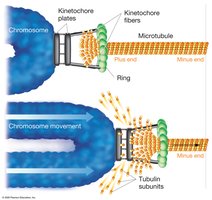
During anaphase, kinetochore microtubules shorten, pulling chromatids apart. Motor proteins and microtubule dynamics are essential for this process.
Cytokinesis
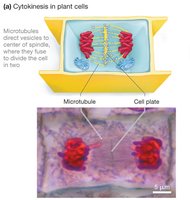
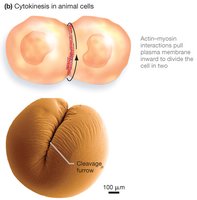
Cytokinesis divides the cytoplasm, resulting in two daughter cells. In plants, vesicles form a cell plate; in animals, a contractile ring forms a cleavage furrow.
Plant Cells: Vesicles fuse to form cell plate.
Animal Cells: Actin-myosin ring contracts to form cleavage furrow.
Bacterial Cell Division
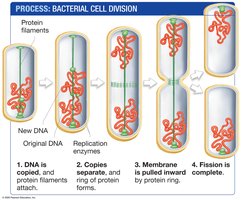
Bacteria divide by binary fission, a process similar to eukaryotic cell division but without mitosis. DNA is copied, separated, and the cell splits.
Regulation of the Cell Cycle
Cell-Cycle Regulatory Molecules
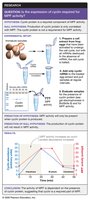
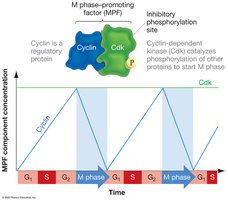
Cell cycle progression is controlled by regulatory molecules such as cyclins and cyclin-dependent kinases (Cdks). The M-phase-promoting factor (MPF) is a key regulator of mitosis.
Cyclin: Regulatory protein whose concentration fluctuates during the cell cycle.
Cdk: Protein kinase active only when bound to cyclin.
Activation and Deactivation of MPF
MPF is activated by removal of inhibitory phosphate and deactivated by negative feedback and cyclin destruction. This ensures proper timing of mitosis.
Negative Feedback: Process is slowed or stopped by its products.
Protein Destruction: Cyclin is marked for destruction, deactivating MPF.
Cancer and Loss of Cell-Cycle Control
Properties of Cancer Cells
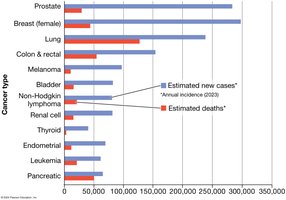
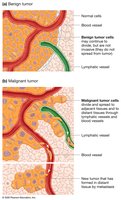
Cancer arises from defects in cell-cycle regulation, leading to uncontrolled cell division. Tumors can be benign (noninvasive) or malignant (invasive and metastatic).
Malignant Tumors: Invade tissues, spread via blood or lymph (metastasis).
Benign Tumors: Do not invade or spread.
Cell-Cycle Checkpoint Defects in Cancer
Many cancers involve defects in the G1 checkpoint, allowing cells to divide without proper signals or DNA repair. Tumor suppressor genes, such as p53, are often mutated in cancer cells.
p53 Protein: Pauses cell cycle or initiates apoptosis if DNA is damaged.
Growth Factors: Stimulate cell division; cancer cells often divide without them.
Summary Table: Cell Cycle Phases and Key Events
Phase | Main Event | Checkpoint |
|---|---|---|
G1 | Cell growth, normal function | Size, nutrients, DNA damage |
S | DNA replication | None |
G2 | Preparation for mitosis | DNA replication, damage |
M | Mitosis and cytokinesis | Chromosome attachment, separation |
Additional info: The notes expand on the original slides by providing definitions, context, and examples for each phase and regulatory mechanism. The summary table is inferred for clarity and completeness.
