 Back
The Cell Cycle: Mechanisms, Regulation, and Implications
Study Guide - Smart Notes
 Tailored notes based on your materials, expanded with key definitions, examples, and context.
The Cell Cycle
Overview: The Key Roles of Cell Division
Cell division is fundamental to the continuity of life, enabling organisms to grow, develop, and repair tissues. Multicellular organisms rely on cell division for development from a fertilized cell, growth, and repair. Some organisms can reproduce without fertilization, a process known as parthenogenesis, as observed in Komodo dragons.
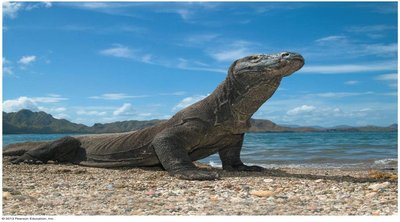
Asexual reproduction: Single-celled organisms reproduce by simple cell division, producing genetically identical offspring.
Sexual reproduction: Requires fertilization and involves meiosis, resulting in genetic diversity.
Cellular Organization of Genetic Material
Genetic information is stored in chromosomes, which are composed of chromatin (DNA and protein). Chromatin condenses during cell division to form visible chromosomes. Somatic cells contain two sets of chromosomes, while gametes have one set.
Chromosome duplication: Prior to cell division, DNA is replicated, resulting in two sister chromatids joined at the centromere.
Sister chromatids: Identical copies that separate during cell division.
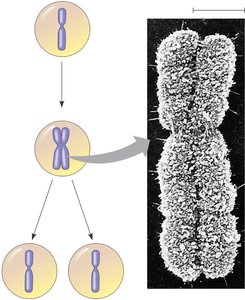
Distribution of Chromosomes During Cell Division
Cell division involves the separation of duplicated chromosomes. Eukaryotic cell division consists of mitosis (nuclear division) and cytokinesis (cytoplasmic division). In meiosis, chromosome number is reduced to produce sex cells.
Phases of the Cell Cycle
Interphase and Mitotic Phase
The cell cycle is divided into interphase and the mitotic phase. Interphase includes G1 (growth), S (DNA synthesis), and G2 (preparation for mitosis). The mitotic phase consists of mitosis and cytokinesis.
G1 phase: Cell grows and performs normal functions.
S phase: DNA is replicated.
G2 phase: Cell prepares for mitosis.
Mitosis: Five Distinct Phases
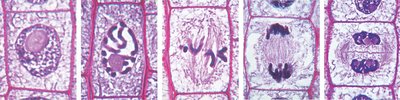
Mitosis is divided into five phases: prophase, prometaphase, metaphase, anaphase, and telophase. Each phase is characterized by specific events involving chromosomes and the mitotic spindle.
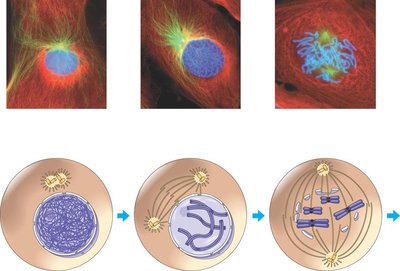
Prophase: Chromosomes condense, nucleoli disappear, spindle begins to form.
Prometaphase: Nuclear envelope breaks down, chromosomes attach to spindle via kinetochores.
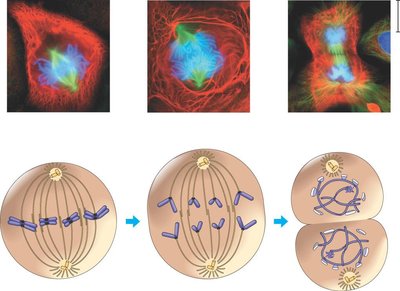
Metaphase: Chromosomes align at the metaphase plate.
Anaphase: Sister chromatids separate and move to opposite poles.
Telophase: Nuclei reform, chromosomes decondense, cytokinesis begins.
The Mitotic Spindle: Structure and Function
The mitotic spindle is a structure made of microtubules that orchestrates chromosome movement. It forms from centrosomes and includes spindle microtubules and asters. Kinetochores are protein complexes at the centromere that attach chromosomes to spindle fibers.
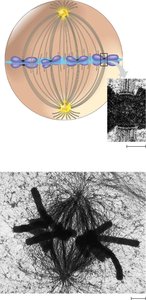
Kinetochore microtubules: Attach to chromosomes and move them to the metaphase plate.
Nonkinetochore microtubules: Overlap and elongate the cell during anaphase.

Cytokinesis: Animal vs. Plant Cells
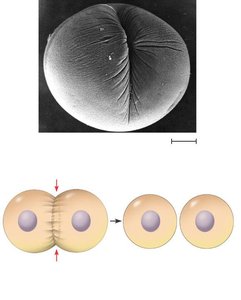
Cytokinesis in Animal Cells
In animal cells, cytokinesis occurs via cleavage, forming a cleavage furrow that pinches the cell into two daughter cells.
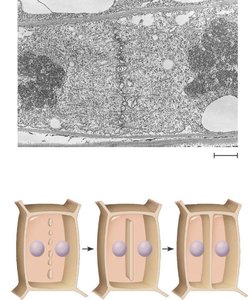
Cytokinesis in Plant Cells
In plant cells, cytokinesis involves the formation of a cell plate, which develops into a new cell wall separating the daughter cells.
Mitosis in Plant Cells: Microscopic View
Microscopic images show the stages of mitosis in plant cells, including prophase, prometaphase, metaphase, anaphase, and telophase.
Binary Fission in Prokaryotes
Mechanism of Binary Fission
Prokaryotes divide by binary fission, a simpler process than mitosis. The bacterial chromosome replicates, and the two copies move apart as the cell elongates. The plasma membrane then pinches inward, forming two daughter cells.
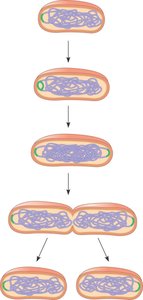
Evolution of Mitosis
Intermediate Cell Division in Protists
Mitosis likely evolved from bacterial cell division. Some protists exhibit intermediate forms of cell division, bridging binary fission and mitosis.
Regulation of the Cell Cycle
Cell Cycle Control System
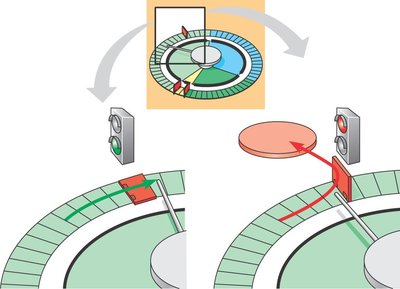
The cell cycle is regulated by a molecular control system, which acts like a clock with specific checkpoints. These checkpoints ensure that the cell only proceeds to the next phase when conditions are favorable.
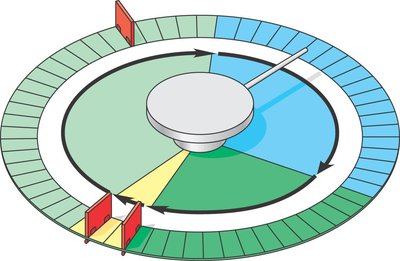
G1 checkpoint: Restriction point; cell commits to division or enters G0 (nondividing state).
G2 checkpoint: Ensures DNA replication is complete.
M checkpoint: Ensures chromosomes are properly attached to the spindle.
Cyclins and Cyclin-Dependent Kinases (Cdks)
Two types of regulatory proteins, cyclins and cyclin-dependent kinases (Cdks), control the cell cycle. Cyclins accumulate and degrade cyclically, activating Cdks to trigger cell cycle events.
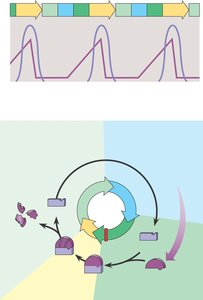
MPF (Maturation Promoting Factor): A complex of cyclin and Cdk that initiates mitosis by phosphorylating target proteins.
Phosphorylation cascade: Activates proteins required for mitosis.
Cell Cycle Regulation: Density and Anchorage Dependence
Normal Cell Behavior
Normal animal cells exhibit density-dependent inhibition and anchorage dependence. Cells stop dividing when they form a single layer and require attachment to a substratum.
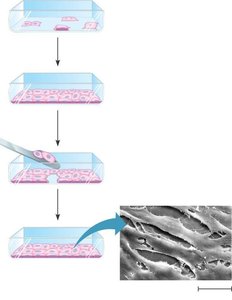
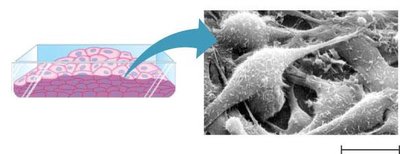
Cancer Cells: Loss of Regulation
Cancer cells do not exhibit density-dependent inhibition or anchorage dependence. They continue dividing, forming clumps and tumors. Malignant tumors invade surrounding tissues and can metastasize, spreading to other parts of the body.
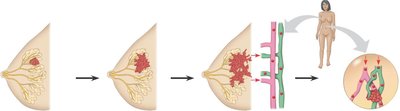
Metastasis: Cancer cells spread through blood and lymph to establish secondary tumors.
Summary Table: Comparison of Cell Division Mechanisms
Feature | Mitosis (Eukaryotes) | Binary Fission (Prokaryotes) |
|---|---|---|
Chromosome Number | Multiple, linear | Single, circular |
Spindle Apparatus | Present | Absent |
Phases | Prophase, Metaphase, Anaphase, Telophase | Continuous |
Regulation | Checkpoints, cyclins, Cdks | Simple, less regulated |
Examples | Animal, plant, fungi cells | Bacteria, archaea |
Key Terms and Concepts
Chromatin: DNA-protein complex forming chromosomes.
Centromere: Region joining sister chromatids.
Kinetochore: Protein structure for spindle attachment.
Cleavage furrow: Indentation during animal cell cytokinesis.
Cell plate: Structure forming new wall in plant cell cytokinesis.
MPF: Maturation promoting factor, triggers mitosis.
Metastasis: Spread of cancer cells to distant sites.
Important Equations
Phosphorylation reaction:
Additional info: Academic context was added to clarify the mechanisms and regulation of the cell cycle, as well as the implications for cancer biology.
