 Back
The Cell Cycle, Mitosis, and Cancer: A Comprehensive Study Guide
Study Guide - Smart Notes
 Tailored notes based on your materials, expanded with key definitions, examples, and context.
Cell Division and the Cell Cycle
Introduction to Cellular Division
Cellular division is a fundamental process essential for growth, development, and maintenance in all living organisms. It ensures the continuity of life by producing new cells for growth, tissue repair, and asexual reproduction. Abnormalities in cell division can lead to diseases such as cancer.
Growth and Development: Multicellular organisms grow by increasing their cell number through division.
Tissue Repair: Damaged or dead cells are replaced via cell division.
Asexual Reproduction: Many organisms reproduce by creating genetically identical offspring from a single parent.
Cell Division in Prokaryotes: Binary Fission
Mechanism of Binary Fission
Prokaryotic cells, such as bacteria, divide by a process called binary fission. This process is simpler than eukaryotic mitosis and results in two genetically identical daughter cells.
Step 1: The circular DNA molecule attaches to the plasma membrane.
Step 2: The DNA is replicated, producing two identical chromosomes.
Step 3: The cell elongates, and a contractile ring forms.
Step 4: The cell membrane pinches inward, dividing the cell into two.
Genetic Identity: Daughter cells are genetically identical to each other and to the parent cell.
The Eukaryotic Cell Cycle
Overview of the Cell Cycle
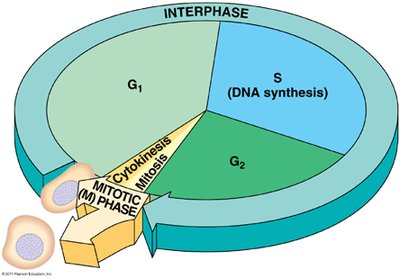
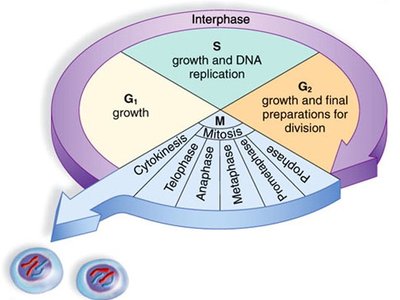
The eukaryotic cell cycle is a series of ordered events that lead to cell growth and division. It consists of interphase (G1, S, G2) and the mitotic (M) phase, which includes mitosis and cytokinesis.
Interphase: The cell grows, replicates its DNA, and prepares for division.
M Phase: The cell undergoes mitosis (nuclear division) and cytokinesis (cytoplasmic division).
Phases of Interphase
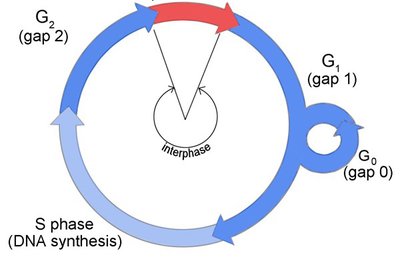
G1 (First Gap): Cell grows and carries out normal functions.
S (Synthesis): DNA is replicated, resulting in duplicated chromosomes.
G2 (Second Gap): Cell prepares for mitosis; additional growth and protein synthesis occur.
G0 Phase
Some cells exit the cell cycle and enter a quiescent state called G0, where they do not divide. Examples include most neurons and muscle cells.
DNA Replication and Chromosome Structure
DNA Replication in S Phase
During the S phase, the cell duplicates its DNA, ensuring that each daughter cell receives an identical set of chromosomes. The process involves:
Unwinding the DNA double helix
Synthesizing new complementary strands
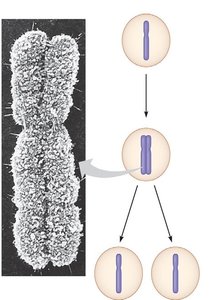
After replication, each chromosome consists of two sister chromatids joined at a region called the centromere.
Chromatin vs. Chromosomes
Chromatin is the loosely packed form of DNA present during interphase, while chromosomes are the condensed, visible structures seen during mitosis.
Mitosis: Division of the Nucleus
Stages of Mitosis
Mitosis is the process by which the nucleus divides, distributing identical sets of chromosomes to two daughter nuclei. It consists of several stages:
Prophase: Chromatin condenses into visible chromosomes; spindle apparatus begins to form.
Prometaphase: Nuclear envelope breaks down; spindle fibers attach to kinetochores.
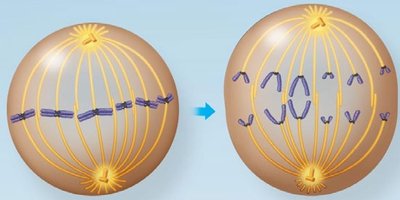
Metaphase: Chromosomes align at the cell's equatorial plate.
Anaphase: Sister chromatids are pulled apart toward opposite poles.
Telophase: Nuclear envelopes reform around the separated chromosomes.
Mitotic Spindle and Chromosome Movement
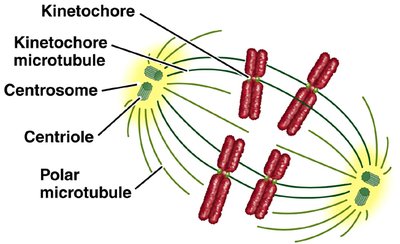
The mitotic spindle is a structure made of microtubules that organizes and separates chromosomes during mitosis. Key components include:
Centrosomes: Organize spindle microtubules.
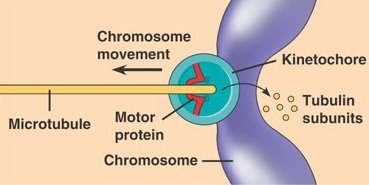
Microtubules: Attach to chromosomes at kinetochores and help move them.
Kinetochores: Protein complexes on the centromere where spindle fibers attach.
Metaphase and Anaphase
During metaphase, chromosomes align at the metaphase plate. In anaphase, sister chromatids are separated and pulled to opposite poles by the shortening of kinetochore microtubules and the action of motor proteins.
Cytokinesis: Division of the Cytoplasm
Mechanisms of Cytokinesis
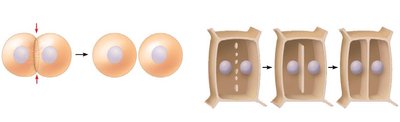
Cytokinesis is the process by which the cytoplasm divides, resulting in two separate daughter cells. The mechanism differs between animal and plant cells:
Animal Cells: A contractile ring forms a cleavage furrow that pinches the cell in two.
Plant Cells: Vesicles form a cell plate that develops into a new cell wall, separating the two daughter cells.
Regulation of the Cell Cycle
Cell Cycle Checkpoints
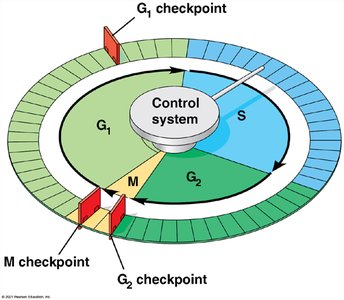
The cell cycle is tightly regulated by checkpoints that ensure each phase is completed accurately before the next begins. Major checkpoints include:
G1 Checkpoint (Restriction Point): Determines if the cell will proceed with division or enter G0.
G2 Checkpoint: Ensures DNA replication is complete and undamaged before mitosis.
M Checkpoint: Ensures all chromosomes are properly attached to the spindle before anaphase.
Molecular Control: Cyclins and Cdks
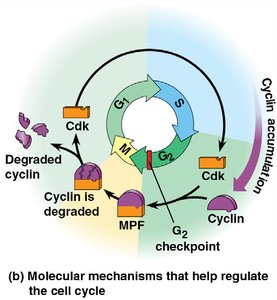
Progression through the cell cycle is controlled by cyclin-dependent kinases (Cdks) and their regulatory proteins, cyclins. The activity of Cdks fluctuates with cyclin concentration, driving the cell through different phases.
Mutations and Cancer
DNA Mutations
Mutations are changes in the DNA sequence that can occur spontaneously during replication or be induced by external factors (mutagens such as UV light or chemicals). Types include:
Point Mutations: Substitutions, insertions, or deletions of one or a few nucleotides.
Chromosomal Rearrangements: Large-scale changes affecting chromosome structure.
Cells have proofreading and repair mechanisms that keep mutation rates low (about 1 error per 109 to 1010 base pairs).
Types of Mutations: Germline vs. Somatic
Type | Description | Inheritance |
|---|---|---|
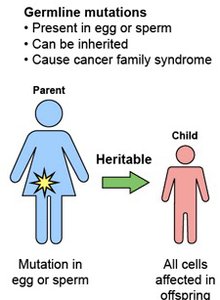
Germline Mutation | Occurs in egg or sperm; present in all cells of offspring | Heritable |
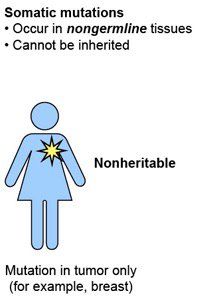
Somatic Mutation | Occurs in non-germline tissues; affects only some cells | Not heritable |
Cancer: Uncontrolled Cell Division
Cancer arises from the accumulation of mutations that disrupt normal cell cycle regulation, leading to uncontrolled cell growth and division. Key features of cancer cells include:
Dedifferentiation: Loss of specialized cell characteristics.
Immune Evasion: Not recognized as abnormal by the immune system.
Metastasis: Ability to invade other tissues and form secondary tumors.
Loss of Cell Cycle Control: Ignore signals that normally inhibit division.
Cancer and Aging
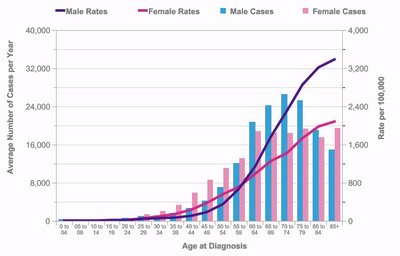
The risk of developing cancer increases with age due to the accumulation of mutations over time. Most cancers require multiple mutations to develop, explaining their higher incidence in older individuals.
Key Vocabulary
Asexual reproduction: Production of offspring from a single parent without genetic recombination.
Binary fission: Prokaryotic cell division producing two identical cells.
Centromere: Region joining sister chromatids.
Centrosome: Organelle organizing microtubules during mitosis.
Chromatin: Loosely packed DNA and proteins in the nucleus.
Chromosome: Condensed DNA structure visible during mitosis.
Kinetochore: Protein complex on the centromere where spindle fibers attach.
Mutation: Change in DNA sequence.
Mutagen: Agent causing mutations.
Differentiation: Process by which cells become specialized.
Summary Table: Stages of the Eukaryotic Cell Cycle
Stage | Main Events |
|---|---|
G1 | Cell growth, normal metabolism |
S | DNA replication |
G2 | Preparation for mitosis |
Mitosis | Nuclear division (prophase, prometaphase, metaphase, anaphase, telophase) |
Cytokinesis | Cytoplasmic division |
Additional info:
Cells that cannot divide (e.g., neurons) remain in G0 and perform specialized functions.
Stem cells retain the ability to divide and differentiate into various cell types.
