 Back
The Cell Cycle: Regulation, Phases, and Cellular Consequences
Study Guide - Smart Notes
 Tailored notes based on your materials, expanded with key definitions, examples, and context.
Chapter 12: The Cell Cycle
Introduction to the Cell Cycle
The cell cycle is a fundamental process by which cells grow, replicate their DNA, and divide to produce genetically identical daughter cells. This process is essential for growth, development, tissue renewal, and asexual reproduction in unicellular organisms.
Cell Division and Its Importance
Cell Division: The process by which a parent cell divides into two daughter cells. In multicellular organisms, this enables growth, development, and tissue repair. In unicellular organisms, it serves as a means of reproduction (asexual reproduction).
Genetic Consistency: Accurate duplication and segregation of genetic material ensure that daughter cells are genetically identical to the parent cell.
Organization of Genetic Material
Chromatin, Chromosomes, and Sister Chromatids
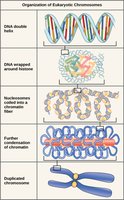
Genetic material in eukaryotic cells is organized as chromatin, a complex of DNA and proteins. During cell division, chromatin condenses into visible chromosomes, each consisting of two sister chromatids joined at a centromere.
Chromatin: Dispersed DNA-protein complex, not visible under a light microscope.
Chromosomes: Highly condensed, linear DNA molecules visible during cell division.
Sister Chromatids: Identical copies of a chromosome, joined together before cell division.
Eukaryotic Chromosome Number
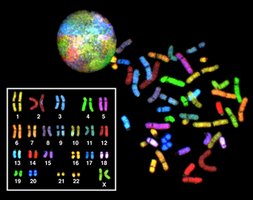
Human somatic cells contain 46 chromosomes (23 pairs).
Gametes (sperm and egg cells) contain 23 chromosomes.
Phases of the Cell Cycle
Overview of the Cell Cycle
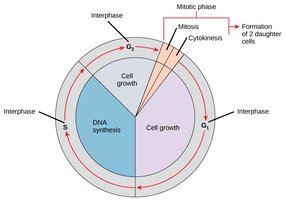
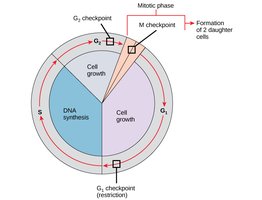
The cell cycle consists of interphase (G1, S, G2 phases) and the mitotic (M) phase, which includes mitosis and cytokinesis.
Interphase: Accounts for 90% of the cell cycle; includes cell growth and DNA replication.
M Phase: Division of the nucleus (mitosis) and cytoplasm (cytokinesis).
Subphases of Mitosis
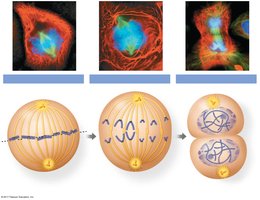
Prophase: Chromatin condenses into chromosomes; mitotic spindle forms; centrosomes move apart.
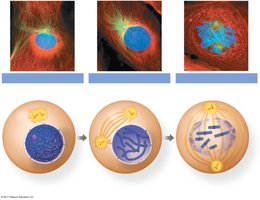
Prometaphase: Nuclear envelope fragments; spindle microtubules attach to kinetochores.
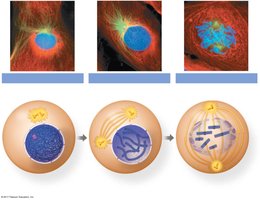
Metaphase: Chromosomes align at the metaphase plate; spindle fibers attach to kinetochores.
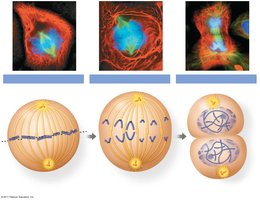
Anaphase: Sister chromatids separate and move toward opposite poles.
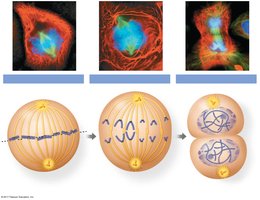
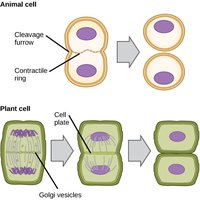
Telophase and Cytokinesis: Nuclear envelopes reform; chromosomes decondense; cytoplasm divides.
Regulation of the Cell Cycle
Cell Cycle Control System
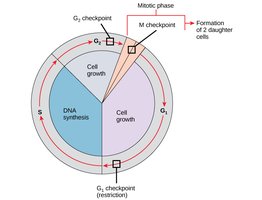
The cell cycle is tightly regulated by a control system consisting of checkpoints and regulatory proteins. This ensures proper DNA replication and division, preventing errors that could lead to diseases such as cancer.
Checkpoints: Critical control points at G1, G2, and M phases where the cell assesses readiness to proceed.
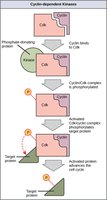
Regulatory Proteins: Cyclin-dependent kinases (Cdks) and cyclins regulate progression through the cell cycle.
Cyclin and Cdk Dynamics
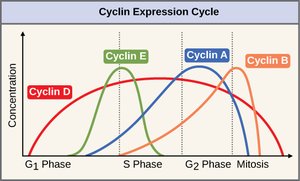
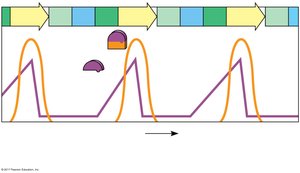
Cyclin concentrations fluctuate throughout the cell cycle, activating Cdks at specific checkpoints. The maturation-promoting factor (MPF) is a key Cdk-cyclin complex that triggers mitosis.
Consequences of Checkpoint Failure
If checkpoints are missed, cells may accumulate mutations, leading to uncontrolled division or cancer. Cells that fail to pass checkpoints may enter a non-dividing state (G0 phase) until reactivated by external signals such as growth factors.
Apoptosis: Programmed Cell Death
Mechanisms and Functions
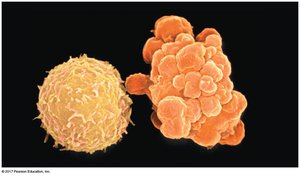
Apoptosis is a regulated process of cell death that removes damaged, infected, or unnecessary cells without causing inflammation. It involves fragmentation of DNA and organelles, cell shrinkage, and packaging of cell remnants for removal by phagocytes.
Triggers: External signals (e.g., death ligands), internal signals (e.g., DNA damage, misfolded proteins), and developmental cues.
Caspases: A family of proteases that execute apoptosis in a cascade.
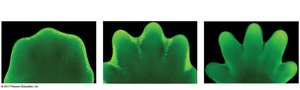
Developmental Role: Apoptosis shapes structures during development, such as removing interdigital tissue to form fingers and toes.
Loss of Cell Cycle Control and Cancer
Characteristics of Cancer Cells
Unregulated Division: Cancer cells divide without the need for growth factors and evade apoptosis.
Transformation: Cells that acquire the ability to divide indefinitely are termed transformed.
Tumor Formation: Benign tumors remain localized; malignant tumors invade tissues and can metastasize.
Treatment: Radiation targets DNA; chemotherapy targets rapidly dividing cells by interfering with the cell cycle.
Summary Table: Key Cell Cycle Checkpoints
Checkpoint | Main Function | Key Regulatory Proteins |
|---|---|---|
G1 | Assesses DNA integrity before replication | Cyclin D, Cdk4/6 |
G2 | Checks for proper DNA replication | Cyclin A, Cdk2 |
M | Ensures chromosomes are attached to spindle | Cyclin B, Cdk1 (MPF) |
Additional info: The cell cycle is a highly conserved process across eukaryotes, and its dysregulation is a hallmark of many diseases, especially cancer. Understanding the molecular mechanisms of cell cycle control is crucial for developing targeted therapies.
