 Back
The Cell Cycle: Structure, Function, and Regulation
Study Guide - Smart Notes
 Tailored notes based on your materials, expanded with key definitions, examples, and context.
The Cell Cycle
Introduction to the Cell Cycle
The cell cycle is a fundamental process in biology, responsible for the growth, development, and maintenance of all living organisms. It encompasses the series of events that cells undergo to divide and produce genetically identical daughter cells. Understanding the cell cycle is essential for comprehending how organisms develop, repair tissues, and reproduce.
Concept 12.1: Most Cell Division Results in Genetically Identical Daughter Cells
Key Roles of Cell Division
Cell division is crucial for the continuity of life, enabling organisms to produce more of their own kind. It serves several important functions:
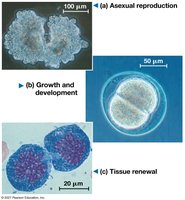
Asexual reproduction: Single-celled organisms reproduce by dividing into new organisms.
Growth and development: Multicellular organisms grow from a single cell through repeated cell divisions.
Tissue renewal: Cell division replaces damaged or dead cells in multicellular organisms.
Genetic Material Organization
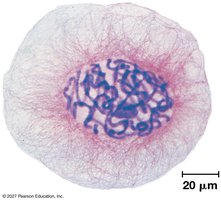
All the DNA in a cell constitutes its genome. In prokaryotes, the genome is typically a single DNA molecule, while in eukaryotes, it consists of multiple DNA molecules packaged into chromosomes. Chromosomes carry genes and are composed of chromatin, a complex of DNA and protein that condenses during cell division.
Somatic Cells vs. Gametes
Somatic cells: Nonreproductive cells with two sets of chromosomes.
Gametes: Reproductive cells (sperm and eggs) with half the chromosome number of somatic cells.
Chromosome Duplication and Distribution
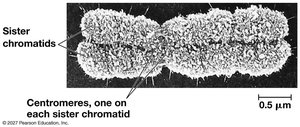
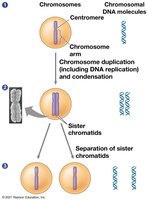
Before cell division, DNA is replicated and chromosomes condense. Each duplicated chromosome consists of two sister chromatids joined at the centromere. During cell division, sister chromatids separate and are distributed to two daughter cells, ensuring genetic continuity.
Types of Cell Division
Mitosis: Division of the genetic material in the nucleus, producing genetically identical daughter cells.
Cytokinesis: Division of the cytoplasm, resulting in two separate cells.
Meiosis: Specialized division producing gametes with half the chromosome number, yielding genetically diverse cells.
Concept 12.2: The Mitotic Phase Alternates with Interphase in the Cell Cycle
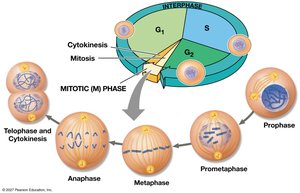
Phases of the Cell Cycle
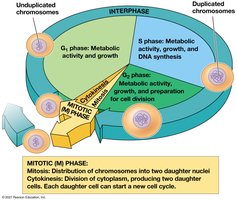
The cell cycle consists of two main phases:
Mitotic (M) phase: Includes mitosis and cytokinesis.
Interphase: Period of cell growth and chromosome duplication, divided into three subphases:
G1 phase: Metabolic activity and growth.
S phase: DNA synthesis and chromosome duplication.
G2 phase: Preparation for cell division.
Stages of Mitosis
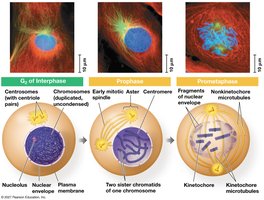
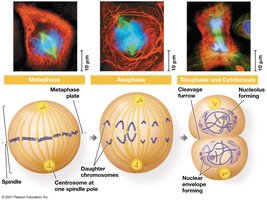
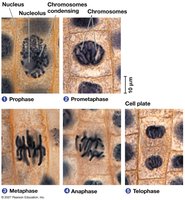
Mitosis is conventionally divided into five stages:
Prophase
Prometaphase
Metaphase
Anaphase
Telophase
The Mitotic Spindle
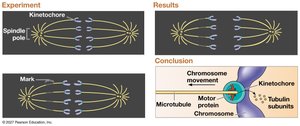
The mitotic spindle is a structure made of microtubules that controls chromosome movement during mitosis. It includes centrosomes, spindle microtubules, and asters. Chromosomes align at the metaphase plate, and kinetochores attach to spindle microtubules.
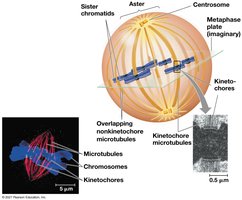
Chromosome Movement During Anaphase
During anaphase, sister chromatids are separated by the enzyme separase and move toward opposite poles. Motor proteins and microtubule depolymerization facilitate this movement.
Cytokinesis
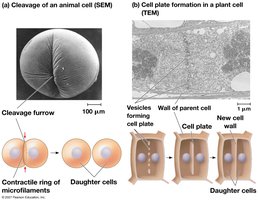
Cytokinesis differs in animal and plant cells:
Animal cells: Occurs by cleavage, forming a cleavage furrow.
Plant cells: Occurs by cell plate formation, leading to a new cell wall.
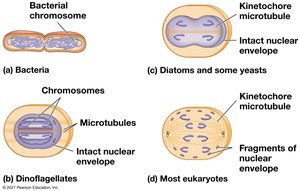
Binary Fission in Bacteria
Mechanism of Binary Fission
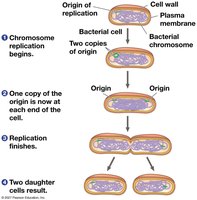
Prokaryotes reproduce by binary fission, a process where the chromosome replicates and the cell divides into two daughter cells. This mechanism is simpler than mitosis and is believed to be the evolutionary precursor to eukaryotic cell division.
Concept 12.3: Regulation of the Eukaryotic Cell Cycle
The Cell Cycle Control System
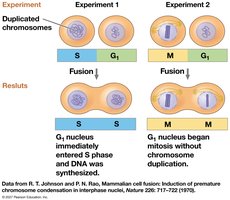
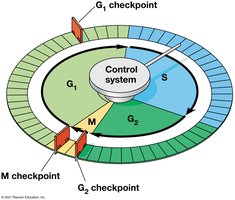
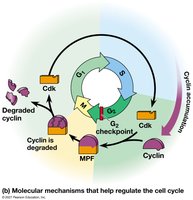
The cell cycle is regulated by a molecular control system, which ensures proper timing and coordination of cell division. This system includes checkpoints that monitor internal and external signals.
Cyclins and Cyclin-Dependent Kinases (Cdks)
Two types of regulatory proteins control the cell cycle:
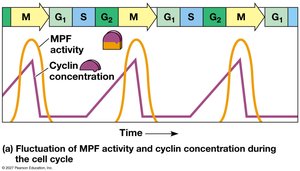
Cyclins: Proteins with cyclically fluctuating concentrations.
Cyclin-dependent kinases (Cdks): Enzymes that must bind cyclins to be active.
The MPF (maturation-promoting factor) is a cyclin-Cdk complex that triggers passage through the G2 checkpoint into the M phase.
Cell Cycle Checkpoints
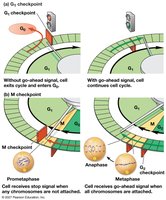
Checkpoints are control points where the cell cycle can be halted until certain conditions are met. The most important checkpoints are:
G1 checkpoint: Determines if the cell will proceed with division.
G2 checkpoint: Ensures DNA replication is complete.
M checkpoint: Ensures chromosomes are properly attached to the spindle before anaphase.
Internal and External Signals
Cell division is influenced by internal surveillance mechanisms and external factors:
Internal signals: Ensure proper chromosome attachment before anaphase.
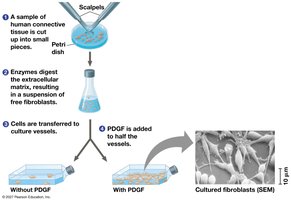
External signals: Include growth factors such as PDGF, which stimulate cell division.
Density-Dependent Inhibition and Anchorage Dependence
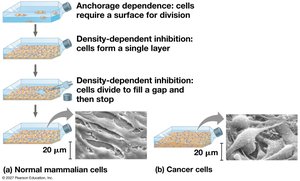
Normal cells stop dividing when crowded (density-dependent inhibition) and require attachment to a surface (anchorage dependence). Cancer cells lack these regulatory mechanisms, leading to uncontrolled growth.
Loss of Cell Cycle Controls in Cancer Cells
Cancer Cell Characteristics
Cancer cells do not respond to normal cell cycle controls. They may:
Produce their own growth factors
Convey growth factor signals without external presence
Have abnormal cell cycle control systems
Tumor Formation and Metastasis
Benign tumors: Remain at the original site and are usually not harmful.
Malignant tumors: Invade surrounding tissues and can spread (metastasize) to other parts of the body.
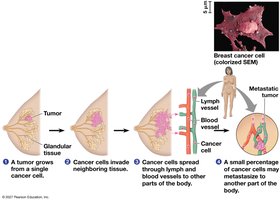
Cancer Treatment and Research
Metastatic tumors are treated with chemotherapeutic drugs targeting the cell cycle. Side effects arise from effects on normal dividing cells. Advances in molecular biology are leading to more personalized cancer treatments.
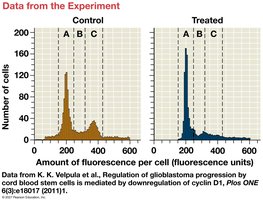
Skills Exercise: Interpreting Histograms
Histograms are used to analyze cell cycle progression and effects of treatments on cell division. For example, fluorescence intensity can indicate the amount of DNA or cell cycle phase.
Summary of Key Concepts: Mitotic (M) Phase
The mitotic phase includes the sequential stages of mitosis and cytokinesis, resulting in two genetically identical daughter cells. Each stage is characterized by specific structural and molecular events.
Test Your Understanding
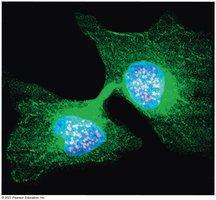
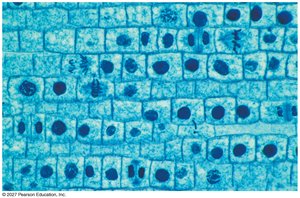
Questions and exercises often use images of cells in various stages of the cell cycle, such as onion root tip cells or HeLa cancer cells, to reinforce concepts and assess comprehension.
Additional info: The notes above expand on brief points from the original materials, providing definitions, examples, and academic context for clarity and completeness.
