 Back
The Cell Cycle: Structure, Function, and Regulation
Study Guide - Smart Notes
 Tailored notes based on your materials, expanded with key definitions, examples, and context.
The Cell Cycle
Key Roles of Cell Division
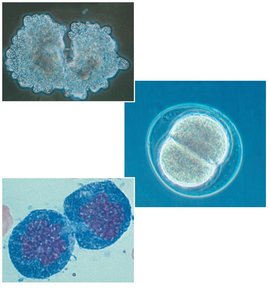
Cell division is fundamental to life, enabling reproduction, growth, renewal, and repair in organisms. It distinguishes living things from nonliving matter by ensuring continuity of life through the reproduction of cells.
Reproduction: Unicellular organisms reproduce by cell division, creating genetically identical offspring.
Growth and Development: Multicellular organisms rely on cell division for development from a fertilized cell, growth, and tissue repair.
Renewal and Repair: Cell division replaces damaged or dead cells, maintaining tissue health.
Chromatin, Chromosomes, and Genomes
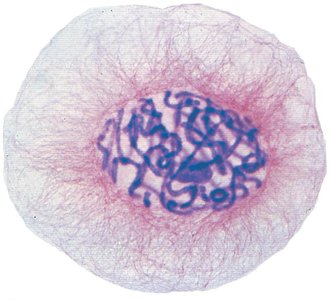
The genetic material of a cell is organized into chromatin, chromosomes, and genomes. Understanding their relationships is essential for grasping cell division.
Genome: All the DNA in a cell; can be a single DNA molecule (prokaryotes) or multiple DNA molecules (eukaryotes).
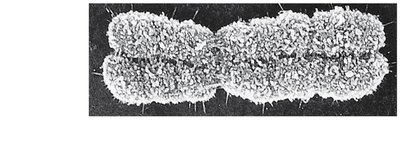
Chromosomes: DNA molecules packaged with proteins; each species has a characteristic number.
Chromatin: The complex of DNA and protein that condenses to form chromosomes during cell division.
Somatic Cells vs. Gametes
Cells are classified based on their role in reproduction.
Somatic cells: Nonreproductive cells; contain two sets of chromosomes (diploid).
Gametes: Reproductive cells (sperm and eggs); contain one set of chromosomes (haploid).
The Mitotic Cell Cycle
Phases of the Cell Cycle
The cell cycle consists of distinct phases that prepare the cell for division and execute the process.
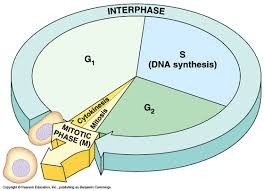
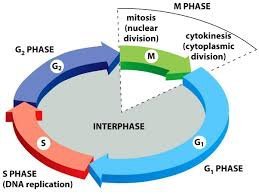
Interphase: The period of cell growth and DNA replication; subdivided into G1 (first gap), S (synthesis), and G2 (second gap).
Mitotic (M) phase: Includes mitosis (nuclear division) and cytokinesis (cytoplasmic division).
Phases of Mitosis
Mitosis is divided into several stages, each characterized by specific events.
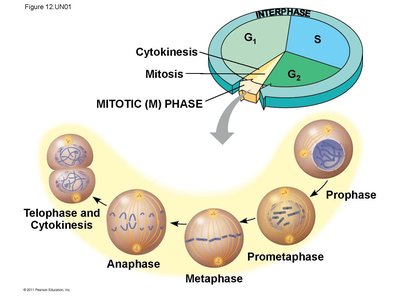
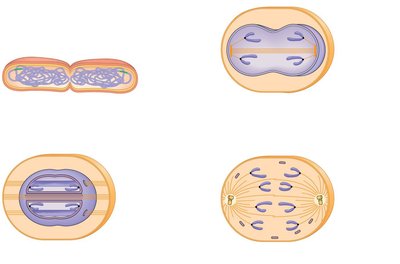
Prophase: Chromosomes condense, spindle apparatus forms.
Prometaphase: Nuclear envelope breaks down, spindle fibers attach to kinetochores.
Metaphase: Chromosomes align at the metaphase plate.
Anaphase: Sister chromatids separate and move to opposite poles.
Telophase: Nuclear envelopes reform, chromosomes decondense.
Cytokinesis: Division of cytoplasm, resulting in two daughter cells.
Mitotic Spindle Structure
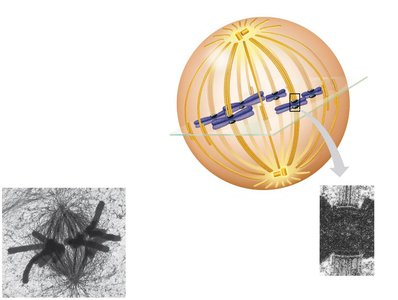
The mitotic spindle is essential for chromosome movement during mitosis. It consists of microtubules, centrosomes, kinetochores, and asters.
Centrosomes: Microtubule organizing centers; replicate and migrate to opposite poles.
Kinetochores: Protein complexes at centromeres; attach to spindle microtubules.
Asters: Radial arrays of microtubules extending from centrosomes.
Kinetochore microtubules: Attach to chromosomes and move them.
Nonkinetochore microtubules: Overlap and elongate the cell during division.
Regulation of the Cell Cycle
Cell Cycle Control System
The cell cycle is regulated by a molecular control system, ensuring proper timing and fidelity of cell division.
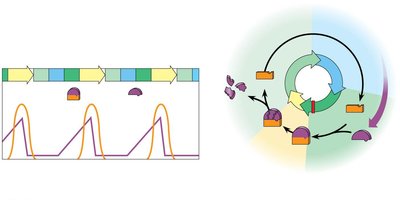
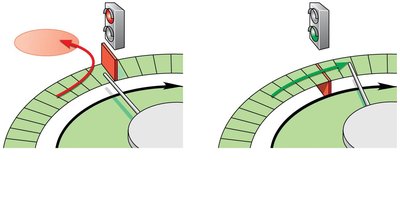
Checkpoints: Control points where the cell cycle can be halted until conditions are favorable.
Cyclins: Regulatory proteins whose levels fluctuate during the cell cycle.
Cyclin-dependent kinases (Cdks): Enzymes activated by cyclins; drive cell cycle progression.
MPF (Maturation-Promoting Factor): Cyclin-Cdk complex that triggers entry into M phase.
Internal and External Factors
Cell cycle progression is influenced by internal surveillance mechanisms and external signals.
Internal signals: Ensure chromosomes are properly attached before anaphase.
External signals: Include growth factors, density-dependent inhibition, and anchorage dependence.
G0 phase: Nondividing state entered if the cell does not receive a go-ahead signal at the G1 checkpoint.
Binary Fission in Bacteria
Prokaryotes reproduce by binary fission, a simpler form of cell division.
Chromosome replication: Begins at the origin of replication.
Segregation: Daughter chromosomes move apart.
Division: Plasma membrane pinches inward, forming two cells.
Loss of Cell Cycle Controls in Cancer Cells
Cancer cells evade normal cell cycle regulation, leading to uncontrolled growth and tumor formation.
Transformation: Conversion of a normal cell to a cancerous cell.
Benign tumors: Remain at the original site.
Malignant tumors: Invade tissues and metastasize to other parts of the body.
Cancer treatments: Include radiation and chemotherapy targeting cell cycle regulation.
Summary Table: Cell Cycle Phases and Key Events
Phase | Main Events |
|---|---|
G1 | Cell growth, preparation for DNA replication |
S | DNA synthesis, chromosome duplication |
G2 | Further growth, preparation for mitosis |
M (Mitosis) | Division of nucleus and cytoplasm |
Key Equations
DNA Replication:
Chromosome Number in Mitosis: (daughter cells are genetically identical to parent)
Additional info: These notes expand on the original content by providing definitions, examples, and a summary table for clarity. Images included are directly relevant to the explanation of each paragraph.
