 Back
The Cell Cycle: Structure, Function, and Regulation
Study Guide - Smart Notes
 Tailored notes based on your materials, expanded with key definitions, examples, and context.
The Cell Cycle
Key Roles of Cell Division
Cell division is fundamental to life, enabling organisms to reproduce, grow, and repair tissues. In unicellular organisms, division of one cell reproduces the entire organism. In multicellular eukaryotes, cell division is essential for development from a fertilized egg, growth, and tissue repair.
Asexual reproduction: Single-celled organisms reproduce by cell division.
Growth and development: Multicellular organisms grow by increasing cell number through division.
Tissue renewal: Damaged or old cells are replaced by new cells via division.
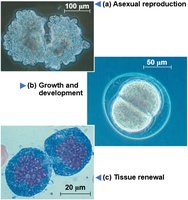
Introduction to Cell Division
Cells arise only through the division of preexisting cells. There are two main types of cell division: mitosis and meiosis. Both processes are accompanied by cytokinesis, the division of the cytoplasm into two distinct daughter cells.
Mitosis: Produces two genetically identical daughter cells.
Meiosis: Produces four genetically distinct daughter cells (gametes).
Cytokinesis: Physical separation of the cytoplasm following nuclear division.
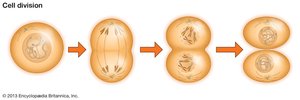
Contrasting Mitosis and Meiosis
Mitosis and meiosis are distinct processes with different outcomes and purposes.
Mitosis: Occurs in somatic cells; results in two daughter cells identical to the parent cell.
Meiosis: Occurs in germ cells; results in four gametes with half the genetic material of the parent cell.
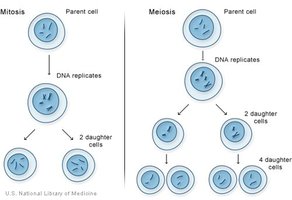
Cellular Organization of Genetic Material
All the DNA in a cell constitutes its genome. DNA molecules carry genes and are packaged as chromosomes. Different organisms have different numbers of chromosomes.
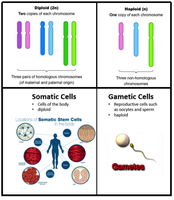
Somatic cells: Have two sets of chromosomes (diploid, 2n).
Gametes: Have one set of chromosomes (haploid, n).
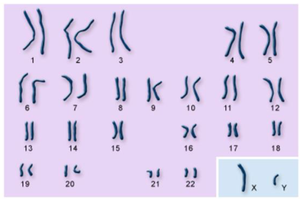
Humans: Have 46 chromosomes (2n = 46), arranged in pairs.
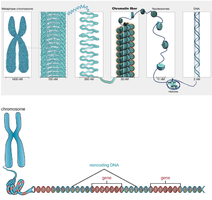
How Do Cells Replicate?
A chromosome is a structure consisting of DNA and associated proteins that carries genetic information. Chromosomes can be unreplicated (single DNA strand) or replicated (two sister chromatids).
Sister chromatids: Identical copies of a chromosome joined at the centromere.
Centromere: Region where sister chromatids are attached.
The Cell Cycle: Phases and Regulation
The cell cycle is divided into distinct phases: Growth Phase 1 (G1), Synthesis (S), Growth Phase 2 (G2), Mitosis (M), and Cytokinesis. Each phase has specific functions and checkpoints to ensure proper cell division.
G1 (First Gap): Cell grows, metabolic activity is high, organelles are duplicated.
S (Synthesis): DNA is replicated.
G2 (Second Gap): Final preparation for cell division, organization of the mitotic spindle.
M (Mitosis): Nucleus divides, sister chromatids are separated.
Cytokinesis: Cytoplasm divides, forming two daughter cells.
Cell Cycle Checkpoints
Checkpoints are control mechanisms that ensure the cell is ready to proceed to the next phase. If errors are detected, guardian proteins halt the cycle for repair. If errors are irreparable, the cell may enter G0 (quiescence) or undergo apoptosis (programmed cell death). Malfunction of these checkpoints can lead to cancer.
G1 checkpoint: Checks for cell size, nutrients, growth factors, and DNA damage.
G2 checkpoint: Ensures DNA replication is complete and checks for DNA damage.
M checkpoint: Ensures all chromosomes are properly attached to the spindle before division.
Phases of Mitosis
Mitosis is divided into five phases: Prophase, Prometaphase, Metaphase, Anaphase, and Telophase (PPMAT). Each phase involves specific changes in chromosome structure and cell organization.
Prophase: Chromosomes condense, spindle forms.
Prometaphase: Nuclear envelope fragments, spindle fibers attach to chromosomes.
Metaphase: Chromosomes align at the metaphase plate.
Anaphase: Sister chromatids separate and move to opposite poles.
Telophase: Nuclear envelope reforms, chromosomes decondense.
Cytokinesis in Animal and Plant Cells
Cytokinesis differs between animal and plant cells. In animal cells, a cleavage furrow forms and pinches the cell in two. In plant cells, a cell plate forms, eventually becoming the new cell wall.
Learning Objectives
Identify chromosomes, chromatids, sister chromatids, and homologous chromosomes in cell images.
Explain the stages of mitosis and the structure of chromosomes at each stage.
Distinguish between the sequence of major events in the cell cycle (M, G1, S, G2).
Predict consequences of altering cell cycle stages and explain checkpoint mechanisms.
Key Terms and Definitions
Chromosome: DNA-protein structure carrying genetic information.
Chromatid: One of two identical halves of a replicated chromosome.
Homologous chromosomes: Chromosome pairs, one from each parent, with similar structure and gene content.
Diploid (2n): Two sets of chromosomes.
Haploid (n): One set of chromosomes.
Somatic cell: Any cell of the body except gametes.
Gamete: Reproductive cell (egg or sperm).
Equations and Formulas
Chromosome number in humans:
Diploid:
Haploid:
Summary Table: Mitosis vs. Meiosis
Process | Number of Daughter Cells | Genetic Content | Function |
|---|---|---|---|
Mitosis | 2 | Identical to parent | Growth, repair, asexual reproduction |
Meiosis | 4 | Half genetic content, unique | Sexual reproduction |
Additional info:
Some details about chromosome structure and cell cycle regulation were inferred for completeness and clarity.
