 Back
The Cell Cycle: Structure, Function, and Division in Eukaryotes and Prokaryotes
Study Guide - Smart Notes
 Tailored notes based on your materials, expanded with key definitions, examples, and context.
Cell Theory and Cellular Organization
Cell Theory
The cell theory is a foundational concept in biology, stating that all living things are composed of cells, the cell is the smallest unit of life, and new cells arise only from pre-existing cells. This principle underlies all biological processes involving growth, development, and reproduction.
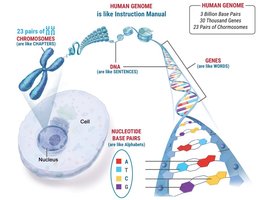
Cellular Organization of Genetic Material
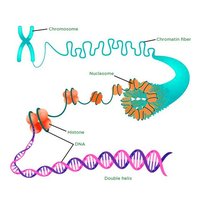
Genome: The complete set of DNA in a cell, which may consist of one or multiple DNA molecules.
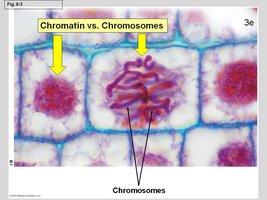
Chromatin: DNA and associated proteins in a relaxed form, allowing transcription.
Chromosome: Condensed form of chromatin, visible during cell division.
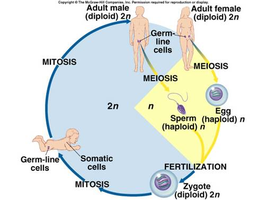
Key Roles of Cell Division
Growth, Development, and Maintenance
Cell division is essential for the continuity of life, enabling organisms to grow, develop, and repair tissues. There are two main types of cell division:
Mitosis: Produces genetically identical cells for growth and maintenance.
Meiosis: Produces gametes for sexual reproduction, ensuring genetic diversity.
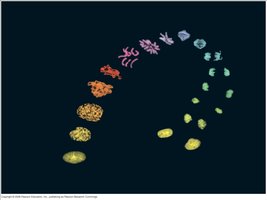
Asexual vs. Sexual Reproduction
Types of Reproduction
Asexual reproduction results in offspring genetically identical to the parent, while sexual reproduction involves gamete formation and fusion, producing genetically diverse offspring.
Asexual Reproduction: Includes binary fission, mitosis, budding, regeneration, fragmentation, and agamogenesis.
Sexual Reproduction: Involves meiosis and fertilization.
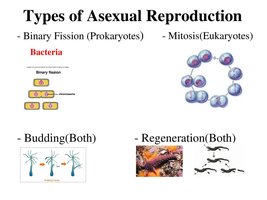
Cell Division in Prokaryotes: Binary Fission
Binary Fission Process
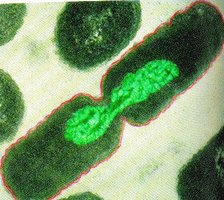
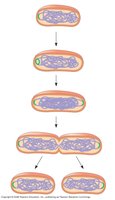
Prokaryotes reproduce by binary fission, a simple process where the chromosome replicates, daughter chromosomes move apart, and the cell divides into two identical cells.
Step 1: Chromosome replication begins at the origin of replication.
Step 2: Two copies of the chromosome are distributed to opposite ends.
Step 3: The cell membrane grows and divides the cell.
Cell Division in Eukaryotes: Mitosis and Meiosis
Mitosis
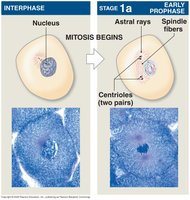
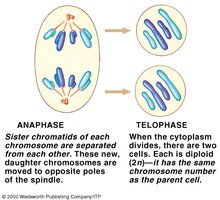
Mitosis is the process by which somatic cells divide, producing two genetically identical daughter cells. It is crucial for growth, tissue repair, and maintenance in multicellular organisms.
Phases of Mitosis: Prophase, Metaphase, Anaphase, Telophase, Cytokinesis
Key Events: Chromatin condenses, chromosomes align, sister chromatids separate, nuclear envelope reforms, cytoplasm divides.
Meiosis
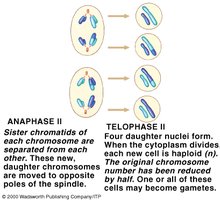
Meiosis is the process by which germ cells divide to produce gametes (sperm and egg), reducing chromosome number by half and increasing genetic diversity through recombination.
Phases: Meiosis I and Meiosis II, each with prophase, metaphase, anaphase, and telophase.
Result: Four haploid cells, each genetically unique.
Cell Cycle: Structure and Regulation
Main Phases of the Cell Cycle
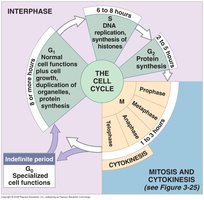
The cell cycle consists of interphase (G1, S, G2) and the M phase (mitosis and cytokinesis). Interphase is where the cell grows, duplicates its DNA, and prepares for division.
G1: Cell growth and normal function
S: DNA replication
G2: Preparation for mitosis
M: Mitosis and cytokinesis
G0: Non-dividing, specialized state
Cell Cycle Checkpoints
Checkpoints ensure proper progression through the cell cycle, preventing errors in DNA replication and division. Key checkpoints occur at G1, G2, and M phases.
Chromatin vs. Chromosome
Structural Differences
Chromatin is the relaxed form of DNA, allowing transcription, while chromosomes are condensed and visible during cell division.
Somatic vs. Sex Cells and Chromosome Numbers
Karyotype and Ploidy
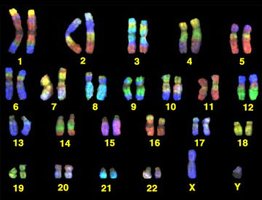
Somatic cells are diploid (2n), containing two sets of chromosomes, while sex cells (gametes) are haploid (n), containing one set. Different species have characteristic chromosome numbers.
Common Name | Scientific Name | 2n |
|---|---|---|
Cat | Felis catus | 38 |
Human | Homo sapiens | 46 |
Chimpanzee | Pan pan | 48 |
Sheep | Ovis aries | 54 |
Cattle | Bos taurus | 60 |
Buffalo | Bison bison | 60 |
Goat | Capra hircus | 60 |
Donkey | Equus asinus | 62 |
Horse | Equus caballus | 64 |
Dog | Canis familiaris | 78 |
Abnormal Cell Division: Cancer and Tumors
Types and Characteristics
Abnormal cell division can lead to tumors and cancer. Tumors may be benign (localized) or malignant (spread to other regions). Cancer types include carcinoma, sarcoma, leukemia, and lymphoma. Metastasis refers to the spread of cancer from a primary to secondary location.
Benign: Not likely to spread
Malignant: High risk of spreading
Metastasis: Spread of cancer cells
Key Terms and Definitions
Apoptosis: Programmed cell death
Cell division: Process by which a cell splits into two daughter cells
Cell cycle: Sequence of events in cell growth and division
Binary fission: Prokaryotic cell division
Budding: Asexual reproduction where a new organism grows from the parent
Haploid: Single set of chromosomes (n)
Diploid: Two sets of chromosomes (2n)
Ploidy: Number of chromosome sets
Somatic cells: Body cells (diploid)
Regeneration: Renewal of lost tissues
Fragmentation: Asexual reproduction by breaking into pieces
Agamogenesis: Asexual reproduction without gametes
Genome: Complete set of genetic material
Chromatin: Relaxed DNA-protein complex
Chromosome: Condensed DNA-protein complex
Interphase: Non-dividing, growth phase
Mitosis: Division of nucleus
Cytokinesis: Division of cytoplasm
Meiosis: Division to produce gametes
Formulas and Equations
Ploidy Relationships
Somatic cells: Gametes: After fertilization:
Stages of Mitosis
Order: Prophase → Metaphase → Anaphase → Telophase → Cytokinesis
Stages of Interphase
Order: G1 → S → G2
Cell Cycle Equation
Summary Table: Mitosis vs. Meiosis
Feature | Mitosis | Meiosis |
|---|---|---|
Cell Type | Somatic | Germ |
Chromosome Number | 2n → 2n | 2n → n |
Genetic Identity | Identical | Unique |
Function | Growth, repair | Reproduction |
Additional info:
Some details about developmental disorders and neurodegenerative diseases are referenced as "coming soon" and are not covered in these notes.
