 Back
The Cell Cycle: Structure, Regulation, and Implications for Cancer
Study Guide - Smart Notes
 Tailored notes based on your materials, expanded with key definitions, examples, and context.
The Cell Cycle
Overview of Cell Division
The cell cycle is a fundamental process by which cells grow, replicate their DNA, and divide to produce new cells. This process is essential for growth, development, and maintenance in multicellular organisms, as well as reproduction in unicellular organisms.
Cell Division: One parent cell divides to form two genetically identical daughter cells.
Types of Division:
Prokaryotes: Binary fission
Eukaryotes: Mitosis (for somatic cells) and meiosis (for gametes)
Chromosome Terms:
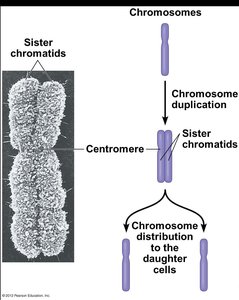
Chromatin: DNA and protein complex in a non-dividing cell
Chromosome: Condensed chromatin visible during cell division
Chromatid: Each of the two identical halves of a duplicated chromosome
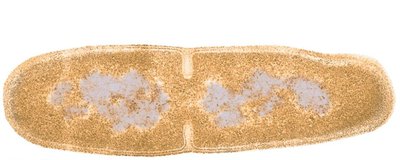
Binary Fission in Prokaryotes
Binary fission is the process by which prokaryotic cells, such as bacteria, reproduce. DNA replication occurs before cell division to ensure each daughter cell receives a complete copy of the genome.
DNA Replication: Occurs prior to cell division
Cell Growth: Cells grow during G1 and G2 phases
S Phase: Chromosomes duplicate
Cohesins: Proteins that hold sister chromatids together
Mitosis: Eukaryotic cells separate sister chromatids and divide
Eukaryotic Cell Cycle Phases
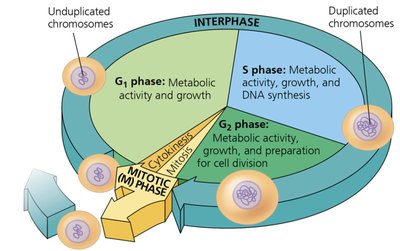
The eukaryotic cell cycle consists of interphase and the mitotic (M) phase. The time spent in each stage varies by cell type.
Interphase:
G1 phase: Metabolic activity and growth
S phase: DNA synthesis and chromosome duplication
G2 phase: Preparation for cell division
M phase: Mitosis and cytokinesis
G0 phase: Cells exit the cycle and stop dividing (cell death or differentiation)
Mitosis: Steps and Mechanisms
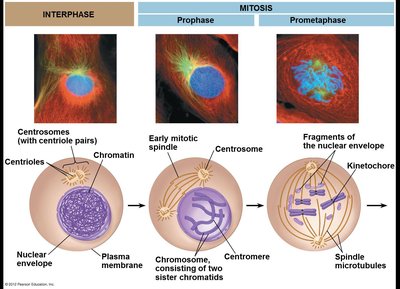
Mitosis is the process by which eukaryotic cells divide their nucleus and distribute identical genetic material to daughter cells. It consists of several distinct stages.
Stages of Mitosis:
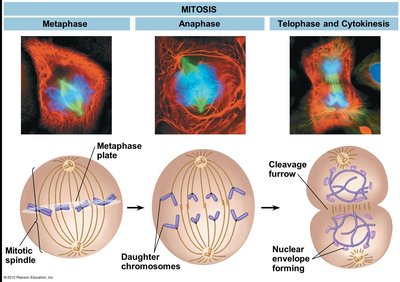
Prophase: Chromatin condenses, spindle forms
Prometaphase: Nuclear envelope fragments, spindle microtubules attach to kinetochores
Metaphase: Chromosomes align at the metaphase plate
Anaphase: Sister chromatids separate and move to opposite poles
Telophase: Nuclear envelope reforms, chromosomes decondense
Cytokinesis: Division of cytoplasm
Mitotic Spindle and Chromosome Movement
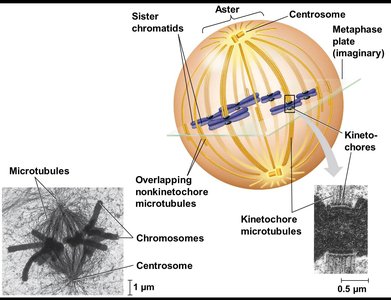
The mitotic spindle is a structure made of microtubules that segregates chromosomes during mitosis. Motor proteins and kinetochores play key roles in chromosome movement.
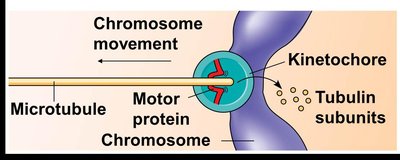
Microtubules: Elongate and shorten by addition/removal of tubulin
Kinetochores: Protein complexes on chromosomes where spindle fibers attach
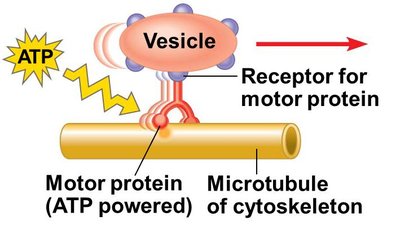
Motor Proteins: Move chromosomes along microtubules
Chromosome Movement: If kinetochores fail to connect, chromosomes may not segregate properly
Cytokinesis: Animal vs. Plant Cells
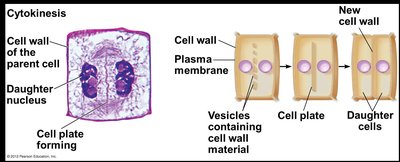
Cytokinesis is the division of the cytoplasm, resulting in two daughter cells. The process differs between animal and plant cells.
Animal Cells:
Formation of a cleavage furrow
Contracting ring of microfilaments pinches the cell in two
Plant Cells:
Formation of a cell plate
Vesicles containing cell wall material fuse to form the new cell wall
Regulation of the Cell Cycle
Cell Cycle Checkpoints
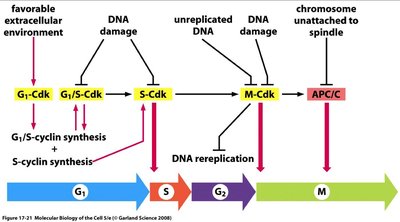
The cell cycle is tightly regulated by checkpoints that ensure proper division and prevent errors. There are three main checkpoints:
G1 Checkpoint: Determines if the cell is ready for DNA synthesis
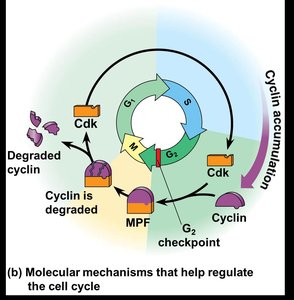
G2 Checkpoint: Ensures DNA replication is complete and checks for damage
M Checkpoint: Ensures chromosomes are properly attached to the spindle before division
Cyclins and Cyclin-Dependent Kinases (Cdks)
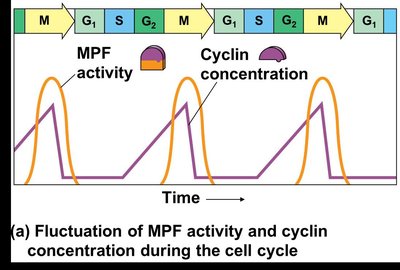
Cyclins and Cdks are key regulators of the cell cycle. Their concentrations fluctuate throughout the cycle, controlling progression through checkpoints.
Cyclins: Proteins whose levels rise and fall during the cell cycle
Cdk: Enzymes that, when bound to cyclins, activate cell cycle processes
MPF (Maturation Promoting Factor): Cyclin-Cdk complex that triggers entry into mitosis
Internal and External Signals
Cell cycle progression is influenced by internal signals (such as DNA integrity) and external signals (such as growth factors and cell density).
Growth Factors: Stimulate cell division
High Cell Density: Inhibits division (contact inhibition)
DNA Damage: Activates repair mechanisms or apoptosis
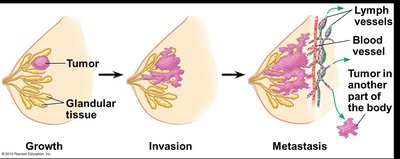
Cancer and the Cell Cycle
Loss of Cell Cycle Control and Cancer
Cancer results from mutations in genes that regulate the cell cycle, leading to uncontrolled cell division.
Key Genes:
p53: Controls checkpoint for DNA replication; can trigger repair or apoptosis
BRCA1/2: Repair damaged DNA
Mutations: Can be inherited (germline) or acquired (somatic)
Two-Hit Hypothesis: Both alleles of a tumor suppressor gene must be mutated for cancer to develop
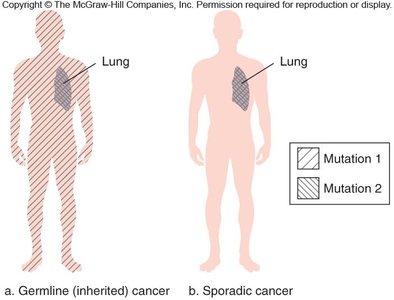
Inherited vs. Sporadic Cancer
Most cancers are sporadic, caused by mutations in somatic cells. However, susceptibility can be inherited through germline mutations.
Sporadic Cancer: Arises from mutations in non-reproductive cells
Inherited Cancer: Germline mutations increase risk; e.g., BRCA1/2 testing
Practice Questions
After mitosis, do daughter cells have the same genetic makeup as the parent cell? Why or why not?
Explain what happens during each stage of the cell cycle.
Explain the purpose of each stage in mitosis.
Explain why mutations in genes that are involved in cell cycle control can lead to cancer.
Summary Table: Cell Cycle Checkpoints
Checkpoint | Main Function | Key Regulators |
|---|---|---|
G1 | Checks for cell size, nutrients, growth factors, DNA damage | Cyclins, Cdks |
G2 | Checks for DNA replication completion, DNA damage | Cyclins, Cdks |
M | Checks for chromosome attachment to spindle | APC/C, M-Cdk |
Key Equations and Concepts
DNA Replication:
Cell Cycle Regulation:
Two-Hit Hypothesis:
Additional info: Academic context was added to clarify the stages of mitosis, the role of cyclins and Cdks, and the mechanisms of cancer development.
