 Back
The Cell: Structure and Function of Eukaryotic Organelles
Study Guide - Smart Notes
 Tailored notes based on your materials, expanded with key definitions, examples, and context.
The Cell: Structure and Function of Eukaryotic Organelles
Overview of Eukaryotic Cell Structure
Eukaryotic cells are highly organized structures containing various membrane-bound organelles, each with specialized functions essential for cellular life. Understanding the structure and function of these organelles is fundamental to cell biology.
Nucleus: Stores genetic information and coordinates cellular activities.
Endoplasmic Reticulum (ER): Synthesizes proteins and lipids; detoxifies chemicals.
Golgi Apparatus: Modifies, sorts, and packages proteins and lipids for secretion or delivery to other organelles.
Lysosomes: Digest macromolecules and recycle cellular components.
Vacuoles: Store nutrients, waste products, and help maintain osmotic balance.
Mitochondria: Generate ATP through cellular respiration.
Chloroplasts (in plants and algae): Conduct photosynthesis.
The Nucleus: Information Central
The nucleus is the control center of the cell, containing most of the cell’s DNA. It is surrounded by a double membrane called the nuclear envelope, which contains nuclear pores for the regulated exchange of materials between the nucleus and cytoplasm.
Nuclear Envelope: Double lipid bilayer that separates the nucleus from the cytoplasm.
Nuclear Pores: Allow selective exchange of substances (e.g., RNA, proteins).
Nuclear Lamina: Protein network that maintains nuclear shape.
Chromatin: DNA-protein complex; condenses to form chromosomes during cell division.
Nucleolus: Site of ribosomal RNA (rRNA) synthesis and ribosome assembly.

The Endomembrane System
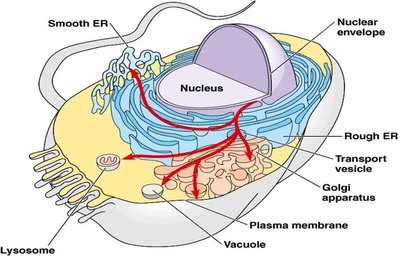
The endomembrane system is a network of membranes inside eukaryotic cells that work together to modify, package, and transport lipids and proteins. It includes the nuclear envelope, endoplasmic reticulum, Golgi apparatus, lysosomes, vacuoles, and the plasma membrane.
Components are either continuous or connected via vesicle transfer.
Ensures compartmentalization and efficient cellular logistics.
Endoplasmic Reticulum (ER): Biosynthetic Factory
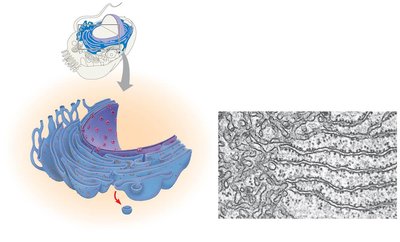
The endoplasmic reticulum is a network of membranes continuous with the nuclear envelope. It exists in two forms: smooth ER and rough ER, each with distinct functions.
Smooth ER: Lacks ribosomes; synthesizes lipids, metabolizes carbohydrates, detoxifies drugs and poisons, and stores calcium ions.
Rough ER: Studded with ribosomes; synthesizes proteins (especially those for secretion or membrane insertion), distributes transport vesicles, and produces membranes.
Ribosomes: Protein Factories
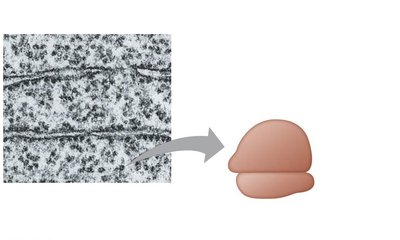
Ribosomes are complexes of ribosomal RNA and protein that carry out protein synthesis. They can be free in the cytosol or bound to the rough ER.
Free Ribosomes: Synthesize proteins that function in the cytosol.
Bound Ribosomes: Synthesize proteins destined for membranes, lysosomes, or secretion.
Golgi Apparatus: Shipping and Receiving Center
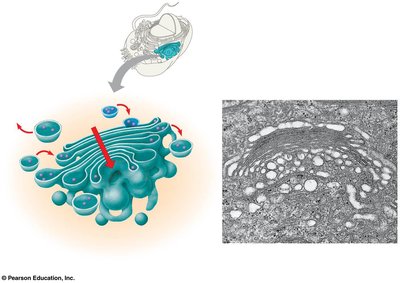
The Golgi apparatus consists of flattened membranous sacs called cisternae. It modifies, sorts, and packages products from the ER for secretion or delivery to other organelles.
Cis Face: Receiving side; accepts vesicles from the ER.
Trans Face: Shipping side; dispatches vesicles to other destinations.
Involved in the synthesis of some macromolecules (e.g., polysaccharides).
Lysosomes: Digestive Compartments
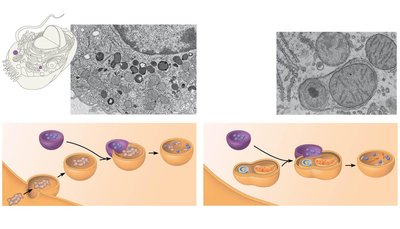
Lysosomes are membrane-bound sacs containing hydrolytic enzymes that digest macromolecules. They play a key role in cellular digestion and recycling (autophagy).
Enzymes function optimally at acidic pH.
Digest food particles (phagocytosis) and damaged organelles (autophagy).
Vacuoles: Diverse Maintenance Compartments
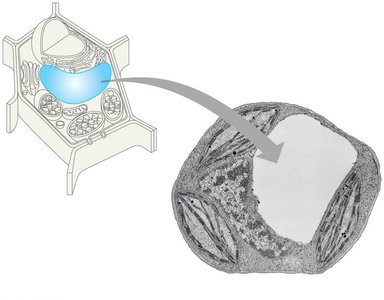
Vacuoles are large vesicles with varied functions depending on the cell type.
Food Vacuoles: Formed by phagocytosis; store nutrients.
Contractile Vacuoles: Pump excess water out of freshwater protists.
Central Vacuole: Found in mature plant cells; stores water, ions, and organic compounds, and helps maintain turgor pressure.
Mitochondria and Chloroplasts: Energy Conversion
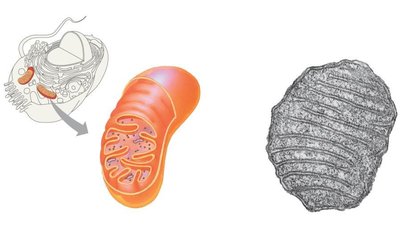
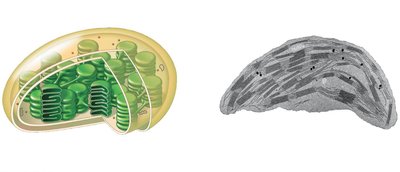
Mitochondria and chloroplasts are organelles that convert energy from one form to another. Mitochondria are the sites of cellular respiration, generating ATP, while chloroplasts (in plants and algae) conduct photosynthesis.
Mitochondria: Double membrane; inner membrane folded into cristae; contains its own DNA and ribosomes.
Chloroplasts: Contain chlorophyll; have thylakoids (stacked into grana) and stroma; also contain their own DNA and ribosomes.
Integration of Cellular Functions
Cells rely on the integration of structures and organelles to function as a coordinated unit. Each organelle contributes to the overall purpose and survival of the cell, tissue, organ, and organism.
Summary Table: Major Eukaryotic Organelles and Their Functions
Organelle | Main Function |
|---|---|
Nucleus | Stores DNA, coordinates cell activities |
Ribosome | Protein synthesis |
Endoplasmic Reticulum (Smooth) | Lipid synthesis, detoxification, calcium storage |
Endoplasmic Reticulum (Rough) | Protein synthesis for secretion/membranes |
Golgi Apparatus | Modification, sorting, packaging of proteins/lipids |
Lysosome | Digestion and recycling of macromolecules |
Vacuole | Storage, waste disposal, water balance |
Mitochondria | ATP production via cellular respiration |
Chloroplast | Photosynthesis (plants/algae) |
Key Terms and Concepts
Organelle: Specialized structure within a cell that performs a specific function.
Vesicle: Small membrane-bound sac that transports substances within the cell.
Autophagy: Process by which lysosomes recycle the cell’s own organelles and macromolecules.
Phagocytosis: Cellular process of engulfing solid particles to form an internal compartment known as a phagosome.
