 Back
BackThe Cell: Structure, Function, and Energy Generation
Study Guide - Smart Notes
 Tailored notes based on your materials, expanded with key definitions, examples, and context.
The Cell
Eukaryotic Cells Compared with Prokaryotic Cells
The cell theory is a foundational concept in biology, stating that cells are the smallest unit of life, all living things are composed of cells, and new cells arise only from preexisting cells. There are two primary cell types: prokaryotic and eukaryotic cells.
Prokaryotic cells: Lack a nucleus and membrane-bound organelles; examples include bacteria and archaea.
Eukaryotic cells: Possess a nucleus and various membrane-bound organelles; examples include plant, animal, and fungal cells.
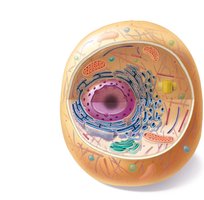
Additional info: Eukaryotic cells are typically larger and more complex than prokaryotic cells.
Cell Size and Microscopy
Cell size is limited by the surface-to-volume ratio, which dictates how efficiently materials can be exchanged with the environment. Most cells are measured in micrometers (μm), and their structure can be observed using light or electron microscopes.
Surface-to-volume ratio: As cells grow, their volume increases faster than their surface area, limiting nutrient exchange.
Microscopy: Light microscopes are used for general cell observation; electron microscopes provide detailed views of cell structures.
Micrographs: Photographs taken through microscopes to visualize cells.
Cell Structure and Function
Cells differentiate into specialized types, each with unique structures suited to their functions. This specialization is essential for multicellular organisms.
Specialized cells: Examples include muscle cells, nerve cells, and epithelial cells.
Structure-function relationship: The shape and internal components of a cell reflect its role in the organism.
Plasma Membrane
The plasma membrane forms the cell's outer boundary and regulates the movement of substances in and out of the cell. It is composed of a phospholipid bilayer with embedded proteins, cholesterol, and carbohydrates, creating a fluid mosaic structure.
Structural integrity: Maintains cell shape and protects internal contents.
Selective permeability: Controls entry and exit of molecules.
Glycoproteins: Provide cell recognition.
Receptors: Enable cell communication.
Cell adhesion molecules: Facilitate tissue and organ formation.
Movement Across the Plasma Membrane
Passive transport: Does not require energy; includes simple diffusion, facilitated diffusion, and osmosis.
Active transport: Requires energy (usually ATP); moves substances against their concentration gradient.
Simple diffusion: Movement from high to low concentration, eliminating gradients.
Facilitated diffusion: Movement from high to low concentration with the help of membrane proteins.
Osmosis: Movement of water across a selectively permeable membrane from high to low water concentration.
Active transport: Movement from low to high concentration using carrier proteins and energy.
Endocytosis: Plasma membrane engulfs substances, forming vesicles. Includes phagocytosis (cell eating) and pinocytosis (cell drinking).
Exocytosis: Vesicles release large molecules outside the cell.
Organelles
Eukaryotic cells contain membrane-bound organelles, each with specific functions. Non-membranous organelles also contribute to cellular activities.
Nucleus: Contains DNA, controls cellular activity, surrounded by a nuclear envelope.
Nucleolus: Produces ribosomal RNA.
Endoplasmic reticulum (ER): Rough ER (with ribosomes) synthesizes proteins; Smooth ER (without ribosomes) produces phospholipids and detoxifies substances.
Golgi complex: Processes and packages proteins.
Lysosomes: Digest macromolecules, old organelles, and invaders.
Mitochondria: Site of cellular respiration, produces ATP.
Additional info: Chromosomes are made of DNA and histone proteins; humans have 46 chromosomes.
Cytoskeleton
The cytoskeleton provides structural support, maintains cell shape, and enables movement. It consists of microtubules, intermediate filaments, and microfilaments.
Microtubules: Made of tubulin; involved in cilia and flagella movement.
Microfilaments: Made of actin; involved in muscle contraction and cell division.
Intermediate filaments: Diverse proteins; maintain cell shape and anchor organelles.
Centrioles: Organize microtubules; important in cell division and formation of cilia/flagella.
Cilia: Numerous, short extensions for movement (e.g., respiratory tract).
Flagella: Larger, undulating movement (e.g., sperm cells).
Cellular Respiration and Fermentation in the Generation of ATP
Cell metabolism encompasses all chemical reactions in a cell, organized into metabolic pathways. Cellular respiration and fermentation are catabolic pathways that generate energy.
Cellular respiration: Requires oxygen; breaks down glucose into CO2, H2O, and ATP.
Fermentation: Occurs without oxygen; less efficient, produces only 2 ATP per glucose.
Phases of Cellular Respiration
Glycolysis: Occurs in cytoplasm; splits glucose into two pyruvate, yields 2 ATP and 2 NADH; does not require oxygen.
Transition reaction: Occurs in mitochondria; converts pyruvate to acetyl CoA, releases CO2, produces NADH.
Citric acid cycle (Krebs cycle): Occurs in mitochondria; acetyl CoA enters cycle, produces 2 ATP, 2 FADH2, 6 NADH, releases CO2.
Electron transport chain: Occurs across inner mitochondrial membrane; requires oxygen, transfers electrons, produces 32 ATP.
Key equation for cellular respiration:
Fermentation
Fermentation is the breakdown of glucose without oxygen, occurring entirely in the cytoplasm. It is inefficient, producing only 2 ATP per glucose. In humans, lactic acid fermentation occurs in muscles during strenuous exercise, causing temporary soreness due to lactic acid accumulation.
Lactic acid fermentation: Converts pyruvate to lactic acid; soreness disappears as lactic acid is converted back to pyruvate in the liver.
Additional info: Fermentation is important in certain microorganisms and industrial processes (e.g., yeast fermentation in bread and alcohol production).
