Back
The Cell: The Fundamental Unit of Life – Study Notes
Study Guide - Smart Notes
 Tailored notes based on your materials, expanded with key definitions, examples, and context.
Chapter 3: The Cell – The Fundamental Unit of Life
Cell Theory
The cell theory is a foundational concept in biology, stating that all living organisms are composed of cells and that all cells arise from pre-existing cells. This principle highlights the cell as the basic structural and functional unit of life.
All living things are made up of one or more cells.
Cells arise only from other pre-existing cells through cell division.
Cells are capable of self-reproduction and carry out all necessary life processes.
The Size Range of Cells
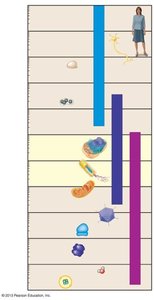
Cells and their components vary greatly in size, from atoms and small molecules to large multicellular organisms. The scale of biological structures determines the tools needed for their observation, such as light or electron microscopes.
Prokaryotic cells are generally smaller (1–10 µm) than eukaryotic cells (10–100 µm).
Some cell types, like nerve and muscle cells, can be exceptionally long.
Organelles such as mitochondria and nuclei are visible under light microscopes, while viruses and ribosomes require electron microscopy.
Types of Cells
Prokaryotic Cells
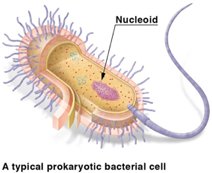
Prokaryotic cells are the simplest and most ancient forms of life. They lack membrane-bound organelles and a true nucleus.
Characteristics: Small, simple structure, no nucleus, no membrane-enclosed organelles.
Genetic material is located in a region called the nucleoid.
Domains: Bacteria and Archaea.
Unicellular organisms.
Eukaryotic Cells
Eukaryotic cells are larger and more complex than prokaryotic cells. They contain a nucleus and various membrane-bound organelles.
Characteristics: Larger size, presence of a nucleus, and membrane-enclosed organelles.
Domains: Plants, Animals, Fungi, and Protists.
Can be unicellular or multicellular.
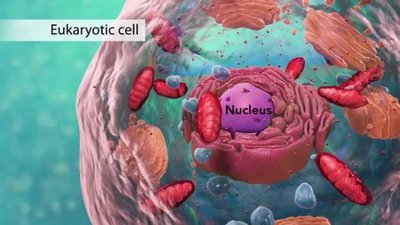
Comparison of Prokaryotic and Eukaryotic Cells
Feature | Prokaryotic Cells | Eukaryotic Cells |
|---|---|---|
Nucleus | Absent | Present |
Membrane-bound organelles | Absent | Present |
Size | 1–10 µm | 10–100 µm |
Examples | Bacteria, Archaea | Plants, Animals, Fungi, Protists |
Examples of Prokaryotic and Eukaryotic Cells
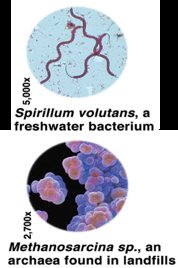
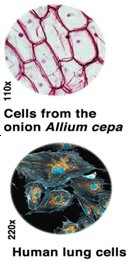
Prokaryotes: Spirillum volutans (bacterium), Methanosarcina sp. (archaea)
Eukaryotes: Onion cells (Allium cepa), Human lung cells
Basic Features of All Cells
Plasma membrane: Encloses the cell, regulates passage of materials.
Cytoplasm: Jelly-like fluid inside the cell.
Chromosomes: Contain DNA, the genetic material.
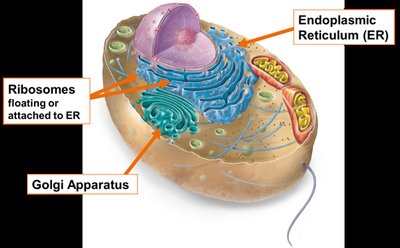
Ribosomes: Sites of protein synthesis.
Specialized Structures in Eukaryotic Cells
Animal vs. Plant Cells
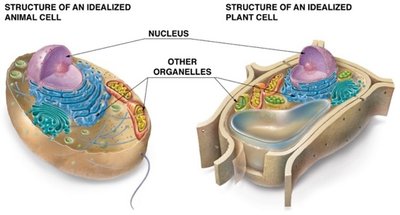
Animal and plant cells share many organelles but also have unique structures that reflect their functions.
Animal cells: Contain lysosomes, lack cell walls and chloroplasts.
Plant cells: Have chloroplasts, cell walls (made of cellulose), and a large central vacuole.
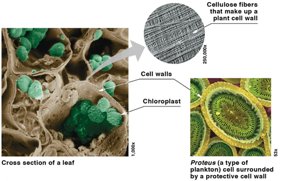
Cell Walls
Cell walls provide structural support and protection. They are found in plants, fungi, and some prokaryotes.
Plant cell walls: Composed mainly of cellulose.
Fungal cell walls: Composed of chitin.
Prokaryotic cell walls: Usually contain peptidoglycan (bacteria).
Cell Membranes and Transport
Structure of the Plasma Membrane
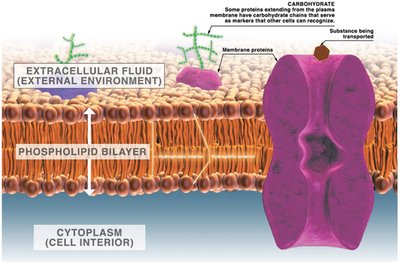
The plasma membrane is primarily composed of a phospholipid bilayer with embedded proteins. This structure is described as a "fluid mosaic" due to the dynamic arrangement of its components.
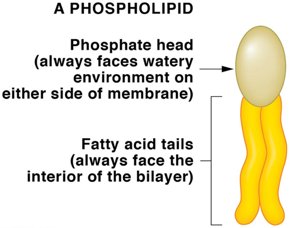
Phospholipids: Have hydrophilic heads and hydrophobic tails, forming a bilayer.
Proteins: Serve as channels, receptors, and enzymes.
Carbohydrates: Attached to proteins and lipids, function in cell recognition.
Membrane Permeability
Cell membranes are selectively permeable, allowing some substances to pass freely while restricting others.
Freely permeable: Water, small nonpolar molecules, some small polar molecules.
Limited permeability: Ions, large polar molecules, and macromolecules.
Transport Across Membranes
Cells use various mechanisms to move substances across their membranes, classified as passive or active transport.
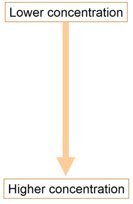
Passive transport: No energy required; substances move down their concentration gradient (high to low).
Types: Diffusion, osmosis, facilitated diffusion (via specific proteins).
Active transport: Requires energy (usually ATP); substances move against their concentration gradient (low to high).
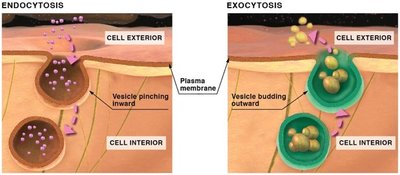
Types: Protein pumps (e.g., sodium-potassium pump), endocytosis, exocytosis.
Genetic Material and the Nucleus
Nucleus
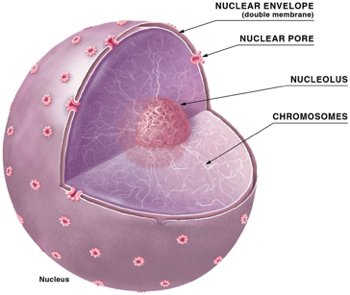
The nucleus is the control center of the eukaryotic cell, containing most of the cell's genetic material in the form of DNA.
Nuclear envelope: Double membrane with pores for molecular transport.
Nucleolus: Site of ribosomal RNA (rRNA) synthesis.
Chromosomes: DNA molecules wrapped around proteins, forming chromatin fibers that condense during cell division.
Protein Production and Endomembrane System
Protein Synthesis
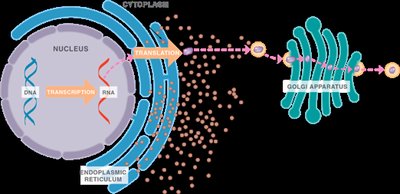
Protein production involves two main steps: transcription and translation.
Transcription: DNA is used as a template to synthesize RNA in the nucleus.
Translation: RNA is used as a template to assemble amino acids into proteins at ribosomes.
Endoplasmic Reticulum (ER)
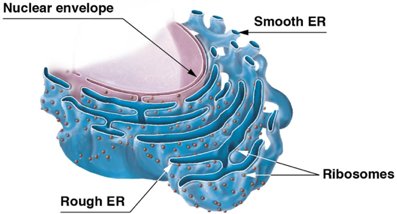
The ER is a network of membranes involved in protein and lipid synthesis.
Rough ER: Studded with ribosomes; synthesizes proteins for export or membrane insertion.
Smooth ER: Lacks ribosomes; synthesizes lipids and detoxifies chemicals.
Golgi Apparatus
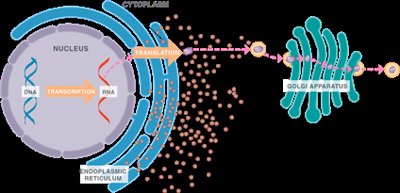
The Golgi apparatus modifies, sorts, and packages proteins and lipids for storage or transport out of the cell.
Acts as the cell's "post office."
Receives vesicles from the ER, processes their contents, and ships them to their final destinations.
Lysosomes
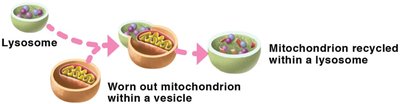
Lysosomes are membrane-bound organelles containing digestive enzymes. They break down large molecules, old cell parts, and invading pathogens.
Important for cellular cleanup and recycling.
Energy-Related Organelles
Chloroplasts
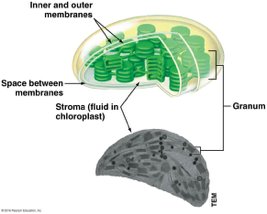
Chloroplasts are found in plant cells and some protists. They are the site of photosynthesis, converting solar energy into chemical energy (glucose).
Contain pigments such as chlorophyll.
Have a double membrane and internal stacks of membranes called thylakoids (grana).
Mitochondria
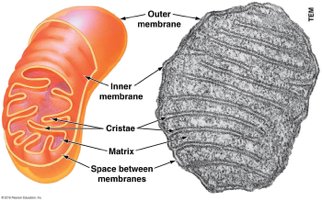
Mitochondria are the "powerhouses" of the cell, where cellular respiration occurs to produce ATP, the cell's main energy currency.
Present in nearly all eukaryotic cells.
Have a double membrane; the inner membrane is highly folded into cristae.
Other Organelles and Structures
Vacuoles
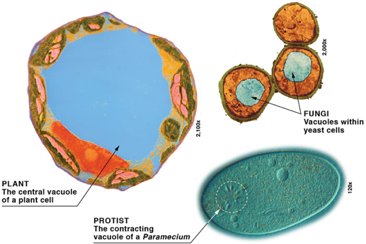
Vacuoles are membrane-bound sacs used for storage and transport. Plant cells typically have a large central vacuole for water, nutrients, and waste storage.
Fungi and protists also have vacuoles with specialized functions.
Flagella and Cilia
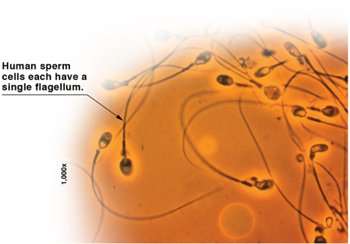
Flagella and cilia are structures used for cell movement or for moving substances along the surface of cells.
Flagella: Long, whip-like structures; usually one or a few per cell (e.g., sperm cells).
Cilia: Short, numerous, hair-like structures; move in coordinated waves (e.g., tracheal cells).