 Back
BackThe Cell: The Fundamental Unit of Life – Structure, Function, and Diversity
Study Guide - Smart Notes
 Tailored notes based on your materials, expanded with key definitions, examples, and context.
The Cell: The Fundamental Unit of Life
Introduction to Cells
Cells are the basic structural and functional units of all living organisms. They can exist as single-celled organisms or as part of multicellular organisms, ranging from microscopic bacteria to large animals like elephants.
All living organisms are composed of cells.
Cells can be unicellular (one cell) or multicellular (many cells).
Cells carry out essential life processes such as metabolism, growth, and reproduction.
Microscopy reveals the complexity and diversity of cell types.
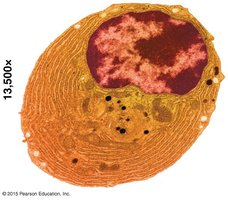

Types of Cells: Prokaryotic vs. Eukaryotic
Cells are classified into two main categories: prokaryotic and eukaryotic. This distinction is based on structural differences, particularly the presence or absence of membrane-bound organelles.
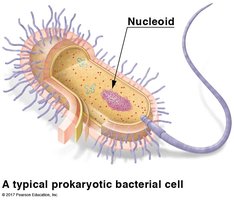
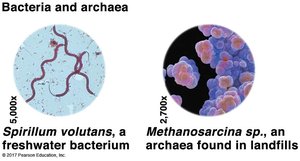
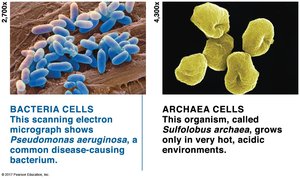
Prokaryotic cells: Small, simple, lack membrane-bound organelles, DNA is located in a nucleoid region. Examples include Bacteria and Archaea.
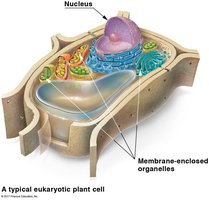
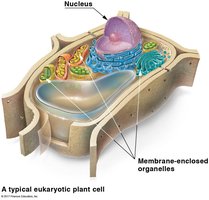
Eukaryotic cells: Larger, complex, contain membrane-bound organelles (such as nucleus, mitochondria, chloroplasts). Found in plants, animals, fungi, and protists.
Cell Diversity and Microscopy
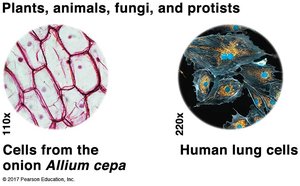
Microscopy allows us to observe the structural diversity of cells across different domains of life. Plant, animal, fungal, and protist cells exhibit unique features, while prokaryotic cells (bacteria and archaea) are generally simpler.
Plant cells often have cell walls and chloroplasts.
Animal cells lack cell walls but have other specialized organelles.
Bacteria and archaea are distinguished by their cell wall composition and environmental adaptations.
Comparing Prokaryotic and Eukaryotic Cells
Prokaryotic Cell Structure
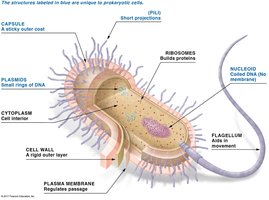
Prokaryotic cells are characterized by their simplicity and lack of internal compartmentalization. Their genetic material is not enclosed within a nucleus.
Nucleoid: Region containing DNA (not membrane-bound).
Cell wall: Provides structural support.
Capsule: Sticky outer coat for protection.
Flagella: Used for movement.
Ribosomes: Sites of protein synthesis.
Eukaryotic Cell Structure
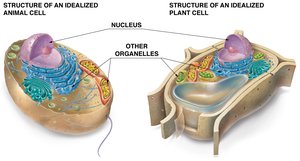
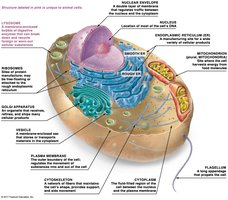
Eukaryotic cells contain a variety of membrane-bound organelles, each with specialized functions. The nucleus is the most prominent organelle, housing the cell's genetic material.
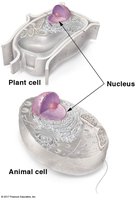
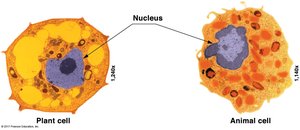
Nucleus: Contains DNA and controls cellular activities.
Mitochondria: Site of cellular respiration.
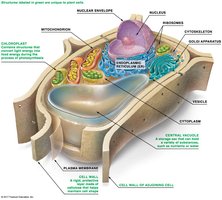
Chloroplasts: Site of photosynthesis (in plant cells).
Endoplasmic reticulum: Synthesizes proteins and lipids.
Golgi apparatus: Modifies, sorts, and packages proteins.
Lysosomes: Digestive organelles (mainly in animal cells).
Central vacuole: Storage and structural support (in plant cells).
Unique Features of Plant and Animal Cells
Plant Cells
Plant cells possess several unique organelles and structures that distinguish them from animal cells.
Cell wall: Provides rigidity and support; composed of cellulose.
Chloroplasts: Conduct photosynthesis.
Central vacuole: Stores water, nutrients, and waste products.
Animal Cells
Animal cells have specialized organelles not found in plant cells.
Lysosomes: Contain digestive enzymes for breaking down macromolecules.
Extracellular matrix: Provides structural support and cell adhesion.
Cell Membranes: Structure and Function
Plasma Membrane Structure
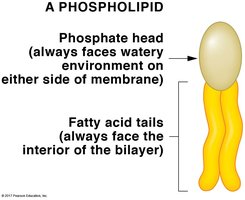
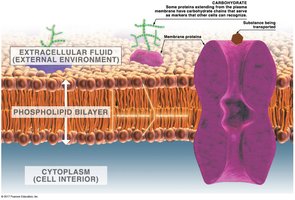
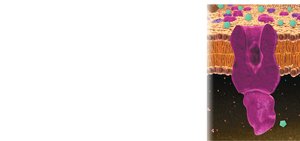
The plasma membrane surrounds every cell, defining its boundaries and regulating the passage of materials. It is composed of a phospholipid bilayer with embedded proteins.
Phospholipids: Amphipathic molecules with hydrophilic heads and hydrophobic tails.
Proteins: Serve as channels, transporters, receptors, and enzymes.
Carbohydrates: Attached to proteins or lipids, involved in cell recognition.
Membrane Function: Selective Permeability
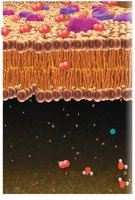
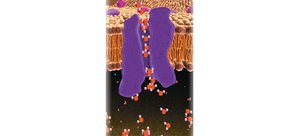
Cell membranes are selectively permeable, allowing some substances to pass while restricting others. This regulation is essential for maintaining cellular homeostasis.
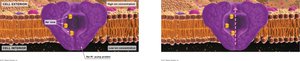
Passive transport: Movement of substances down their concentration gradient without energy input.
Active transport: Movement of substances against their concentration gradient, requiring energy (usually ATP).
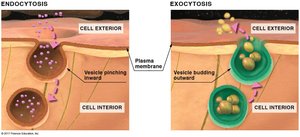
Endocytosis/Exocytosis: Bulk transport mechanisms for importing/exporting large molecules.
The Nucleus and Genetic Material
Nucleus Structure and Function
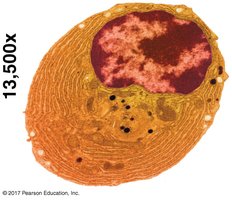
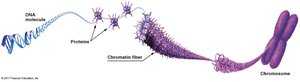
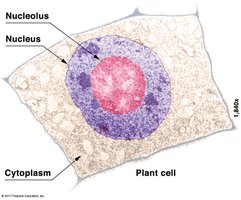
The nucleus is the control center of the eukaryotic cell, containing most of the cell's DNA organized into chromosomes. It is surrounded by a double membrane called the nuclear envelope.
Nuclear envelope: Double membrane with nuclear pores for molecular transport.
Nucleolus: Site of ribosomal RNA (rRNA) synthesis.
Chromatin: DNA-protein complex that condenses to form chromosomes during cell division.
Organelles Involved in Protein Production
Protein Synthesis: Transcription and Translation
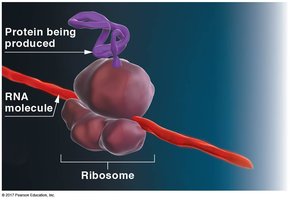
Protein production in eukaryotic cells involves two main steps: transcription (in the nucleus) and translation (at ribosomes).
Transcription: DNA is used as a template to synthesize RNA.
Translation: RNA is used as a template to synthesize proteins at ribosomes.


Endoplasmic Reticulum (ER)
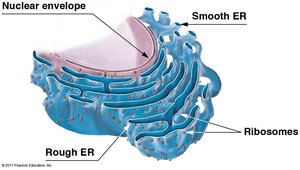
The ER is a network of membranes involved in the synthesis of proteins and lipids.
Rough ER: Studded with ribosomes; synthesizes proteins.
Smooth ER: Lacks ribosomes; synthesizes lipids and detoxifies chemicals.
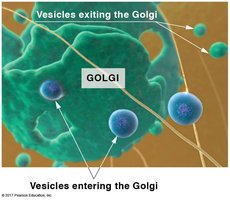
Golgi Apparatus
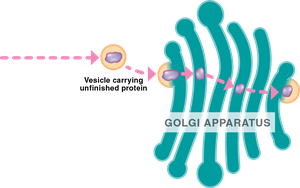
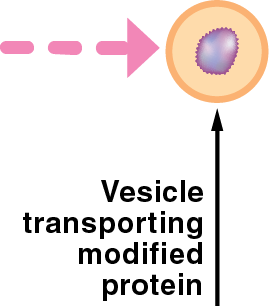
The Golgi apparatus modifies, sorts, and packages proteins and lipids for transport within or outside the cell.
Receives products from the ER.
Packages products into vesicles for delivery.
Energy-Related Organelles
Chloroplasts
Chloroplasts are found in plant cells and some protists. They are the site of photosynthesis, converting solar energy into chemical energy (sugars).
Require water and carbon dioxide.
Contain green pigment chlorophyll.
Mitochondria
Mitochondria are found in both plant and animal cells. They are the site of cellular respiration, converting sugars and oxygen into ATP (chemical energy).
ATP powers cellular processes.
Other Organelles and Structures
Vacuoles
Vacuoles are intracellular sacs used for storage and maintenance. Plant cells often have a large central vacuole for water and nutrient storage.
Cell Wall
Cell walls provide structural support and protection. Found in plants, fungi, and some prokaryotes.
Cytoskeleton
The cytoskeleton is a network of protein fibers that provides mechanical support, anchorage, and flexibility to animal cells.
Extracellular Matrix
Animal cells produce a sticky extracellular matrix that helps hold cells together in tissues.
Moving Appendages
Some cells have appendages for movement:
Flagella: Whip-like motion for propulsion.
Cilia: Coordinated back-and-forth motion.
Summary Table: Prokaryotic vs. Eukaryotic Cells
Feature | Prokaryotic Cells | Eukaryotic Cells |
|---|---|---|
Size | Small | Larger |
Organelles | None | Membrane-bound organelles |
Nucleus | No | Yes |
Examples | Bacteria, Archaea | Plants, Animals, Fungi, Protists |
Cell Wall | Usually present | Present in plants/fungi, absent in animals |
Key Terms
Cell: Basic unit of life.
Organelle: Specialized structure within a cell.
Plasma membrane: Boundary of the cell.
Prokaryote: Cell without a nucleus.
Eukaryote: Cell with a nucleus.
Diffusion: Passive movement of molecules.
Osmosis: Diffusion of water.
Active transport: Energy-requiring movement of molecules.
Transcription: DNA to RNA.
Translation: RNA to protein.
Important Equations
Diffusion:
Osmosis:
ATP Formation (Cellular Respiration):
Photosynthesis:
