 Back
BackThe Cellular Basis of Reproduction and Inheritance: Mitosis, Meiosis, and Genetic Variation
Study Guide - Smart Notes
 Tailored notes based on your materials, expanded with key definitions, examples, and context.
Ch. 8 The Cellular Basis of Reproduction and Inheritance
Introduction to Cell Division
Cell division is a fundamental process by which a single parent cell divides to produce two or more daughter cells. This process is essential for reproduction, growth, and tissue repair in all living organisms. There are three main types of cell division:
Binary Fission: A form of asexual cell division in prokaryotes, resulting in two genetically identical cells.
Mitosis: Eukaryotic cell division that produces genetically identical somatic (body) cells. Human somatic cells are diploid (2n), containing two copies of each chromosome.
Meiosis: Eukaryotic cell division that produces haploid (n) gametes (sex cells), each with one copy of each chromosome.
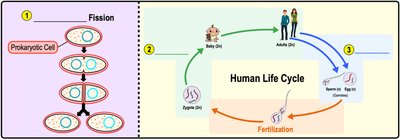
Example: The diagram above illustrates binary fission in prokaryotes and the human life cycle, which involves both mitosis and meiosis.
Asexual vs. Sexual Reproduction
All living organisms reproduce via one of two main types of reproduction:
Asexual Reproduction: Involves only one parent and produces genetically identical offspring (clones). Examples include binary fission and mitosis.
Sexual Reproduction: Involves two parents, resulting in genetically diverse offspring due to the combination of DNA from both parents. This process involves meiosis and fertilization.
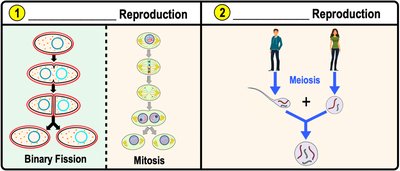
Example: The image compares binary fission and mitosis (asexual) with meiosis and fertilization (sexual).
Importance of Cell Division
Cell division is crucial for:
Reproduction: Producing new organisms or cells.
Growth and Development: Increasing cell number during embryonic and fetal development.
Tissue Repair and Renewal: Replacing damaged or dead cells in multicellular organisms.
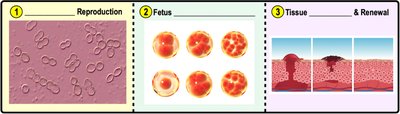
Organization of DNA in the Cell
Genome Structure
The genome is the complete set of an organism's DNA. In eukaryotes, DNA is organized with proteins called histones to form nucleosomes. The structure of DNA changes depending on the cell's state:
Chromatin: Loosely packed DNA in non-dividing cells.
Chromosomes: Highly condensed DNA in dividing cells.
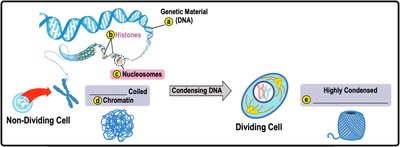
Example: The image shows the transition from chromatin to condensed chromosomes during cell division.
DNA Replication and Chromosome Structure
Before cell division, DNA must be replicated to ensure each daughter cell receives a complete set of genetic material. DNA replication produces chromosomes with two identical sister chromatids joined at a centromere.
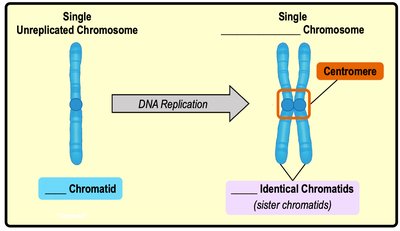
Key Point: Sister chromatids are genetically identical and are separated during cell division.
The Cell Cycle
Phases of the Cell Cycle
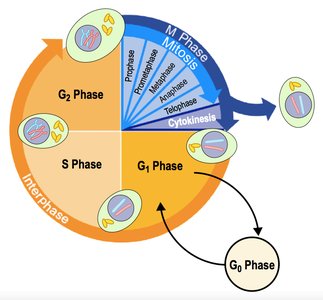
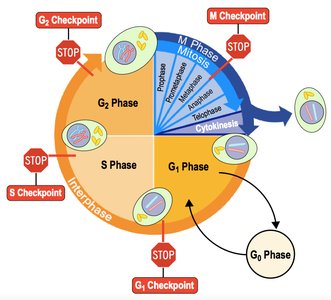
The cell cycle describes the sequence of events from the formation of a cell to its division into daughter cells. It consists of two major phases:
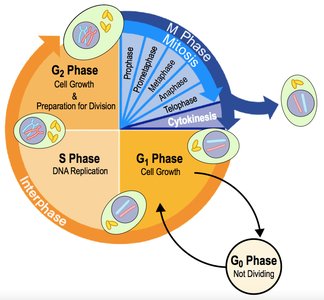
Interphase: Non-dividing phase for cell growth, DNA replication, and production of organelles and enzymes. Subdivided into G1, S, and G2 phases.
M (Mitotic) Phase: Dividing phase, including mitosis (nuclear division) and cytokinesis (cytoplasmic division).
Interphase Sub-phases
G1 Phase (First Gap): Cell growth and normal functions.
S Phase (Synthesis): DNA replication and centrosome duplication.
G2 Phase (Second Gap): Further growth and preparation for mitosis.
G0 Phase: Non-dividing state where cells exit the cycle and perform specialized functions.
Centrosomes and Mitotic Spindles
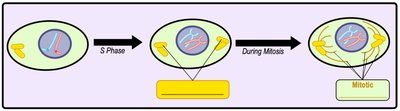
During S phase, centrosomes are duplicated. Centrosomes organize the mitotic spindle, a structure made of microtubules that separates chromosomes during mitosis.
Phases of Mitosis
Overview of Mitosis
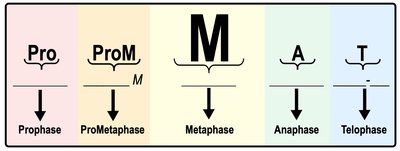
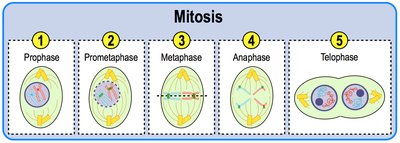
Mitosis is the process of dividing the nucleus and genetic material of a somatic cell, resulting in two genetically identical daughter cells. Mitosis consists of five phases:
Prophase
Prometaphase
Metaphase
Anaphase
Telophase
Detailed Phases of Mitosis
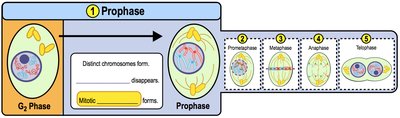
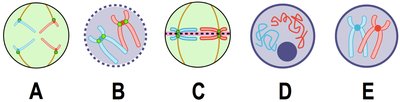
Prophase
Chromatin condenses into visible chromosomes with sister chromatids.
Nucleolus disappears.
Centrosomes move to opposite poles and begin forming the mitotic spindle.
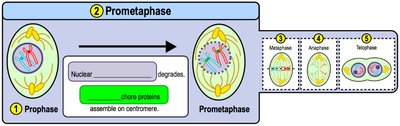
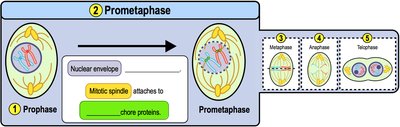
Prometaphase
Nuclear envelope breaks down.
Mitotic spindle attaches to chromosomes via kinetochore proteins at the centromere.
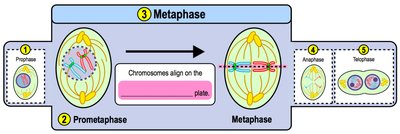
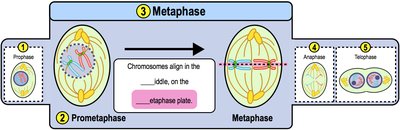
Metaphase
Chromosomes align at the metaphase plate (cell equator).
Spindle fibers attach to each sister chromatid.
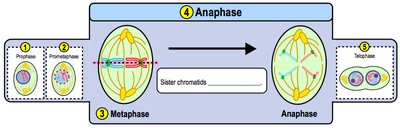
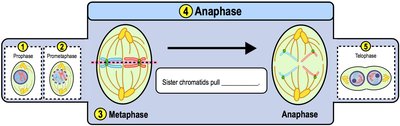
Anaphase
Sister chromatids are pulled apart toward opposite poles of the cell.
Spindle fibers shorten, separating chromatids.
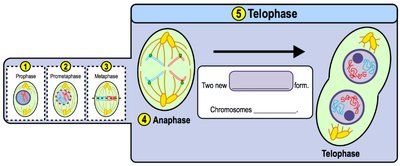
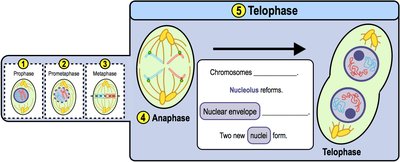
Telophase
Chromosomes decondense back into chromatin.
Mitotic spindle disassembles.
Nuclear envelope and nucleolus reform, resulting in two nuclei.
Cytokinesis
Animal Cell Cytokinesis
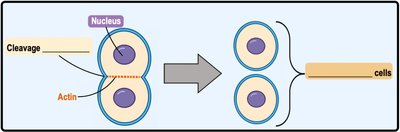
After mitosis, cytokinesis divides the cytoplasm, producing two identical daughter cells. In animal cells, a cleavage furrow forms due to the contraction of actin microfilaments and myosin at the cell center.
Plant Cell Cytokinesis
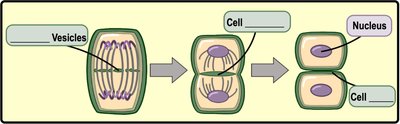
In plant cells, vesicles from the Golgi apparatus form a cell plate that develops into a new cell wall, separating the two daughter cells.
Cell Cycle Regulation
Checkpoints and Control
Cell division is regulated by protein signals called growth factors and multiple cell cycle checkpoints that ensure the cell is ready to proceed to the next phase. If errors are detected, the protein p53 can trigger repair or apoptosis (programmed cell death). Uncontrolled cell division can lead to cancer.
G1 Checkpoint: Checks for DNA damage before replication.
S Checkpoint: Monitors DNA synthesis.
G2 Checkpoint: Ensures DNA is fully replicated and undamaged before mitosis.
M (Metaphase) Checkpoint: Confirms all chromosomes are properly attached to the spindle before separation.
Genes, Alleles, and Chromosome Number
Genes and Alleles
Genes are segments of DNA that encode proteins and determine traits. Alleles are alternative versions of a gene, often represented by different letters (e.g., B for blue eyes, b for brown eyes).
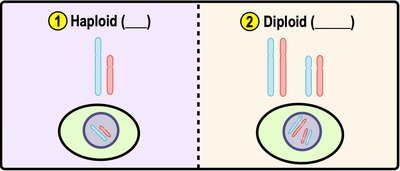
Haploid vs. Diploid Cells
Ploidy refers to the number of chromosome sets in a cell:
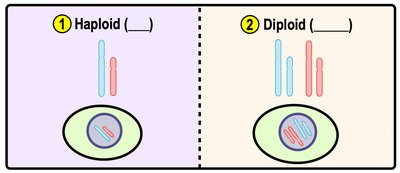
Haploid (n): One copy of each chromosome (e.g., gametes).
Diploid (2n): Two copies of each chromosome (e.g., somatic cells).
Homologous Chromosomes and Karyotypes
Homologous chromosomes are pairs of chromosomes similar in size and gene content but may have different alleles. Humans have 23 pairs of chromosomes: 22 pairs of autosomes and 1 pair of sex chromosomes (XX for females, XY for males).
Life Cycle of Sexual Reproducers
The life cycle of sexually reproducing organisms involves both mitosis and meiosis. Meiosis produces haploid gametes, and fertilization restores the diploid state in the zygote, which then grows by mitosis.
Introduction to Meiosis
Overview of Meiosis
Meiosis is a two-part cell division process in germ cells that produces four genetically diverse haploid gametes from one diploid cell. It consists of:
Meiosis I (Reductional Division): Homologous chromosomes are separated, reducing chromosome number by half.
Meiosis II (Equational Division): Sister chromatids are separated, similar to mitosis.
Genetic Variation During Meiosis
Meiosis generates genetic diversity through:
Crossing Over: Exchange of genetic material between non-sister chromatids during prophase I, resulting in recombinant chromosomes.
Independent Assortment: Random alignment of homologous chromosome pairs during metaphase I, leading to numerous possible genetic combinations. The number of combinations is calculated as , where is the haploid number of chromosomes.
Nondisjunction
Nondisjunction is an error in meiosis when chromosomes fail to separate properly, resulting in aneuploid cells (cells with abnormal chromosome numbers). This can cause genetic disorders such as Down syndrome (trisomy 21).
Mitosis vs. Meiosis: Comparison
Mitosis: Occurs in somatic cells, produces two genetically identical diploid cells, used for growth and repair.
Meiosis: Occurs in germ cells, produces four genetically diverse haploid gametes, used for sexual reproduction.
Homologous chromosomes pair and undergo crossing over in meiosis but not in mitosis.
Cytokinesis occurs once in mitosis and twice in meiosis.
Additional info: This summary covers the essential concepts of cell division, including the cell cycle, mitosis, meiosis, genetic variation, and the regulation of these processes, as outlined in a typical introductory college biology course.
