 Back
Unit 2
Study Guide - Smart Notes
 Tailored notes based on your materials, expanded with key definitions, examples, and context.
The Chemical Basis of Life
Elements and Compounds
Biological systems are composed of a limited set of elements, most of which are essential for life. Elements are pure substances consisting of only one type of atom, and compounds are substances formed from two or more elements in fixed ratios.
Element: A pure substance that cannot be broken down further by chemical means. Each element is made up of atoms.
Compound: A substance formed when two or more elements combine in a fixed ratio, resulting in molecules.
Example: Water (H2O) is a compound made of hydrogen and oxygen; sodium chloride (NaCl) is a compound made of sodium and chlorine.
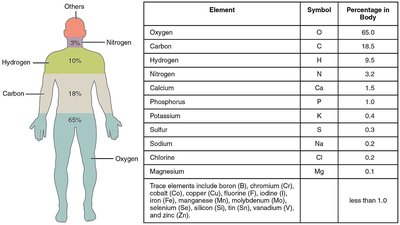
Major Elements in Biological Systems
The human body is primarily composed of a few key elements, each playing a vital role in biological processes.
Oxygen (O): Most abundant element in the body, essential for cellular respiration.
Carbon (C): Backbone of organic molecules.
Hydrogen (H): Found in water and organic compounds.
Nitrogen (N): Component of amino acids and nucleic acids.
Other elements: Calcium, phosphorus, potassium, sulfur, sodium, chlorine, magnesium, and trace elements.
Atomic Structure
Atoms are the fundamental units of elements, consisting of protons, neutrons, and electrons. The arrangement of electrons in shells determines chemical reactivity.
Atomic number: Number of protons in the nucleus.
Atomic mass: Sum of protons and neutrons, measured in Daltons (Da).
Isotopes: Atoms of the same element with different numbers of neutrons.
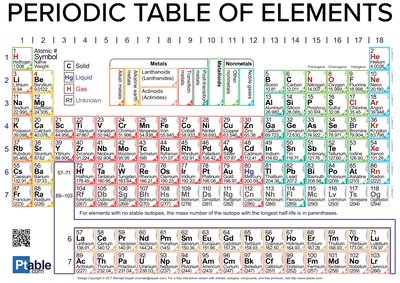
Electron Configuration and Chemical Bonding
Electrons are arranged in shells around the nucleus. The stability of an atom is determined by the filling of these shells, leading to the formation of chemical bonds.
First shell: Stable with two electrons.
Second shell: Stable with eight electrons.
Third shell: Stable with eight electrons.
Octet rule: Atoms tend to gain, lose, or share electrons to achieve a full outer shell.
Formation of Compounds: Sodium Chloride Example
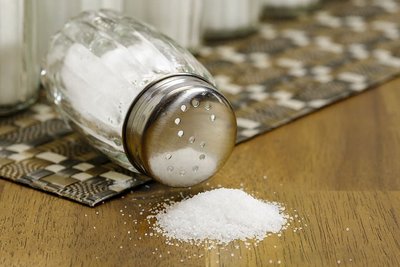
Compounds are formed when atoms combine through chemical bonds. Sodium and chlorine form sodium chloride (table salt) via ionic bonding.
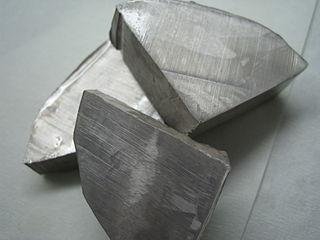
Sodium (Na): Highly reactive metal.
Chlorine (Cl): Reactive nonmetal.
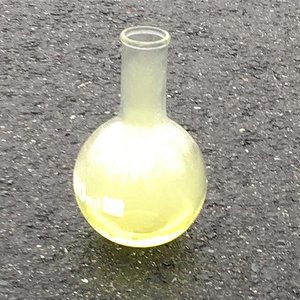
Sodium chloride (NaCl): Formed by the transfer of an electron from sodium to chlorine, resulting in ionic bonding.
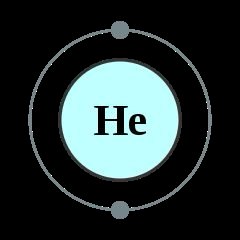
Electron Shell Diagrams
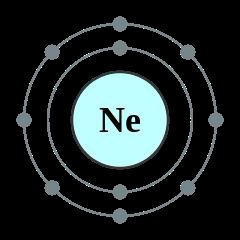
Electron shell diagrams visually represent the arrangement of electrons in atoms, which is crucial for understanding chemical bonding.
Neon (Ne): Full outer shell, chemically inert.
Helium (He): Full first shell, chemically inert.
Chemical Bonds
Atoms form chemical bonds to achieve stability. The main types of bonds are covalent, ionic, and hydrogen bonds.
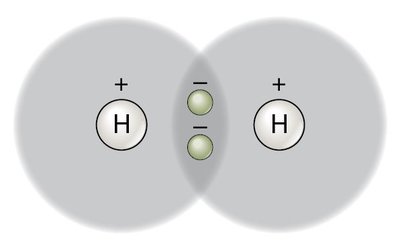
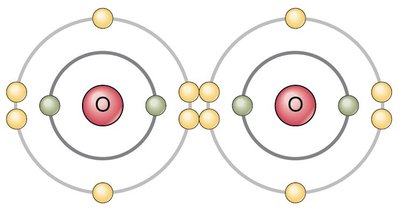
Covalent bonds: Atoms share electrons. Can be single, double, or triple bonds.
Ionic bonds: Electrons are transferred from one atom to another, resulting in charged ions held together by electrostatic attraction.
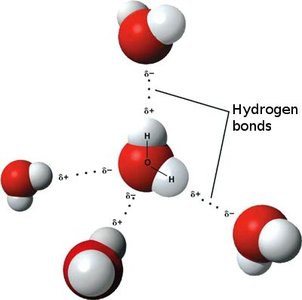
Hydrogen bonds: Weak electrostatic interactions between a hydrogen atom and an electronegative atom (e.g., oxygen, nitrogen).
Examples of Covalent Bonds
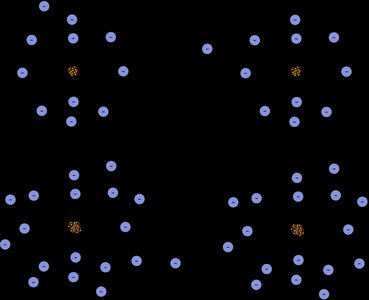
Covalent bonds are fundamental to the structure of biological molecules.
Hydrogen (H2): Single covalent bond.
Oxygen (O2): Double covalent bond.
Carbon dioxide (CO2): Two double covalent bonds.
Polarity and Electronegativity
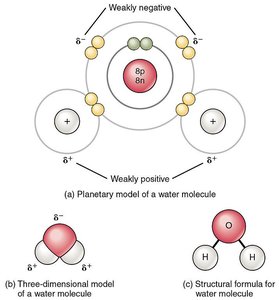
Polarity arises when electrons are shared unequally in a covalent bond, often due to differences in electronegativity.
Electronegativity: The tendency of an atom to attract electrons.
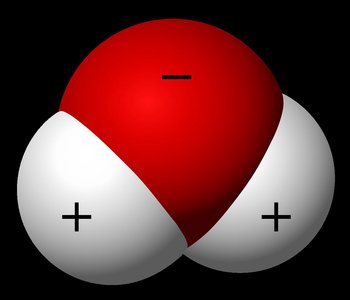
Polar covalent bond: Unequal sharing of electrons, resulting in partial charges (e.g., water).
Nonpolar covalent bond: Equal sharing of electrons.
Hydrogen Bonds and Water
Hydrogen bonds are critical for the unique properties of water, which make life possible.
Hydrogen bond: Electrostatic interaction between hydrogen (δ+) and an electronegative atom (δ-).
Importance: Stabilizes protein and DNA structures, gives water its special properties.
Special Properties of Water
Water exhibits several unique properties due to its ability to form hydrogen bonds:
Temperature moderation: Water has a high heat capacity and resists temperature changes.
Cohesion and adhesion: Water molecules stick to each other (cohesion) and to other surfaces (adhesion).
Solvent of life: Water dissolves many substances essential for life.
Density: Liquid water is denser than ice, allowing ice to float.
Chemical Reactions and Conservation of Matter
Chemical reactions involve the rearrangement of atoms, breaking and forming bonds, but matter is neither created nor destroyed.
Reactants: Starting compounds in a reaction.
Products: Compounds formed as a result of the reaction.
Conservation of matter: The number and type of atoms remain constant; they are simply rearranged.
Quantifying Compounds: Molecular Weight and Moles
Molecular weight and moles are essential concepts for quantifying substances in chemistry and biology.
Molecular weight (MW): Sum of atomic masses in a molecule, measured in Daltons (Da) or grams per mole (g/mol).
Mole: A physical quantity representing 6.02 x 10²³ molecules (Avogadro's number).
Molarity (M): Concentration of a solution, defined as moles per liter.
Acids, Bases, and pH
The pH scale measures the concentration of hydrogen ions in a solution, indicating its acidity or basicity.
pH: Defined as
Acid: Proton donor, increases [H+], decreases pH.
Base: Proton acceptor, decreases [H+], increases pH.
Water: Neutral, pH = 7.
Introduction to Organic Chemistry
Organic chemistry focuses on carbon-containing compounds, which are the basis of life.
Organic compound: Contains at least one carbon and one hydrogen atom.
Carbon: Forms stable covalent bonds, can make four bonds, and is abundant.
Hydrocarbons and Structural Diversity
Hydrocarbons are compounds containing only carbon and hydrogen, exhibiting enormous structural diversity.
Chain length: Number of carbon atoms in the backbone.
Branching: Structural isomers.
Ring structures: Cyclic hydrocarbons.
Double bonds: Desaturation changes geometry.
Functional Groups in Organic Chemistry
Functional groups are specific combinations of atoms that confer new properties to organic compounds.
Methyl (-CH3): Hydrophobic.
Hydroxyl (-OH): Polar, hydrophilic.
Amino (-NH2): Basic.
Carboxyl (-COOH): Acidic, ionic.
Phosphate (-OPO32-): Negative charge.
Biochemistry: Macromolecules
Macromolecules are large biological molecules essential for life, including carbohydrates, lipids, proteins, and nucleic acids.
Carbohydrates: Energy transport, storage, and structural functions.
Lipids: Energy storage, structure, and signaling.
Proteins: Catalysis, transport, signaling, structure, immunity, and movement.
Nucleic acids: Store and transmit genetic information.
Cells and Cell Theory
Cell theory is a foundational concept in biology, stating that all life is composed of cells, which are the basic unit of structure and function.
All life is composed of cells.
Cells are the basic unit of structure and function.
Cells derive from previously existing cells.
Prokaryotic and Eukaryotic Cells
Cells are classified as prokaryotic or eukaryotic based on their structural complexity.
Prokaryotes: Bacteria and archaea, lack a nucleus.
Eukaryotes: Have a nucleus and membrane-bound organelles.
Organelles and Their Functions
Organelles are specialized structures within cells that perform distinct functions.
Nucleus: Contains DNA, site of replication and transcription.
Ribosomes: Sites of protein synthesis.
Endomembrane system: Includes ER, Golgi apparatus, vesicles, and plasma membrane.
Mitochondria: Site of ATP production.
Chloroplasts: Site of photosynthesis (plants only).
Endosymbiotic Theory
The endosymbiotic theory explains the origin of mitochondria and chloroplasts as formerly free-living prokaryotes engulfed by ancestral eukaryotic cells.
Evidence: Mitochondria and chloroplasts have their own DNA and double membranes.
Additional info: Academic context was added to clarify the structure and function of elements, atoms, molecules, and their relevance to biological systems, as well as to expand on cell theory and organelle functions.
