 Back
The Chemical Basis of Life: Foundations for Biology
Study Guide - Smart Notes
 Tailored notes based on your materials, expanded with key definitions, examples, and context.
The Nature of Science and the Chemical Basis of Life
The Process of Science
Science is a systematic approach to understanding the natural world through observation, experimentation, and reasoning. Key terms in the scientific process include:
Fact: An observation so well supported by evidence that it is accepted as true, though absolute certainty is never claimed in science.
Hypothesis: A testable, causal explanation for an observation or fact that has not yet been thoroughly tested.
Scientific Theory: A well-substantiated explanation of some aspect of the natural world, based on a body of facts and laws that have been repeatedly confirmed through observation and experiment.
Scientific Law: A description of a natural phenomenon, often expressed mathematically.
These concepts form the foundation for scientific inquiry and the development of biological knowledge.
The Chemical Basis of Life
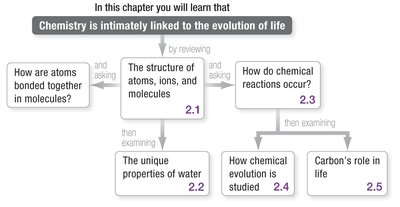
Atoms, Ions, and Molecules
All matter is composed of atoms, which consist of protons, neutrons, and electrons. The arrangement and interactions of these particles determine the chemical properties of elements and compounds.
Atom: The smallest unit of an element, consisting of a nucleus (protons and neutrons) surrounded by electrons.
Element: A substance that cannot be broken down into simpler substances by chemical means.
Valence Shell: The outermost electron shell of an atom; the number of unpaired electrons in this shell determines the atom's valence.
Chemical Bonds
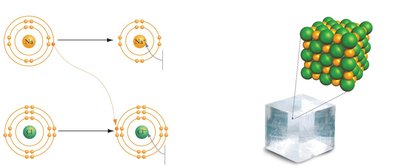
Atoms combine to form molecules through chemical bonds, which are determined by the arrangement of electrons in their valence shells.
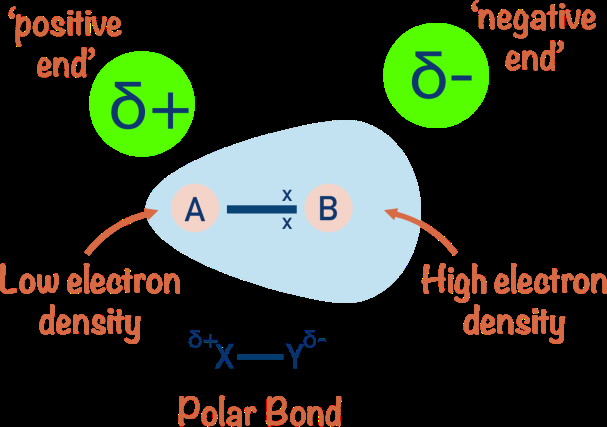
Covalent Bond: A bond formed when two atoms share one or more pairs of electrons. Covalent bonds can be nonpolar (equal sharing) or polar (unequal sharing).
Ionic Bond: A bond formed when one atom transfers electrons to another, resulting in oppositely charged ions that attract each other.
Electronegativity and Bond Polarity
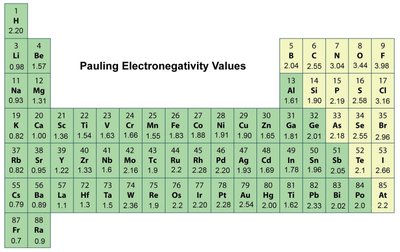
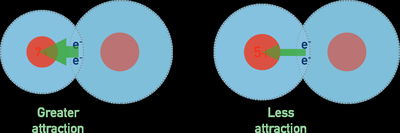
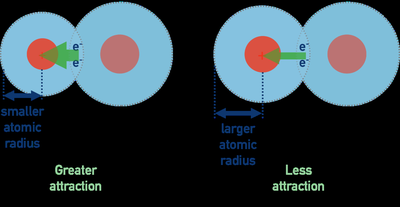
Electronegativity is the tendency of an atom to attract electrons in a chemical bond. Differences in electronegativity between atoms determine whether a bond is nonpolar covalent, polar covalent, or ionic.
Nonpolar Covalent Bond: Electrons are shared equally between atoms (e.g., H2).
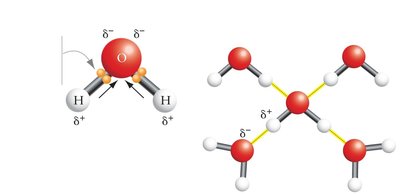
Polar Covalent Bond: Electrons are shared unequally, resulting in partial charges (e.g., H2O).
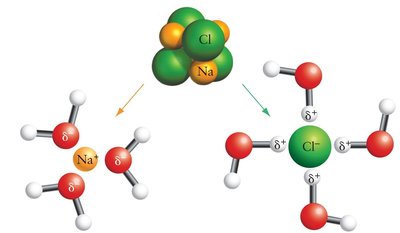
Ionic Bond: Electrons are transferred, resulting in full charges (e.g., NaCl).
Types of Covalent Bonds
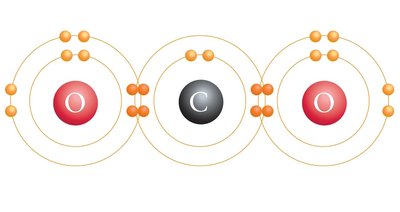
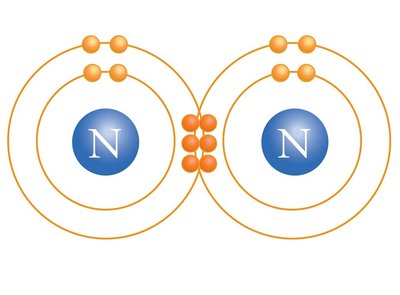
Covalent bonds can involve the sharing of one, two, or three pairs of electrons, resulting in single, double, or triple bonds, respectively.
Single Bond: One pair of electrons shared (e.g., CH4).
Double Bond: Two pairs of electrons shared (e.g., CO2).
Triple Bond: Three pairs of electrons shared (e.g., N2).
Hydrogen Bonds and Intermolecular Forces
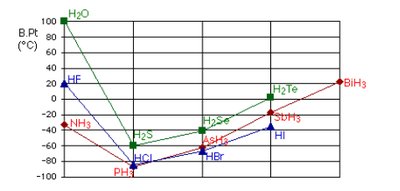
Hydrogen bonds are weak interactions that occur between a hydrogen atom covalently bonded to an electronegative atom (O, N, or F) and another electronegative atom. These bonds are crucial for the properties of water and biological molecules.
Hydrogen Bond: An attraction between a hydrogen atom with a partial positive charge and an electronegative atom with a partial negative charge.
Intermolecular Forces: Forces that hold molecules together, influencing boiling points and solubility.
Water: Structure and Properties
Polarity and Solubility
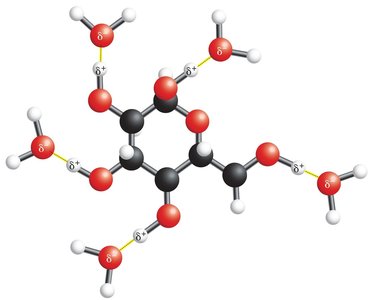
Water is a polar molecule, allowing it to dissolve many ionic and polar substances. Nonpolar molecules do not dissolve in water, making water an excellent solvent for biological reactions.
Hydrophilic: Substances that dissolve in water (polar or ionic).
Hydrophobic: Substances that do not dissolve in water (nonpolar).
Cohesion, Adhesion, and Surface Tension
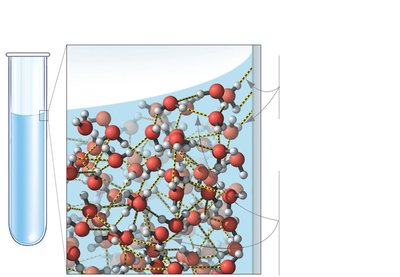
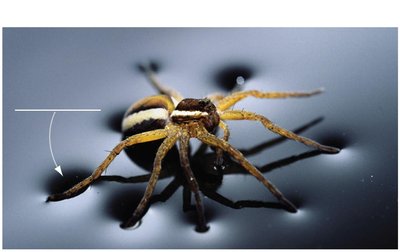
Water molecules exhibit cohesion (attraction to each other) and adhesion (attraction to other substances), leading to high surface tension and the formation of a meniscus in containers.
Cohesion: Water molecules stick to each other due to hydrogen bonding.
Adhesion: Water molecules stick to other surfaces.
Surface Tension: The energy required to increase the surface area of a liquid, high in water due to hydrogen bonds.
Density of Ice vs. Liquid Water
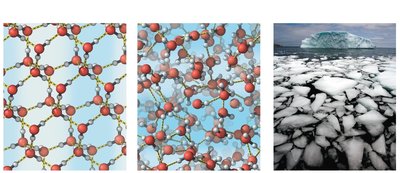
Solid water (ice) is less dense than liquid water because hydrogen bonds form a crystal lattice that spaces molecules farther apart. This property allows ice to float, insulating aquatic life in cold environments.
Acids, Bases, and pH in Biology
pH Scale and Calculations
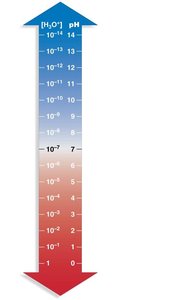
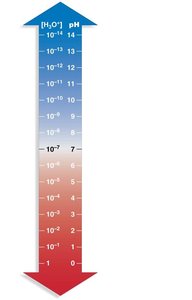
The pH scale measures the concentration of hydrogen ions (H+) in a solution. It is defined as:
$pH = -\log [H^+]$
Acid: A substance that increases the concentration of H+ in solution (lowers pH).
Base: A substance that decreases the concentration of H+ in solution (raises pH).
Neutral Solution: pH = 7 (e.g., pure water).
Examples of pH Calculations
For a solution with $[H^+] = 3.0 \times 10^{-8}$ M:
$pH = -\log [3.0 \times 10^{-8}] = 7.5$
For a solution with $pH = 4.7$:
$[H^+] = 10^{-4.7} = 2.0 \times 10^{-5}$ M
For a strong acid like HCl at 0.01 M ($10^{-2}$ M):
$pH = -\log [10^{-2}] = 2$
Acids, Bases, and Buffers
Acids donate protons (H+), while bases accept protons. Buffers help maintain stable pH in biological systems by neutralizing excess acids or bases.
Acid Example: $HCl + H_2O \rightarrow H_3O^+ + Cl^-$
Base Example: $NaOH \rightarrow Na^+ + OH^-$
Buffer Example: Bicarbonate in blood helps maintain pH near 7.4.
Chemical Evolution and the Origin of Life
Stanley Miller’s Experiment
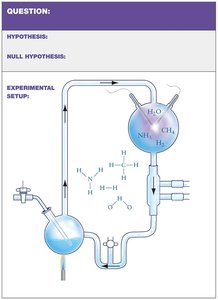
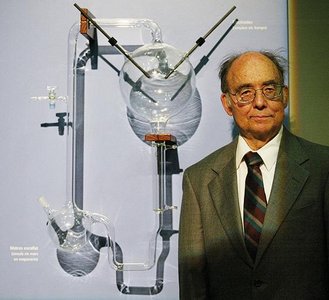
The Miller-Urey experiment tested whether simple molecules and energy could lead to the formation of complex organic molecules under early Earth conditions. The experiment simulated the atmosphere and energy sources of early Earth, resulting in the formation of amino acids and other organic compounds.
Hypothesis: Chemical evolution of organic molecules will occur in environments simulating early-Earth conditions.
Null Hypothesis: Chemical evolution will not occur in early-Earth simulations.
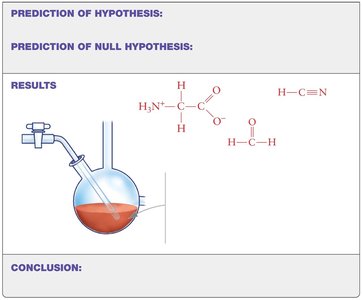
Results: Amino acids and other organic molecules were produced, supporting the hypothesis.
Atmospheric Evolution and Chemical Evolution
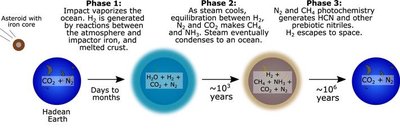
Recent studies suggest that events such as asteroid impacts could have altered Earth's early atmosphere, creating conditions favorable for the synthesis of organic molecules necessary for life.
Impact Hypothesis: Iron-rich asteroids could transiently reduce the atmosphere, leading to a composition rich in H2, CH4, and NH3 for millions of years.
Summary Table: Types of Chemical Bonds
Bond Type | Electron Sharing/Transfer | Example | Relative Strength |
|---|---|---|---|
Covalent (Nonpolar) | Equal sharing | H2, O2 | Strong |
Covalent (Polar) | Unequal sharing | H2O, NH3 | Strong |
Ionic | Electron transfer | NaCl | Strong (in solid), weaker in water |
Hydrogen Bond | Attraction between partial charges | Between H2O molecules | Weak (individually), strong (collectively) |
Additional info: This guide expands on the foundational chemical principles essential for understanding biological processes, including the structure of atoms, types of chemical bonds, properties of water, the pH scale, and the chemical origins of life.
