 Back
The Chemical Context of Life & Water: Foundations for Biology
Study Guide - Smart Notes
 Tailored notes based on your materials, expanded with key definitions, examples, and context.
Chapter 2: The Chemical Context of Life
Chemistry and Biology
Understanding biology requires a foundation in chemistry, as all living organisms are composed of matter governed by chemical laws. The properties and functions of biological molecules depend on the interactions of their atomic building blocks.
Matter: Anything that takes up space and has mass.
Chemistry: The study of matter and its interactions.
Elements and Compounds
All matter is composed of elements or compounds. Elements are pure substances that cannot be broken down by chemical reactions, while compounds are substances consisting of two or more elements in a fixed ratio, with properties distinct from their constituent elements.
Element: Substance that cannot be broken down into other substances by chemical reactions.
Compound: Substance consisting of two or more elements in a fixed ratio.
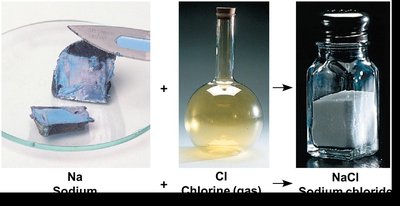
The Elements of Life
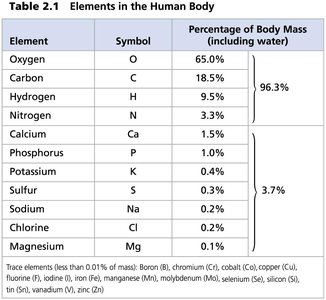
Of the 92 naturally occurring elements, about 20–25% are essential for life. Four elements—carbon, hydrogen, oxygen, and nitrogen (CHON)—make up about 96% of living matter. The remaining 4% consists of elements such as calcium, phosphorus, potassium, sulfur, sodium, chlorine, and magnesium. Trace elements are required in minute quantities.
Element | Symbol | Percentage of Body Mass (including water) |
|---|---|---|
Oxygen | O | 65.0% |
Carbon | C | 18.5% |
Hydrogen | H | 9.5% |
Nitrogen | N | 3.3% |
Calcium | Ca | 1.5% |
Phosphorus | P | 1.0% |
Potassium | K | 0.4% |
Sulfur | S | 0.3% |
Sodium | Na | 0.2% |
Chlorine | Cl | 0.2% |
Magnesium | Mg | 0.1% |
Atoms: The Building Blocks of Matter
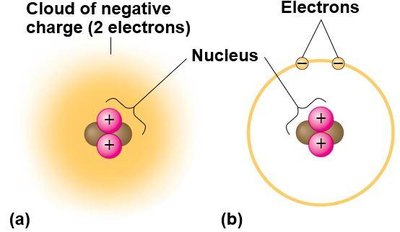
Each element consists of unique atoms, the smallest units of matter that retain the properties of an element. Atoms are composed of subatomic particles: neutrons (neutral), protons (positive), and electrons (negative). Neutrons and protons form the atomic nucleus, while electrons form a cloud around the nucleus.
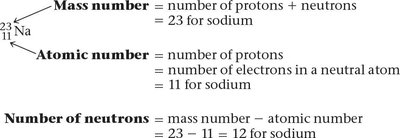
Atomic number: Number of protons in the nucleus (defines the element).
Mass number: Sum of protons and neutrons in the nucleus.
Atomic mass: Total mass of an atom, measured in Daltons (Da).
Isotopes and Radioactivity
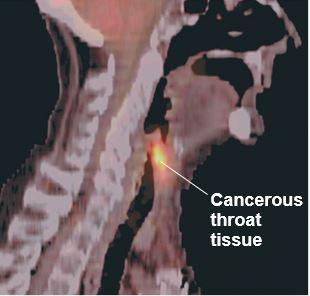
Isotopes are atoms of the same element with different numbers of neutrons. Some isotopes are unstable (radioactive) and decay spontaneously, emitting particles and energy. Radioactive isotopes are used as tracers in medicine to track atoms through metabolic processes.
Electrons and Energy Levels
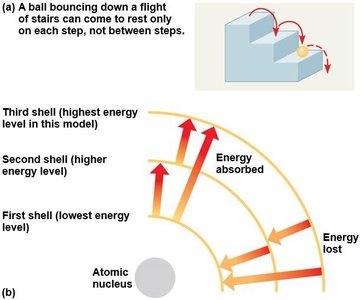
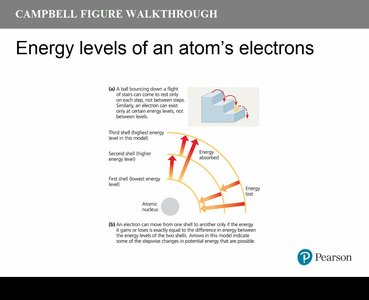
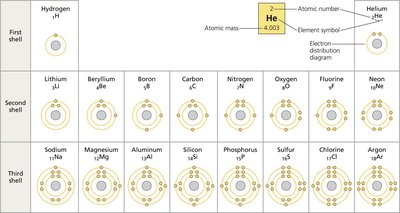
Electrons have potential energy due to their position relative to the nucleus. They occupy specific energy levels (shells), and can move between shells by absorbing or releasing energy. The chemical behavior of an atom is determined by the distribution of electrons in these shells, especially the outermost (valence) shell.
Valence electrons: Electrons in the outermost shell; determine chemical reactivity.
Elements with full valence shells are chemically inert.
Chemical Bonds
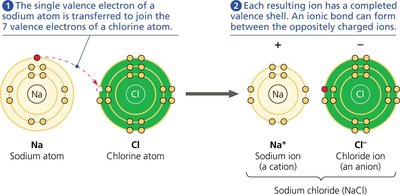
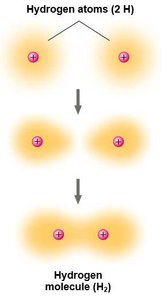
Atoms with incomplete valence shells can share or transfer electrons, forming chemical bonds. The main types of bonds are ionic and covalent bonds.
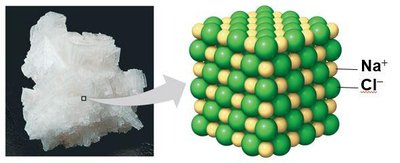
Ionic bond: Attraction between oppositely charged ions (cation and anion) formed by electron transfer.
Covalent bond: Sharing of pairs of valence electrons between atoms.
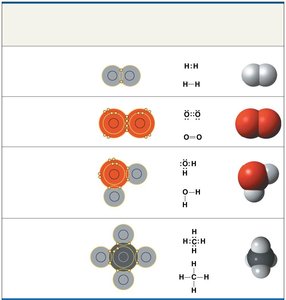
Electronegativity and Bond Polarity
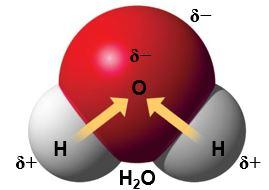
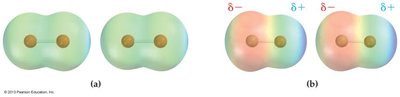
Electronegativity is an atom's attraction for electrons in a covalent bond. If atoms have similar electronegativity, they share electrons equally (nonpolar covalent bond). If one atom is more electronegative, electrons are shared unequally (polar covalent bond), resulting in partial charges.
Weak Molecular Interactions
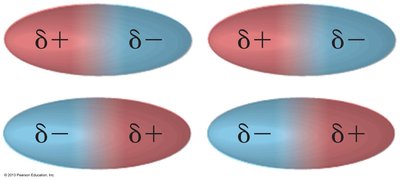
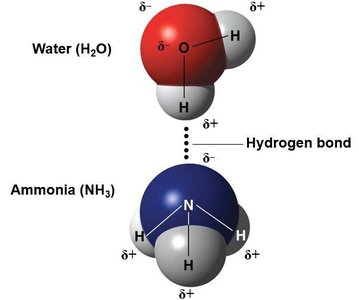
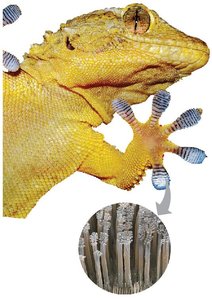
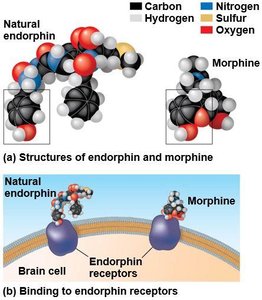
Large biological molecules are often held together by weak interactions, including dipole-dipole forces, hydrogen bonds, and van der Waals forces. These interactions are reversible and allow for temporary associations, such as enzyme-substrate binding.
Dipole-dipole: Attraction between polar molecules.
Hydrogen bond: Attraction between a hydrogen atom covalently bonded to a highly electronegative atom (O or N) and another electronegative atom.
Van der Waals forces: Weak attractions due to transient local partial charges.
Molecular Shape and Function
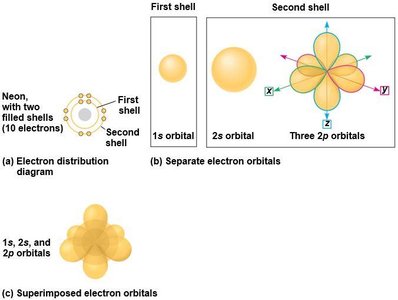
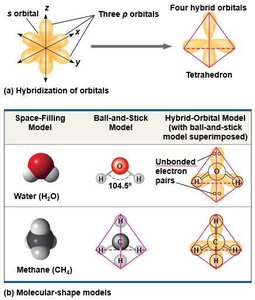
The shape of a molecule is determined by the positions of its atoms' orbitals and is crucial for its function. Molecular shape and charge determine how biological molecules recognize and respond to each other.
Chemical Reactions
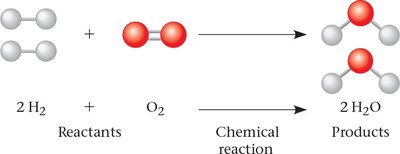
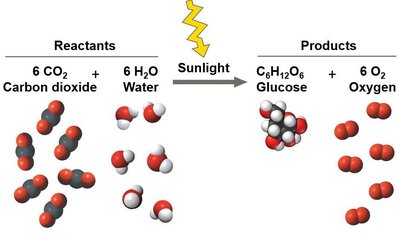
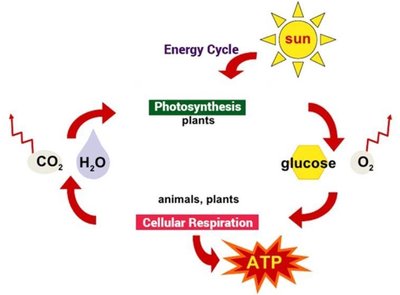
Chemical reactions involve the making and breaking of chemical bonds. Reactants are the starting materials, and products are the resulting substances. All chemical reactions are reversible, and equilibrium is reached when the forward and reverse reactions occur at the same rate.
Chemical equilibrium: State where reactant and product concentrations remain constant.
Chapter 3: Water and Life
Importance of Water
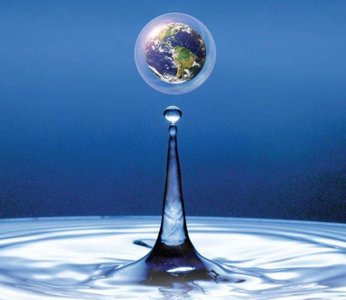
Water is essential for life, covering about 70% of Earth's surface and making up 70–95% of cell mass. It is the only common substance that exists in all three physical states (solid, liquid, gas) under natural conditions on Earth. The shape and charge of the water molecule are crucial to its life-supporting properties.
Hydrogen Bonding in Water
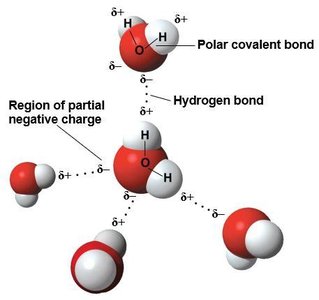
Water molecules are polar, with oxygen being highly electronegative and hydrogen less so, resulting in polar covalent bonds. The polarity allows water molecules to form hydrogen bonds with each other, which are strong enough to give water its unique properties.
Four Emergent Properties of Water
Water's structure and hydrogen bonding give rise to four key properties that support life:
Cohesive and adhesive behavior
Ability to moderate temperature
Expansion upon freezing
Versatility as a solvent
Cohesion and Adhesion
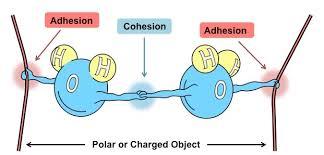
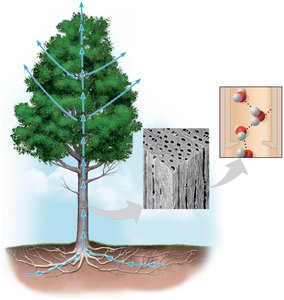
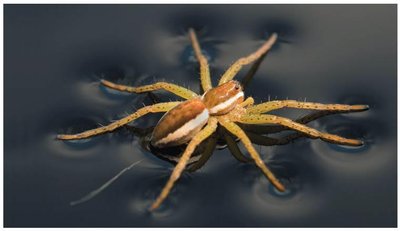
Cohesion is the attraction between water molecules due to hydrogen bonding, while adhesion is the attraction between water and other substances. These properties enable processes like water transport in plants and high surface tension.
Moderation of Temperature
Water absorbs heat from warmer air and releases it to cooler air, moderating temperature. It has a high specific heat, meaning it can absorb or release large amounts of heat with little temperature change. This property stabilizes climates and organisms' internal temperatures.
Specific heat of water:
Calorie (cal): Amount of heat required to raise 1 g of water by 1°C.
Joule (J):
Expansion upon Freezing
Water is less dense as a solid (ice) than as a liquid because hydrogen bonds in ice are more ordered, keeping molecules farther apart. This allows ice to float, insulating bodies of water and enabling aquatic life to survive in winter.
Versatility as a Solvent
Water is an excellent solvent due to its polarity, dissolving ionic and polar substances. When an ionic compound dissolves, each ion is surrounded by a hydration shell of water molecules. Water can also dissolve large polar molecules, such as proteins, if they have ionic and polar regions.
Hydrophilic and Hydrophobic Substances
Hydrophilic substances have an affinity for water (e.g., salts, sugars), while hydrophobic substances do not (e.g., oils, lipids). This distinction is crucial for biological structures like cell membranes.
Solute Concentration in Aqueous Solutions
Chemical reactions in organisms often occur in aqueous solutions. Concentrations are measured in moles (1 mol = molecules). Molarity (M) is the number of moles of solute per liter of solution.
Molar mass: Mass (g) of 1 mol of a molecule.
Molarity (M):
Acidity, Basicity, and pH
Water can dissociate into hydronium (H3O+) and hydroxide (OH–) ions. Acids increase H+ concentration, while bases decrease it. The pH scale measures H+ concentration: .
Neutral solution: pH = 7
Acidic solution: pH < 7
Basic solution: pH > 7
Buffers
Buffers are substances that minimize changes in pH by accepting or donating H+ ions. Most biological fluids are buffered to maintain a stable internal environment. The bicarbonate buffer system is especially important in blood.
Acidification: A Threat to Our Oceans
Human activities, such as burning fossil fuels, increase atmospheric CO2, which dissolves in oceans to form carbonic acid, lowering pH (ocean acidification). This process reduces carbonate ion concentration, threatening marine organisms that rely on calcium carbonate for their skeletons and shells.
Chapter Overviews and Key Concepts
Define and understand: matter, element, compound, atom, isotope, energy, chemical equilibrium, cohesion, adhesion, surface tension, kinetic energy, temperature, heat, specific heat, pH.
Describe the four properties of water that support life: cohesion/adhesion, temperature moderation, expansion upon freezing, solvent versatility.
Be able to convert between calories and joules, calculate molarity, and distinguish between acids, bases, hydrophilic, and hydrophobic substances.
