 Back
The Chemical Context of Life & Water: Foundations for General Biology
Study Guide - Smart Notes
 Tailored notes based on your materials, expanded with key definitions, examples, and context.
The Chemical Context of Life
Levels of Structural Organization
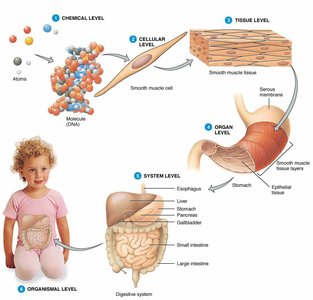
Biological systems are organized hierarchically, from atoms to molecules, cells, tissues, organs, organ systems, and the organism as a whole. Understanding these levels is fundamental to biology.
Chemical Level: Atoms combine to form molecules, such as DNA.
Cellular Level: Molecules form cells, the basic unit of life.
Tissue Level: Cells group to form tissues, like smooth muscle tissue.
Organ Level: Tissues combine to form organs, such as the stomach.
System Level: Organs work together in systems, e.g., the digestive system.
Organismal Level: All systems function together in the organism.
Matter, Elements, and Compounds
All living organisms are composed of matter, which consists of elements and compounds.
Matter: Anything that takes up space and has mass.
Element: A substance that cannot be broken down by chemical reactions; there are 92 naturally occurring elements.
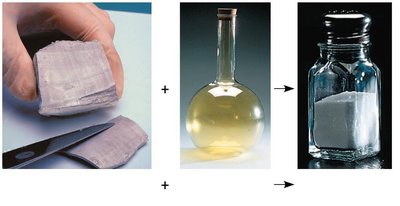
Compound: A substance consisting of two or more elements in a fixed ratio, with properties different from its constituent elements.
Emergent Properties: Compounds exhibit new properties not found in their component elements.
The Elements of Life
Life depends on a select group of elements, with four making up most of living matter.
Essential Elements: Required for life; humans need 25, plants 17.
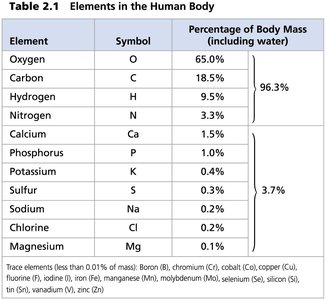
Major Elements: Carbon, hydrogen, oxygen, and nitrogen constitute 96% of living matter.
Minor Elements: Calcium, phosphorus, potassium, and sulfur make up most of the remaining 4%.
Trace Elements: Needed in minute quantities, e.g., iron and iodine.
Element | Symbol | Percentage of Body Mass |
|---|---|---|
Oxygen | O | 65.0% |
Carbon | C | 18.5% |
Hydrogen | H | 9.5% |
Nitrogen | N | 3.3% |
Calcium | Ca | 1.5% |
Phosphorus | P | 1.0% |
Potassium | K | 0.4% |
Sulfur | S | 0.3% |
Sodium | Na | 0.2% |
Chlorine | Cl | 0.2% |
Magnesium | Mg | 0.1% |
Atoms and Their Structure
Atoms are the smallest units of matter that retain the properties of an element. Their structure determines the element's properties.
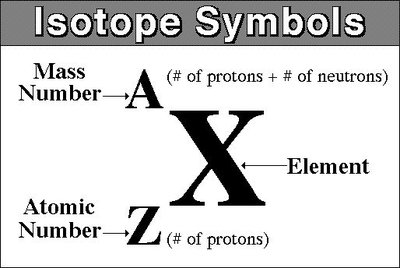
Atomic Structure: Atoms consist of a nucleus (protons and neutrons) surrounded by electrons.
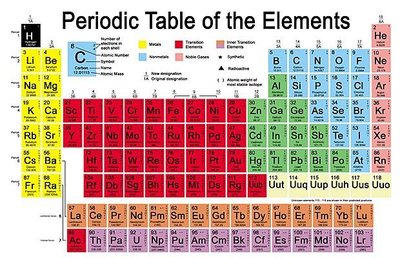
Atomic Number: Number of protons in the nucleus.
Mass Number: Sum of protons and neutrons.
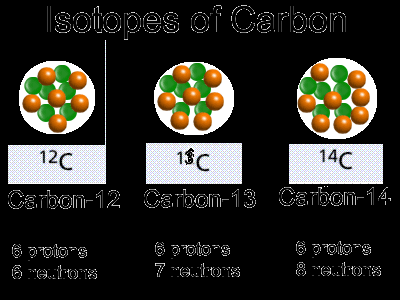
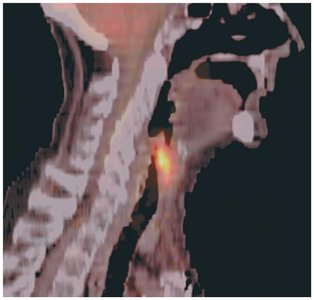
Isotopes: Variants of elements with different neutron numbers; can be stable or radioactive.
Electron Shells and Chemical Behavior
The arrangement of electrons in shells determines how atoms interact and form bonds.
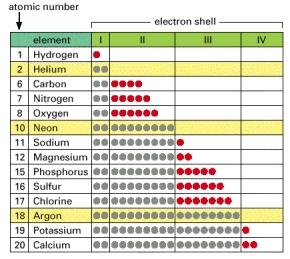
Valence Electrons: Electrons in the outermost shell; determine chemical reactivity.
Electron Shells: Atoms with incomplete outer shells are reactive; those with full shells are inert.
Electronegativity: The tendency of an atom to attract electrons; higher electronegativity means stronger attraction.
Chemical Bonds
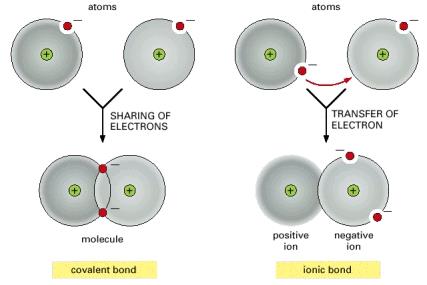
Atoms form bonds by gaining, losing, or sharing electrons to achieve stable electron configurations.
Covalent Bonds: Sharing of electron pairs between atoms; can be single, double, or triple bonds.
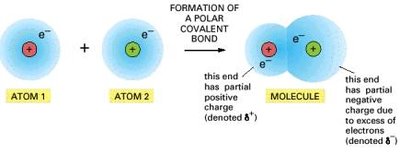
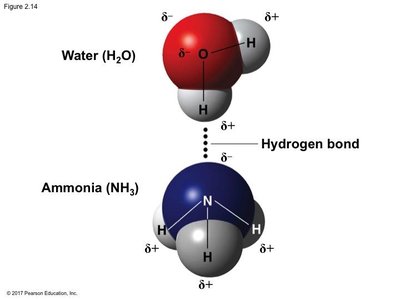
Polar Covalent Bonds: Unequal sharing of electrons, resulting in partial charges.
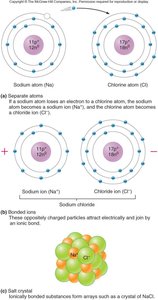
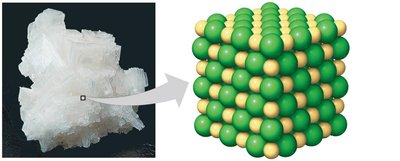
Ionic Bonds: Transfer of electrons from one atom to another, forming charged ions (cations and anions).
Noncovalent Bonds: Include ionic, hydrogen, and van der Waals interactions.
Weak Chemical Interactions
Weak interactions, such as hydrogen bonds and van der Waals forces, are crucial for the structure and function of biological molecules.
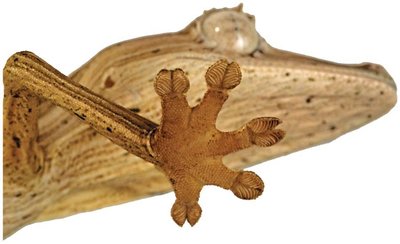
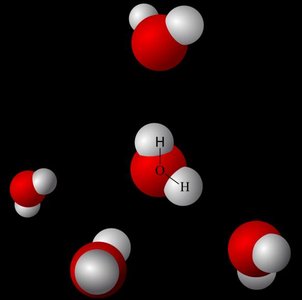
Hydrogen Bonds: Electrostatic attraction between polar molecules where hydrogen is bound to a highly electronegative atom (N, O, F).
Van der Waals Interactions: Weak attractions between molecules or parts of molecules that result from transient local partial charges.
Molecular Shape and Function
The shape of a molecule is determined by the positions of its atoms' orbitals and is critical for its function in biological systems.
Shape: Determines how molecules interact with each other.
Example: Endorphins and morphine have similar shapes, allowing both to bind to the same brain receptors.
Chemical Reactions
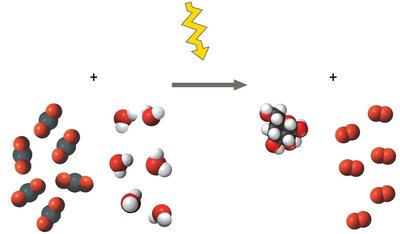
Chemical reactions involve the making and breaking of chemical bonds, transforming reactants into products.
Reactants: Starting materials in a reaction.
Products: Resulting substances after the reaction.
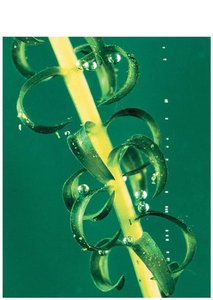
Example: Photosynthesis:
Water and Life
The Molecule That Supports All of Life
Water is essential for life, existing in all three states and exhibiting unique properties due to its molecular structure.
Structure: Water molecules are polar, allowing them to form hydrogen bonds.
Emergent Properties: Cohesion, moderation of temperature, expansion upon freezing, and versatility as a solvent.

Polar Covalent Bonds and Hydrogen Bonding
Water's polarity leads to hydrogen bonding, which is responsible for many of its unique properties.
Polar Covalent Bonds: Oxygen is more electronegative than hydrogen, creating partial charges.
Hydrogen Bonds: Form between water molecules, giving rise to cohesion and other properties.
Cohesion and Adhesion
Hydrogen bonds cause water molecules to stick together (cohesion) and to other substances (adhesion).
Cohesion: Responsible for surface tension and water transport in plants.
Adhesion: Helps water cling to cell walls and other surfaces.
Moderation of Temperature
Water moderates temperature by absorbing and releasing heat, thanks to its high specific heat.
Kinetic Energy: Energy of motion; thermal energy is the random motion of molecules.
Specific Heat: Amount of heat needed to change temperature; water's high specific heat stabilizes environments.
Evaporative Cooling: As water evaporates, it cools surfaces.
Floating of Ice on Water
Ice floats because it is less dense than liquid water, due to stable hydrogen bonds forming a crystalline structure.
Density: Water is densest at 4°C; ice is less dense, allowing it to float.
Biological Importance: Floating ice insulates water below, supporting aquatic life.
Water: The Solvent of Life
Water's polarity makes it an excellent solvent, dissolving a wide range of substances.
Solution: Homogeneous mixture; solvent dissolves solute.
Aqueous Solution: Water is the solvent.
Hydrophilic: Substances attracted to water.
Hydrophobic: Substances repelled by water; important in cell membranes.
Solute Concentration and Molarity
Biological reactions often occur in aqueous solutions, where concentration is measured in moles and molarity.
Molecular Mass: Sum of atomic masses in a molecule.
Mole: 6.02 × 10²³ molecules (Avogadro's number).
Molarity (M): Moles of solute per liter of solution.
Acids, Bases, and pH
Acids and bases alter the concentration of hydrogen ions in solution, affecting pH.
Acid: Increases H+ concentration.
Base: Reduces H+ concentration, increases OH-.
pH Scale: Measures acidity;
Neutral Solution: , pH = 7.
Buffers
Buffers help maintain stable pH in biological systems by minimizing changes in H+ and OH- concentrations.
Composition: Usually a weak acid and its conjugate base.
Function: Combine reversibly with H+ ions to resist pH changes.
