 Back
BackThe Chemical Context of Life: Atoms, Elements, and Chemical Bonds
Study Guide - Smart Notes
 Tailored notes based on your materials, expanded with key definitions, examples, and context.
The Chemistry and Structure of the Cell
Atoms and Subatomic Particles
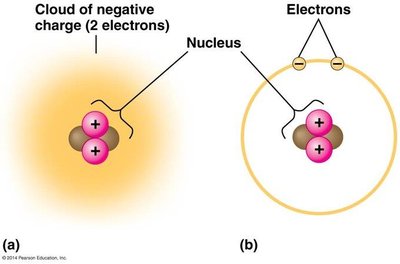
Atoms are the fundamental building blocks of matter, forming the basis of all substances, including living organisms. Each atom consists of a nucleus containing protons and neutrons, surrounded by electrons in defined regions called orbitals.
Atom: The smallest unit of an element that retains its chemical properties.
Subatomic particles: Protons (positively charged), neutrons (neutral), and electrons (negatively charged).
The number and arrangement of these particles determine the atom's identity and behavior.
Elements and the Periodic Table
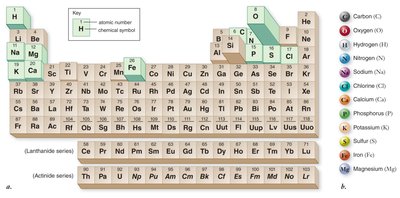
Elements are pure substances that cannot be broken down by ordinary chemical means. The periodic table organizes elements by their atomic number and properties.
Atomic number: Number of protons in the nucleus.
Atomic mass: Sum of protons and neutrons.
Most elements exist as mixtures of isotopes, which differ in neutron number.
Isotopes
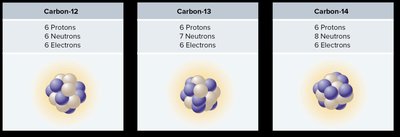
Isotopes are atoms of the same element with different numbers of neutrons. They have similar chemical properties but may differ in stability and mass.
Stable isotopes: Do not change over time.
Radioactive isotopes: Decay spontaneously, emitting radiation; useful in biological research and medicine.
Electron Arrangement and Orbitals
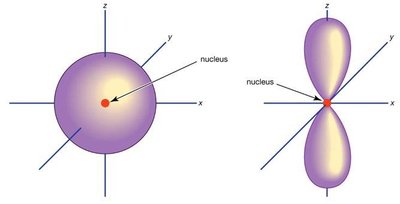
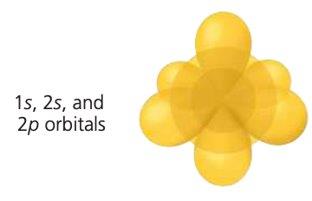
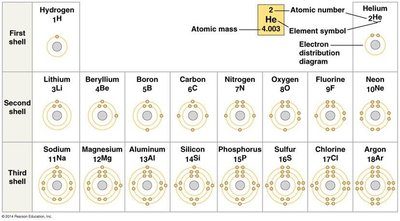
Electrons occupy orbitals, which are regions around the nucleus where electrons are likely to be found. The arrangement of electrons determines the chemical behavior of an atom.
Orbitals: s, p, d, f types; each can hold up to two electrons.
Shells: Energy levels containing one or more orbitals.
Electrons fill lower energy levels first before occupying higher ones.
Energy Levels and Electron Transitions
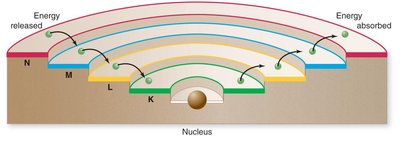
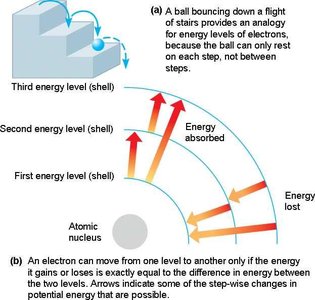
Electrons have potential energy based on their distance from the nucleus. When electrons absorb energy, they move to higher energy levels; when they release energy, they fall back to lower levels.
Potential energy: Energy due to position; electrons farther from the nucleus have more potential energy.
Energy is absorbed or released in discrete amounts (quanta).
Valence Electrons and the Octet Rule
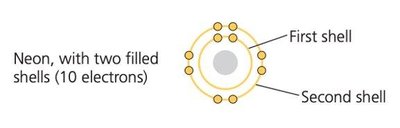
Valence electrons are those in the outermost shell and determine an atom's chemical properties. Atoms tend to gain, lose, or share electrons to achieve a full valence shell, often eight electrons (octet rule).
Valence shell: Outermost electron shell.
Octet rule: Atoms are most stable with eight electrons in their valence shell.
This rule explains the reactivity of elements and the formation of chemical bonds.
Chemical Bonds and Molecules
Types of Chemical Bonds
Chemical bonds are forces that hold atoms together in molecules and compounds. The main types are ionic, covalent, and hydrogen bonds, each with distinct properties and biological significance.
Molecule: Group of atoms held together by chemical bonds.
Compound: Molecule containing atoms of more than one element.
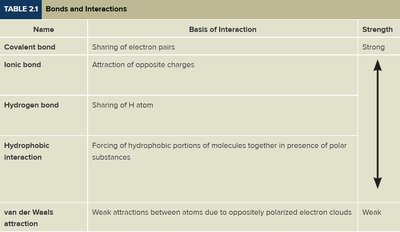
Name | Basis of Interaction | Strength |
|---|---|---|
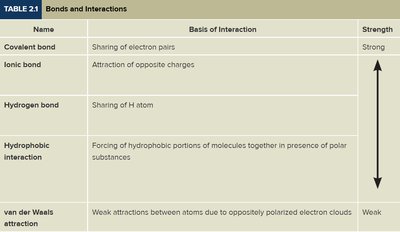
Covalent bond | Sharing of electron pairs | Strong |
Ionic bond | Attraction of opposite charges | Moderate |
Hydrogen bond | Sharing of H atom | Weak |
Hydrophobic interaction | Forcing of hydrophobic portions of molecules together in presence of polar substances | Weak |
van der Waals attraction | Weak attractions between atoms due to oppositely polarized electron clouds | Weak |
Ionic Bonds
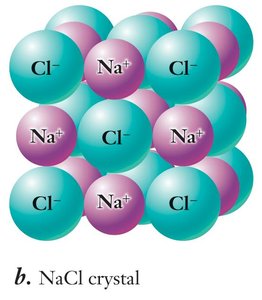
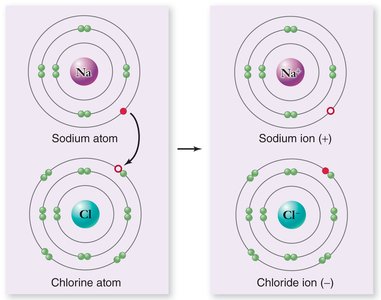
Ionic bonds form when atoms transfer electrons, resulting in oppositely charged ions that attract each other. This typically occurs between metals and nonmetals.
Cation: Positively charged ion (loses electrons).
Anion: Negatively charged ion (gains electrons).
Example: Sodium chloride (NaCl) forms when sodium donates an electron to chlorine.
Covalent Bonds
Covalent bonds form when two atoms share one or more pairs of valence electrons. These bonds are strong and can involve single, double, or triple pairs of electrons.
Single bond: One pair of shared electrons (e.g., H2).
Double bond: Two pairs of shared electrons (e.g., O2).
Triple bond: Three pairs of shared electrons (e.g., N2).
Molecules are stable when all valence electrons are paired and the octet rule is satisfied.
Polar and Nonpolar Covalent Bonds
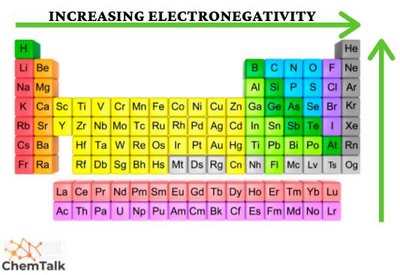
The sharing of electrons in covalent bonds can be equal or unequal, depending on the atoms' electronegativity (affinity for electrons).
Nonpolar covalent bond: Electrons are shared equally (e.g., H2, O2).
Polar covalent bond: Electrons are shared unequally, creating partial charges (e.g., H2O).
Electronegativity increases across a period and up a group in the periodic table.
Hydrogen Bonds
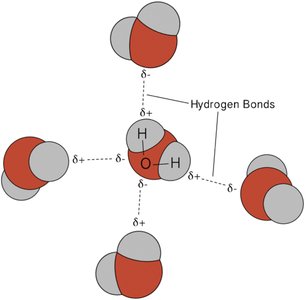
Hydrogen bonds are weak attractions between the partially positive hydrogen atom of one polar molecule and the partially negative atom (often oxygen or nitrogen) of another. Though individually weak, they are crucial in stabilizing the structures of DNA, proteins, and water.
Common in water, where they contribute to its unique properties.
Too weak to form stable molecules alone, but strong in large numbers.
Summary Table: Types of Chemical Bonds
Name | Basis of Interaction | Strength |
|---|---|---|
Covalent bond | Sharing of electron pairs | Strong |
Ionic bond | Attraction of opposite charges | Moderate |
Hydrogen bond | Sharing of H atom | Weak |
Hydrophobic interaction | Forcing of hydrophobic portions of molecules together in presence of polar substances | Weak |
van der Waals attraction | Weak attractions between atoms due to oppositely polarized electron clouds | Weak |
Additional info:
Understanding atomic structure and chemical bonding is foundational for studying biological molecules and cellular processes.
These principles explain the behavior of water, macromolecules, and the biochemical reactions essential for life.
