 Back
BackThe Chemical Context of Life: Atoms, Molecules, and Bonds in Biology
Study Guide - Smart Notes
 Tailored notes based on your materials, expanded with key definitions, examples, and context.
The Chemical Context of Life
Atoms, Molecules, and Biological Organization
All living organisms are composed of matter, which is made up of elements organized into atoms and molecules. Understanding the structure and behavior of atoms is fundamental to biology, as it explains how molecules form and interact within cells.
Atoms are the smallest units of elements that retain their chemical properties.
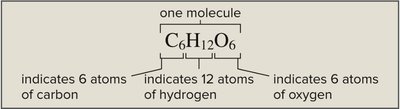
Molecules are combinations of two or more atoms held together by chemical bonds.
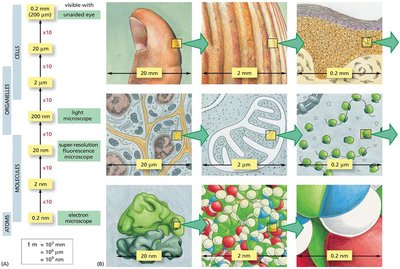
Biological organization spans from atoms to molecules, organelles, cells, and beyond.
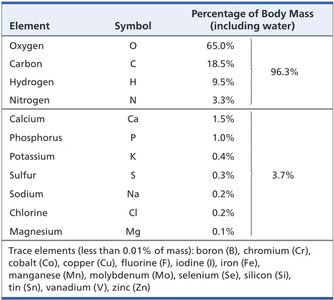
Elements Essential to Life
Life depends on a limited number of elements, with four (oxygen, carbon, hydrogen, and nitrogen) making up the majority of living matter. Trace elements are also vital for specific biological functions.
Major elements: O, C, H, N (make up over 96% of body mass)
Minor elements: Ca, P, K, S, Na, Cl, Mg
Trace elements: Required in very small amounts (e.g., Fe, Zn, I)
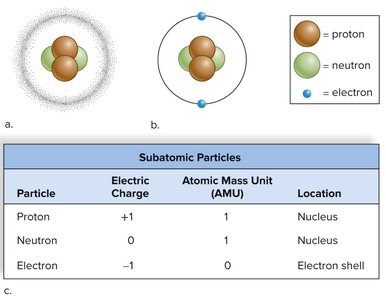
Atomic Structure and Properties
Subatomic Particles
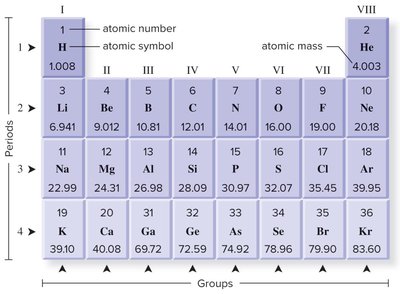
Atoms consist of three main subatomic particles: protons, neutrons, and electrons. The arrangement and number of these particles determine the atom's identity and chemical behavior.
Protons: Positively charged, found in the nucleus, define the atomic number.
Neutrons: Neutral, found in the nucleus, contribute to atomic mass.
Electrons: Negatively charged, orbit the nucleus in shells.
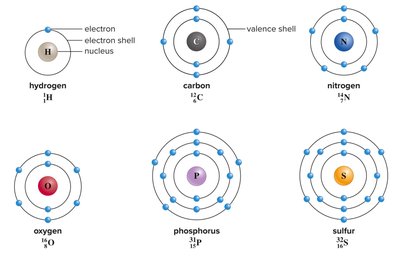
Atomic Number, Mass Number, and Isotopes
The atomic number is the number of protons in an atom, which defines the element. The mass number is the sum of protons and neutrons. Isotopes are atoms of the same element with different numbers of neutrons.
Atomic number (Z): Number of protons
Mass number (A): Number of protons + neutrons
Isotopes: Atoms with the same atomic number but different mass numbers
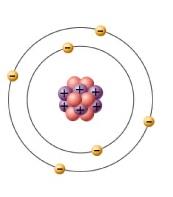
Electron Shells and Energy Levels
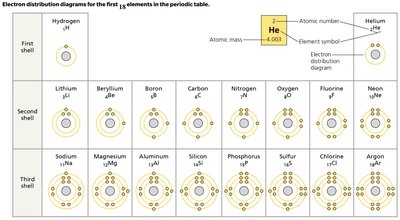
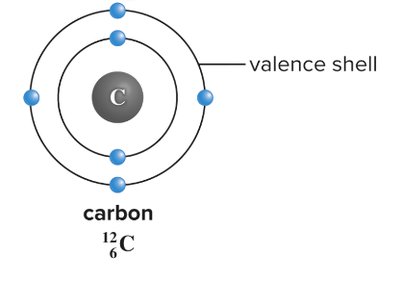
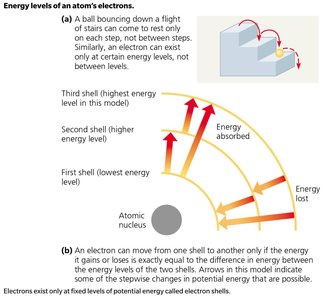
Electrons occupy energy levels or shells around the nucleus. The arrangement of electrons, especially in the outermost shell (valence shell), determines an atom's chemical reactivity.
First shell: Holds up to 2 electrons
Second shell: Holds up to 8 electrons
Third shell: Holds up to 8 electrons (for main group elements)
Atoms are most stable when their valence shell is full (the "octet rule").
Chemical Bonds and Molecular Formation
Types of Chemical Bonds
Atoms interact to achieve stable electron configurations, often by forming chemical bonds. The main types of bonds in biology are ionic, covalent, and hydrogen bonds.
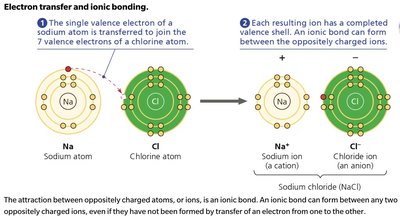
Ionic bonds: Formed by the transfer of electrons from one atom to another, resulting in oppositely charged ions (e.g., NaCl).
Covalent bonds: Formed by the sharing of electron pairs between atoms. Can be single, double, or triple bonds.
Polar covalent bonds: Unequal sharing of electrons, leading to partial charges (δ+ and δ-).
Nonpolar covalent bonds: Equal sharing of electrons, no charge separation.
Valence Electrons and Bonding Capacity
The number of valence electrons determines how many bonds an atom can form. The "HONC" rule summarizes the typical bonding patterns for hydrogen, oxygen, nitrogen, and carbon.
Element | Valence Electrons | Typical Bonds Formed |
|---|---|---|
Hydrogen (H) | 1 | 1 |
Oxygen (O) | 6 | 2 |
Nitrogen (N) | 5 | 3 |
Carbon (C) | 4 | 4 |
Phosphorus (P) | 5 | 3 or 5 |
Electronegativity and Bond Polarity
Electronegativity is an atom's ability to attract shared electrons. Differences in electronegativity between atoms determine whether a bond is nonpolar covalent, polar covalent, or ionic.
Nonpolar covalent: Electronegativity difference < 0.5
Polar covalent: Electronegativity difference 0.5–1.7
Ionic: Electronegativity difference > 1.7
Oxygen and nitrogen are highly electronegative, often creating polar bonds in biological molecules.
Ionic Bond Example: Sodium Chloride (NaCl)
Sodium (Na) donates an electron to chlorine (Cl), forming Na+ and Cl- ions, which are held together by ionic attraction.
Biological Molecules and Their Chemical Basis
Major Classes of Biomolecules
Biological macromolecules are built from atoms through covalent bonding. The four major classes are proteins, lipids, carbohydrates, and nucleic acids.
Proteins: Polymers of amino acids; perform structural, enzymatic, and regulatory functions.
Lipids: Hydrophobic molecules; major components of cell membranes and energy storage.
Carbohydrates: Sugars and polymers of sugars; energy storage and structural roles.
Nucleic acids: DNA and RNA; store and transmit genetic information.
Atoms to Cells: Scale of Biological Structures
Biological structures range in size from atoms and molecules to organelles and cells. Understanding this scale is essential for appreciating how chemical properties influence biological function.
Summary Table: Key Elements in Biology
Element | Symbol | Percentage of Body Mass |
|---|---|---|
Oxygen | O | 65.0% |
Carbon | C | 18.5% |
Hydrogen | H | 9.5% |
Nitrogen | N | 3.3% |
Calcium | Ca | 1.5% |
Phosphorus | P | 1.0% |
Potassium | K | 0.4% |
Sulfur | S | 0.3% |
Sodium | Na | 0.2% |
Chlorine | Cl | 0.2% |
Magnesium | Mg | 0.1% |

Key Concepts
Atoms interact via bonds to form molecules, which are essential for biological structure and function.
Chemical properties such as polarity and electronegativity determine molecular interactions and biological activity.
Understanding atomic structure and bonding is foundational for studying all aspects of biology.
