 Back
BackThe Chemical Context of Life: Atoms, Elements, and Chemical Bonds
Study Guide - Smart Notes
 Tailored notes based on your materials, expanded with key definitions, examples, and context.
The Chemical Context of Life
Atoms and Elements
The foundation of all matter is the atom, the smallest unit of an element that retains its chemical properties. Elements are substances that cannot be broken down into simpler substances by chemical means. Each element is defined by the number of protons in its nucleus, known as the atomic number.
Atom: Consists of a nucleus (containing protons and neutrons) and electrons orbiting the nucleus.
Element: A pure substance made of only one kind of atom (e.g., Hydrogen, Oxygen).
Atomic Number (Z): Number of protons in the nucleus.
Mass Number (A): Sum of protons and neutrons in the nucleus.
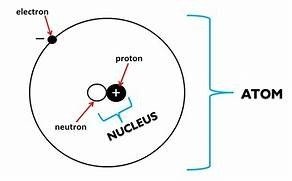
Example: A carbon atom has 6 protons, 6 neutrons, and 6 electrons.
The Periodic Table of Elements
The periodic table organizes elements based on their atomic number and chemical properties. Elements in the same column (group) have similar chemical behaviors due to their valence electron configurations.
Groups: Vertical columns; elements share similar properties.
Periods: Horizontal rows; elements have the same number of electron shells.
Major Element Groups: Alkali metals, alkaline earth metals, transition metals, halogens, noble gases, etc.
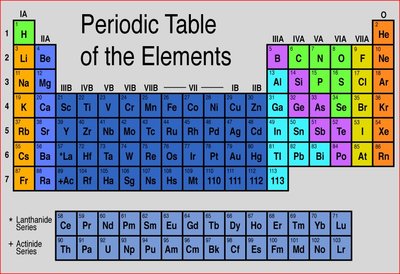
Example: Sodium (Na) and Potassium (K) are both alkali metals and react vigorously with water.
Atomic Structure and Electron Configuration
Atoms are composed of a central nucleus (protons and neutrons) surrounded by electrons in specific energy levels or shells. The arrangement of electrons determines how atoms interact and bond with each other.
Valence Electrons: Electrons in the outermost shell; determine chemical reactivity.
Electron Shells: Energy levels where electrons reside; filled in order of increasing energy.
Example: Carbon has 4 valence electrons, allowing it to form up to 4 covalent bonds.
Chemical Bonds and Molecules
Covalent Bonds
Covalent bonds form when two atoms share one or more pairs of electrons. These bonds are strong and are the basis for most molecules in living organisms.
Single Bond: One pair of shared electrons (e.g., H–H).
Double Bond: Two pairs of shared electrons (e.g., O=O).
Polar Covalent Bond: Electrons are shared unequally, resulting in partial charges (e.g., H2O).
Nonpolar Covalent Bond: Electrons are shared equally (e.g., O2).
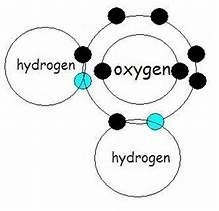
Example: In a water molecule, oxygen shares electrons with two hydrogen atoms, forming polar covalent bonds.
Polarity of Water
Water is a polar molecule due to the unequal sharing of electrons between oxygen and hydrogen. This polarity allows water to form hydrogen bonds, which are critical for many biological processes.
Partial Charges: Oxygen is slightly negative (δ−), hydrogens are slightly positive (δ+).
Hydrogen Bonds: Weak attractions between the partial positive charge of hydrogen and the partial negative charge of another electronegative atom.
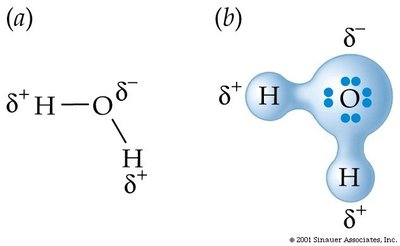
Example: Hydrogen bonds between water molecules give water its unique properties, such as high surface tension and specific heat.
Ionic Bonds
Ionic bonds form when one atom transfers one or more electrons to another atom, resulting in oppositely charged ions that attract each other. These bonds are common in salts and are important in biological systems for maintaining electrical gradients.
Cation: Positively charged ion (e.g., Na+).
Anion: Negatively charged ion (e.g., Cl−).
Salt: Compound formed by ionic bonding (e.g., NaCl).
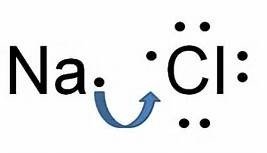
Example: Sodium donates an electron to chlorine, forming Na+ and Cl−, which combine to make table salt (NaCl).
Summary Table: Types of Chemical Bonds
Bond Type | Description | Example |
|---|---|---|
Covalent | Atoms share electrons | H2O, CH4 |
Ionic | Transfer of electrons; attraction between ions | NaCl |
Hydrogen Bond | Weak attraction between polar molecules | Between H2O molecules |
Additional info: Understanding atomic structure and chemical bonding is essential for grasping how biological molecules interact and function in living systems.
