 Back
The Chemical Context of Life: Atoms, Elements, and Chemical Bonds
Study Guide - Smart Notes
 Tailored notes based on your materials, expanded with key definitions, examples, and context.
Introduction to Biology
What is Life?
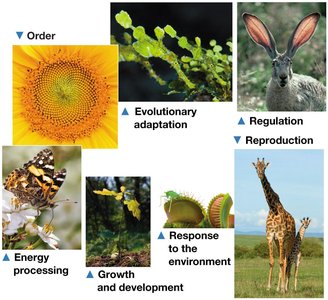
Biology is the scientific study of life. Life is recognized by a set of characteristics that living things exhibit. These characteristics are unified by several major themes in biology.
Organization: Living things are highly organized, from molecules to entire organisms.
Information: Life processes are based on genetic information encoded in DNA.
Energy and Matter: Living organisms acquire and use energy and matter.
Interactions: Organisms interact with each other and their environment.
Evolution: Populations of organisms evolve over generations.
The Chemical Context of Life
Elements, Compounds, and Matter
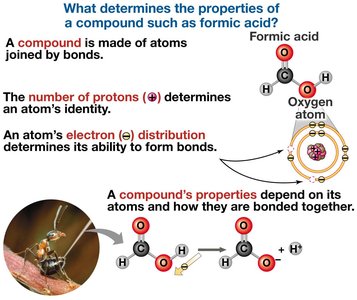
All organisms are composed of matter, which is anything that takes up space and has mass. Matter is made up of elements, substances that cannot be broken down by chemical reactions. Compounds are substances consisting of two or more elements in a fixed ratio, often exhibiting emergent properties distinct from their constituent elements.
Element: A pure substance consisting of only one type of atom.
Compound: A substance formed from two or more elements chemically combined in a fixed ratio.
Emergent Properties: New characteristics that arise when elements combine to form compounds.
The Elements of Life
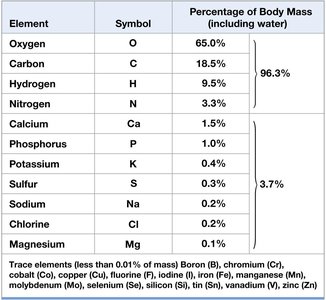
About 96% of living matter is composed of four elements: carbon (C), hydrogen (H), oxygen (O), and nitrogen (N). Most of the remaining 4% consists of calcium (Ca), phosphorus (P), potassium (K), and sulfur (S). Trace elements are required in very small amounts but are essential for life (e.g., iron, Fe).
Element | Symbol | Percentage of Body Mass (including water) |
|---|---|---|
Oxygen | O | 65.0% |
Carbon | C | 18.5% |
Hydrogen | H | 9.5% |
Nitrogen | N | 3.3% |
Calcium | Ca | 1.5% |
Phosphorus | P | 1.0% |
Potassium | K | 0.4% |
Sulfur | S | 0.3% |
Sodium | Na | 0.2% |
Chlorine | Cl | 0.2% |
Magnesium | Mg | 0.1% |
Atoms and Their Structure
Subatomic Particles
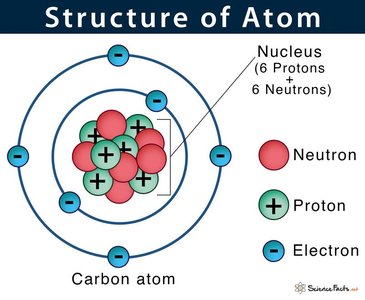
Each element consists of unique atoms, the smallest units of matter that retain the properties of the element. Atoms are composed of subatomic particles:
Protons: Positively charged particles found in the nucleus.
Neutrons: Electrically neutral particles found in the nucleus.
Electrons: Negatively charged particles orbiting the nucleus in electron shells.
Atomic Number, Mass Number, and Isotopes
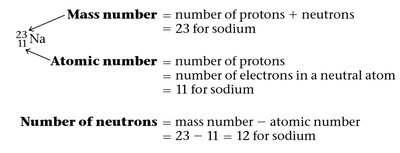
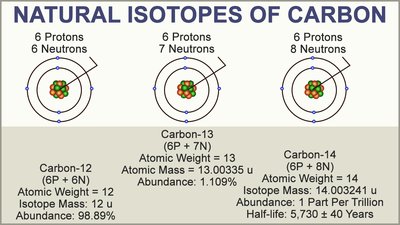
The atomic number is the number of protons in an atom, which determines the element. The mass number is the sum of protons and neutrons. Isotopes are atoms of the same element with different numbers of neutrons, resulting in different mass numbers. Some isotopes are radioactive and decay spontaneously.
Atomic Number (Z): Number of protons in the nucleus.
Mass Number (A): Number of protons plus neutrons.
Isotopes: Atoms with the same number of protons but different numbers of neutrons.
Electron Arrangement and Chemical Properties
Energy Levels and Electron Shells
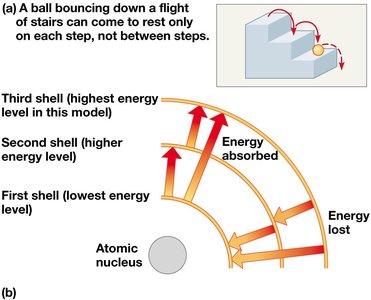
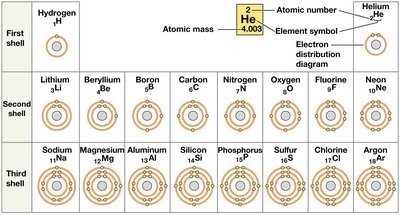
Electrons occupy energy levels called shells. The arrangement of electrons in these shells determines the chemical behavior of an atom. Electrons in the outermost shell, called valence electrons, are most important for chemical bonding. Atoms with full valence shells are chemically inert.
Valence Shell: Outermost electron shell.
Valence Electrons: Electrons in the valence shell; determine chemical reactivity.
Chemical Bonds and Molecules
Covalent Bonds
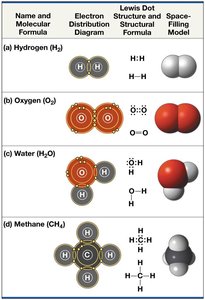
Covalent bonds involve the sharing of pairs of valence electrons between atoms. Molecules are formed when two or more atoms are held together by covalent bonds. Covalent bonds can be single, double, or triple, depending on the number of shared electron pairs.
Single Bond: Sharing of one pair of electrons (e.g., H—H).
Double Bond: Sharing of two pairs of electrons (e.g., O=O).
Nonpolar Covalent Bond: Electrons are shared equally.
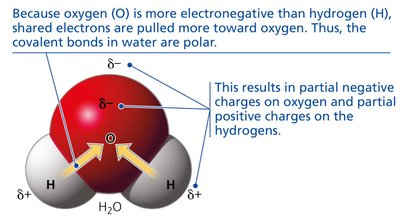
Polar Covalent Bond: Electrons are shared unequally, resulting in partial charges.
Electronegativity
Electronegativity is an atom's attraction for electrons in a covalent bond. The more electronegative an atom, the more strongly it pulls shared electrons toward itself. This leads to polarity in molecules such as water.
Example: In water (H2O), oxygen is more electronegative than hydrogen, resulting in a polar molecule with partial charges.
Weak Chemical Interactions: Ionic and Hydrogen Bonds
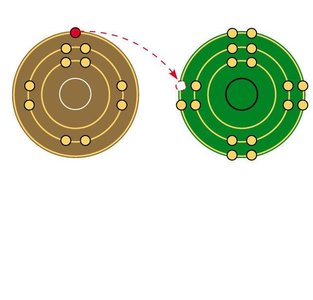
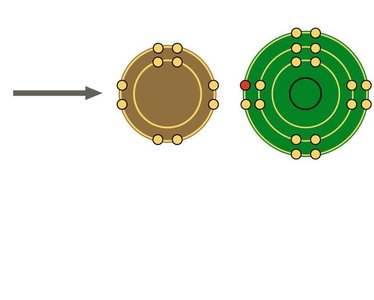
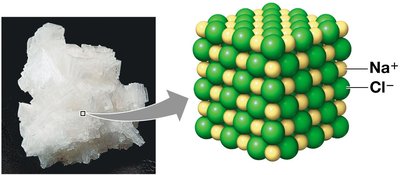
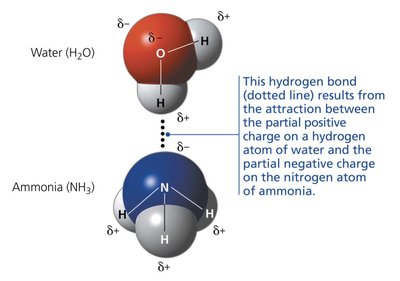
In addition to covalent bonds, weak chemical interactions play important roles in biological systems. Ionic bonds form when electrons are transferred from one atom to another, creating oppositely charged ions that attract each other. Hydrogen bonds occur when a hydrogen atom covalently bonded to one electronegative atom is attracted to another electronegative atom.
Ionic Bond: Attraction between cations (+) and anions (−).
Hydrogen Bond: Weak attraction between a hydrogen atom and an electronegative atom (e.g., O or N).
Chemical Reactions
Making and Breaking Bonds
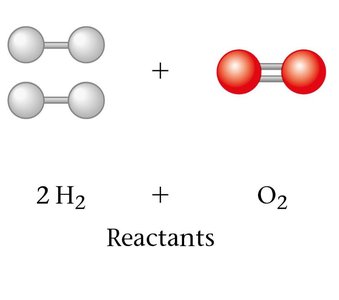
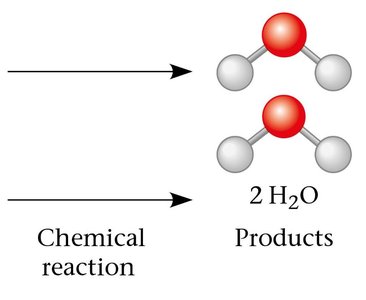
Chemical reactions involve the making and breaking of chemical bonds. Reactants are the starting substances, and products are the resulting substances. Chemical reactions are fundamental to all biological processes, including metabolism and energy transfer.
Reactants: Substances that start a chemical reaction.
Products: Substances formed as a result of a chemical reaction.
Example: Photosynthesis
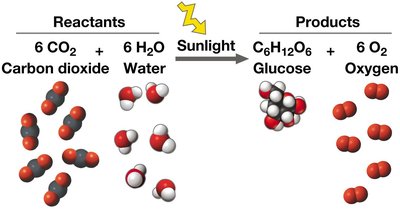
Photosynthesis is a key chemical reaction in biology, where sunlight powers the conversion of carbon dioxide and water into glucose and oxygen.
Summary of Key Concepts
Matter consists of chemical elements in pure form and in combinations called compounds.
An element’s properties depend on the structure of its atoms (protons, neutrons, electrons, electron shells).
The formation and function of molecules and ionic compounds depend on chemical bonding between atoms (covalent, ionic, hydrogen bonds).
Chemical reactions make and break chemical bonds, enabling life’s processes.
