 Back
The Chemical Context of Life: Atoms, Bonds, and Molecular Interactions
Study Guide - Smart Notes
 Tailored notes based on your materials, expanded with key definitions, examples, and context.
The Chemical Context of Life
Atoms and Subatomic Particles
Atoms are the fundamental units of matter, composed of three types of subatomic particles: protons, neutrons, and electrons. Understanding their arrangement and properties is essential for grasping the chemical basis of biological molecules.
Protons: Positively charged particles found in the nucleus; determine the atomic number and identity of the element.
Neutrons: Neutral particles in the nucleus; contribute to atomic mass and define isotopes.
Electrons: Negatively charged particles orbiting the nucleus; responsible for chemical reactivity.
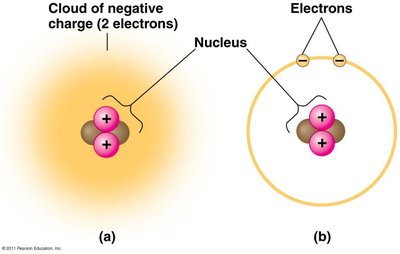
Electron Shells and Orbitals
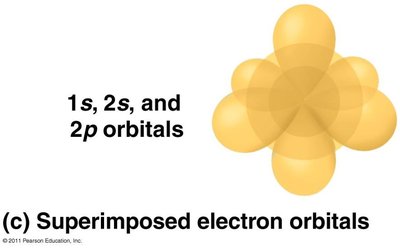
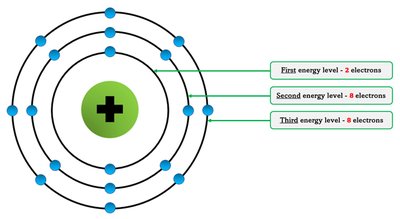
Electrons occupy specific energy levels, or shells, around the nucleus. The arrangement of electrons in these shells determines how atoms interact and bond.
Electrons are constantly moving and their exact location cannot be pinpointed, but they are found within shells 90% of the time.
The first shell holds up to 2 electrons; subsequent shells can hold up to 8 electrons each.
Electrons in shells farther from the nucleus have higher potential energy.
The outermost shell is called the valence shell, which is crucial for chemical bonding.
Formation of Molecules and Chemical Bonds
Atoms combine to form molecules through chemical bonds, which involve interactions between electrons in the valence shell. There are two main types of bonds: ionic and covalent.
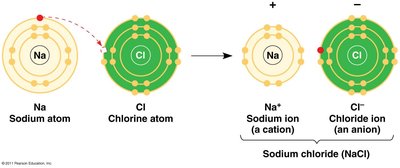
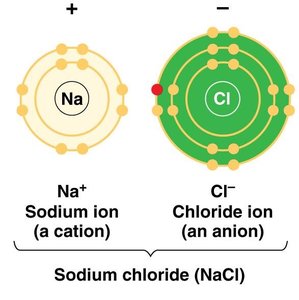
Ionic Bonds: Formed when one atom transfers an electron to another, creating charged ions (cations and anions) that attract each other.
Covalent Bonds: Formed when two atoms share pairs of electrons.
Electronegativity
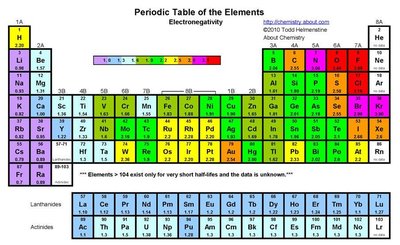
Electronegativity is the tendency of an atom to attract electrons. It influences the type of bond formed between atoms.
Atoms with high electronegativity (e.g., oxygen, fluorine) strongly attract electrons.
Differences in electronegativity between atoms lead to the formation of ionic or polar covalent bonds.
Ionic Bonds
Ionic bonds occur when atoms with very different electronegativities interact, resulting in the transfer of electrons and the formation of ions.
Anion: An atom that gains an electron and becomes negatively charged.
Cation: An atom that loses an electron and becomes positively charged.
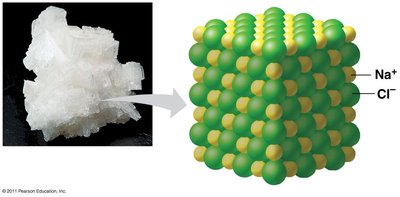
Ions are held together by electrostatic attraction.
Ionic compounds (salts) are formed from these interactions.
Common Ionic Compounds
NaCl (sodium chloride)
CaCl2 (calcium chloride)
KCl (potassium chloride)
MgCl2 (magnesium chloride)
Covalent Bonds
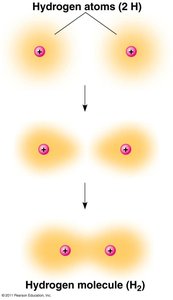
Covalent bonds are formed when two atoms share one or more pairs of electrons. These bonds are fundamental to the structure of most biological molecules.
Single Bond: Sharing one pair of electrons.
Double Bond: Sharing two pairs of electrons.
Covalent bonds are represented by lines in molecular diagrams.
Nearly every molecule in biology is held together by covalent bonds.
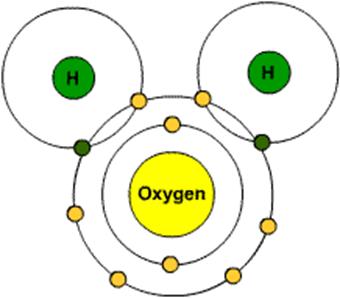
Types of Covalent Bonds
Nonpolar Covalent Bonds: Electrons are shared equally between atoms of similar electronegativity (e.g., C-H bonds).
Polar Covalent Bonds: Electrons are shared unequally, resulting in partial charges (e.g., O-H bonds in water).
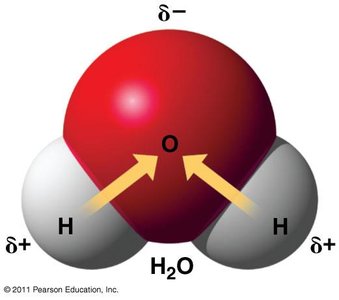
Electronegativity and Bond Polarity
Oxygen and nitrogen are highly electronegative and form polar covalent bonds with carbon and hydrogen.
Carbon and hydrogen have similar electronegativity and form nonpolar covalent bonds.
Hydrogen Bonds
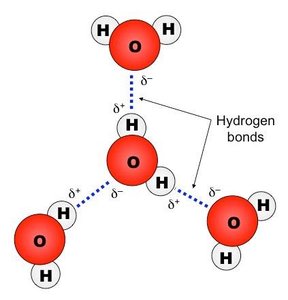
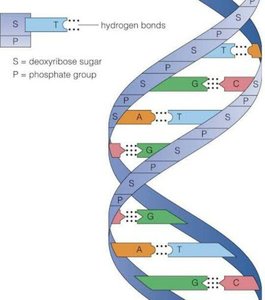
Hydrogen bonds are weak interactions that occur between molecules, especially when hydrogen is covalently bonded to highly electronegative atoms like oxygen or nitrogen. These bonds are critical for the structure and function of many biological molecules.
Hydrogen bonds are represented by dotted lines in diagrams.
Though individually weak, many hydrogen bonds together create strong interactions.
Hydrogen bonds are responsible for holding together the two strands of DNA and for the unique properties of water.
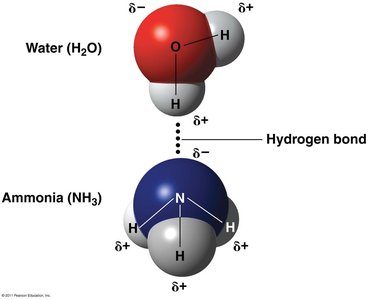
Summary Table: Types of Chemical Bonds
Bond Type | Mechanism | Strength | Example |
|---|---|---|---|
Ionic | Electron transfer | Strong (in dry conditions) | NaCl |
Covalent | Electron sharing | Very strong | H2O, CH4 |
Hydrogen | Attraction between partial charges | Weak (but strong in numbers) | DNA, water |
Key Terms and Definitions
Atom: The smallest unit of matter that retains the properties of an element.
Isotope: Variants of an element with different numbers of neutrons.
Electronegativity: The ability of an atom to attract electrons in a bond.
Cation: A positively charged ion.
Anion: A negatively charged ion.
Molecule: Two or more atoms bonded together.
Valence shell: The outermost electron shell of an atom.
Equations and Formulas
Electron configuration: (example for neon)
Electrostatic force:
Additional info:
Hydrogen bonds are essential for the secondary and tertiary structure of proteins.
Polar and nonpolar covalent bonds influence solubility and biological function.
