 Back
The Chemical Context of Life: Atoms, Isotopes, and Chemical Bonds
Study Guide - Smart Notes
 Tailored notes based on your materials, expanded with key definitions, examples, and context.
The Chemical Context of Life
Subatomic Particles and Atomic Structure
Atoms are the fundamental units of matter, and their properties are determined by the arrangement and characteristics of subatomic particles: protons, neutrons, and electrons.
Proton: Positively charged particle found in the nucleus; mass ≈ 1 dalton.
Neutron: Neutral particle found in the nucleus; mass ≈ 1 dalton.
Electron: Negatively charged particle found in orbitals around the nucleus; mass is negligible compared to protons and neutrons.
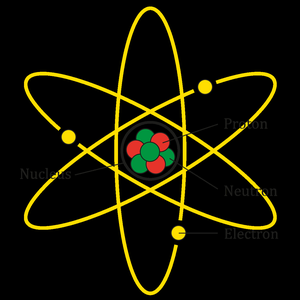
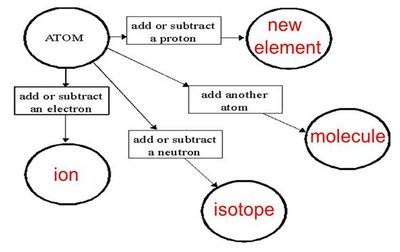
Atomic Number is the number of protons in an atom and defines the element. Atomic Mass is the sum of protons and neutrons in the nucleus.
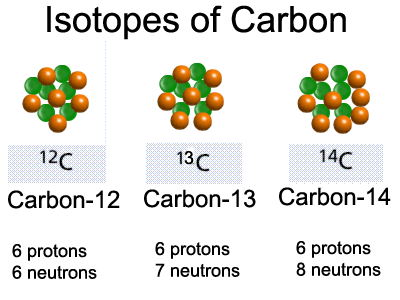
Isotopes: Atoms of the same element with different numbers of neutrons.
Ions: Atoms that have gained or lost electrons, resulting in a charge (cations are positive, anions are negative).
Electron Shells and Energy Levels
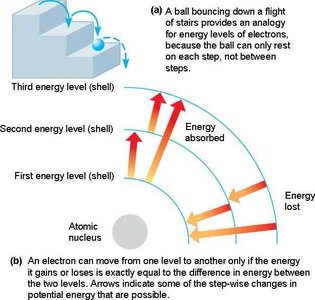
Electrons occupy specific energy levels or shells around the nucleus. The arrangement of electrons determines the chemical properties of an atom.
Valence Electrons: Electrons in the outermost shell; they determine how atoms interact and bond with other atoms.
Electrons can absorb or release energy to move between shells.
Isotopes and Their Applications
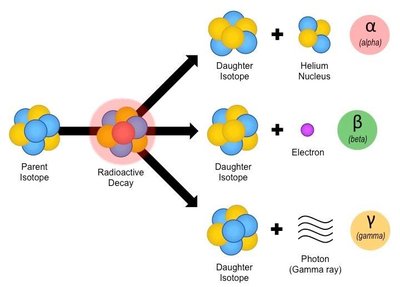
Isotopes have the same number of protons but different numbers of neutrons. Some isotopes are stable, while others are radioactive and decay over time, releasing energy and particles.
Stable Isotopes: Do not change spontaneously.
Radioactive Isotopes: Undergo radioactive decay, emitting radiation.
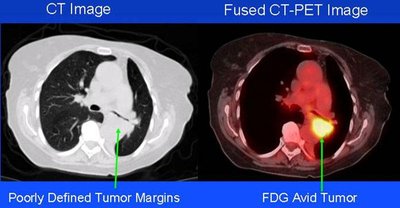
Applications: Used as tracers in medicine (e.g., PET scans), and for dating fossils and rocks (radiometric dating).
Carbon-14 Dating: Used to estimate the age of biological materials by measuring the ratio of C-14 to C-12.
Chemical Bonds and Molecular Structure
Chemical bonds hold atoms together in molecules and compounds. The main types of chemical bonds are covalent, ionic, and hydrogen bonds.
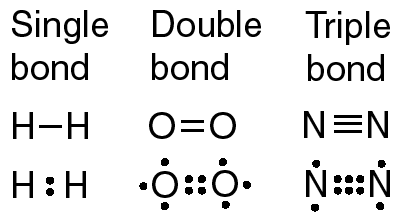
Covalent Bonds: Atoms share pairs of electrons. Can be single, double, or triple bonds depending on the number of shared electron pairs.
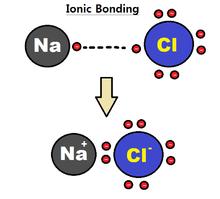
Ionic Bonds: Formed when one atom donates an electron to another, resulting in oppositely charged ions that attract each other.
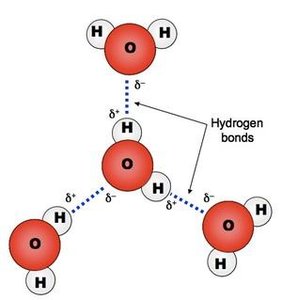
Hydrogen Bonds: Weak attractions between a hydrogen atom in one molecule and an electronegative atom in another (e.g., between water molecules).
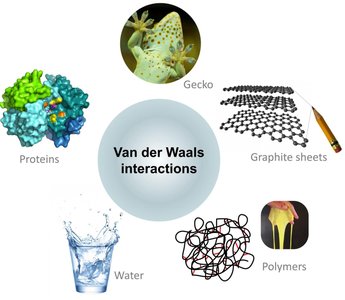
Van der Waals Interactions: Weak, transient interactions due to temporary shifts in electron density.
Energy in Chemical Bonds
Chemical bonds store potential energy. The energy released or absorbed during bond formation or breaking is crucial for biological processes.
Exothermic Reactions: Release energy by breaking bonds.
Endothermic Reactions: Absorb energy to form new bonds.
Activation Energy: The minimum energy required to initiate a chemical reaction.
Chemical Equilibrium: The state where the rate of the forward reaction equals the rate of the reverse reaction.
Summary Table: Subatomic Particles
Subatomic Particle | Location | Charge | Approximate Mass |
|---|---|---|---|
Proton | Nucleus | +1 | 1 dalton |
Neutron | Nucleus | 0 | 1 dalton |
Electron | Electron cloud/orbitals | -1 | ~0 (1/1836 of a proton) |
Key Equations
Atomic Number (Z):
Atomic Mass (A):
Half-life Decay:
Example: If a radioactive isotope has a half-life of 5,000 years, after 10,000 years only 25% of the original isotope remains.
Additional info: The structure and function of molecules are directly related; for example, the shape of a protein or DNA molecule is essential for its biological activity. Chemical bonds and interactions determine these shapes and, consequently, their functions in living organisms.
