 Back
The Chemical Context of Life: Atoms, Elements, and Water in Biology
Study Guide - Smart Notes
 Tailored notes based on your materials, expanded with key definitions, examples, and context.
The Chemical Context of Life
Introduction
All living organisms are governed by the fundamental laws of chemistry and physics. Understanding the chemical basis of life is essential for studying biology, as it explains how atoms and molecules interact to form the structures and processes necessary for life.
Matter and Elements
What is Matter?
Matter is anything that has mass and occupies space.
All matter is composed of elements, which are substances that cannot be broken down by ordinary chemical reactions.
Elements and Atoms
An element is defined by the number of protons in its nucleus.
An atom is the smallest unit of an element that retains its chemical properties.
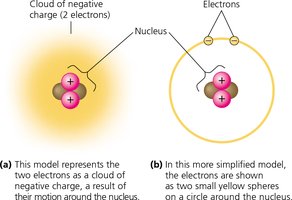
Atoms are made of protons (positive charge), neutrons (neutral), and electrons (negative charge).
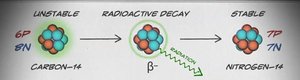
Isotopes are atoms of the same element with different numbers of neutrons.
Ions are atoms with unequal numbers of protons and electrons, resulting in a net charge.
Elements Essential for Life
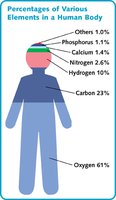
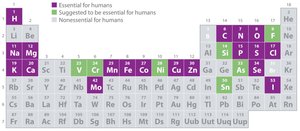
About 25 elements are essential for human life.
Major elements include oxygen, carbon, hydrogen, nitrogen, calcium, and phosphorus.
Trace elements are required in small amounts but are vital for biological processes.
Atomic Structure and Properties
Subatomic Particles
Protons: Positively charged, found in the nucleus.
Neutrons: No charge, found in the nucleus.
Electrons: Negatively charged, orbit the nucleus in electron shells.
Electron Shells and Orbitals
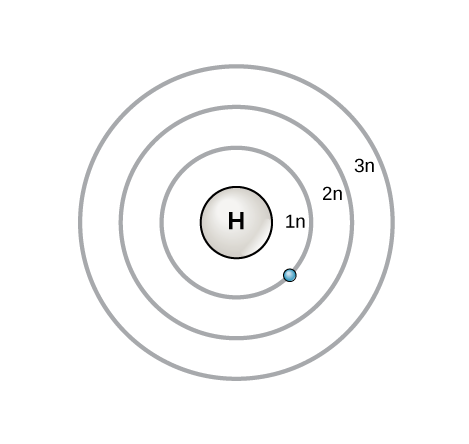
Electrons occupy energy levels called shells.
The first shell holds up to 2 electrons, the second up to 8, and the third up to 18.
The valence shell is the outermost shell and determines an atom's chemical reactivity.
Isotopes and Radioactivity
Stable isotopes do not change over time, while radioisotopes decay, releasing particles and energy.
Radioisotopes are used in dating fossils and medical diagnostics.
Chemical Bonds and Molecules
Types of Chemical Bonds
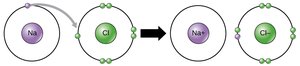
Ionic bonds: Formed when electrons are transferred from one atom to another, creating ions (e.g., NaCl).
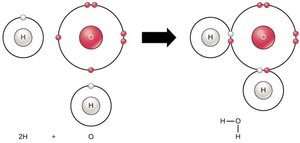
Covalent bonds: Formed when atoms share electrons. Can be nonpolar (equal sharing) or polar (unequal sharing).
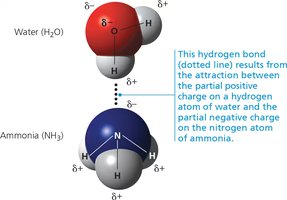
Hydrogen bonds: Weak attractions between a hydrogen atom in one molecule and an electronegative atom in another (e.g., between water molecules).
Molecules and Compounds
A molecule consists of two or more atoms bonded together.
A compound is a molecule composed of atoms of different elements.
Compounds have emergent properties that differ from their constituent elements.
Water: Structure and Properties
Structure of Water
Water (H2O) is a bent, polar molecule.
The oxygen atom is more electronegative, creating partial charges and allowing hydrogen bonding.
Properties of Water Critical to Life
Polarity: Allows water to dissolve many substances (universal solvent).
Cohesion: Water molecules stick to each other, creating surface tension.
Adhesion: Water molecules stick to other substances, aiding capillary action.
High heat capacity: Water absorbs and releases heat slowly, moderating temperature.
High heat of vaporization: Requires significant energy to change from liquid to gas, enabling evaporative cooling.
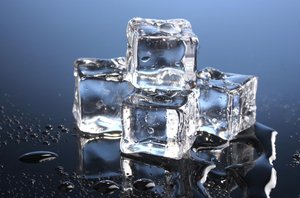
Expands upon freezing: Ice is less dense than liquid water, so it floats.
Water as a Solvent
Water dissolves ionic and polar substances by surrounding them with spheres of hydration.
This property is essential for biochemical reactions in cells.
Thermal Properties of Water
Water's high specific heat helps stabilize temperatures in organisms and environments.
Evaporative cooling (e.g., sweating, transpiration) helps regulate temperature.
Density and States of Water
Water is most dense at 4°C; ice floats, insulating aquatic life in winter.
Water exists naturally as a solid, liquid, and gas on Earth, supporting diverse life processes.
Acids, Bases, and pH
Water Dissociation and pH
Water can dissociate into hydrogen ions (H+) and hydroxide ions (OH-).
pH measures the concentration of H+ ions; it is a logarithmic scale.
Acids increase H+ concentration (pH < 7); bases decrease H+ concentration (pH > 7).
Buffers
Buffers are solutions that resist changes in pH by absorbing excess H+ or OH- ions.
Example: Carbonic acid-bicarbonate buffer system in blood.
Thermodynamics in Biology
Laws of Thermodynamics
First Law: Energy cannot be created or destroyed, only transformed.
Second Law: Every energy transfer increases the entropy (disorder) of the universe.
Living organisms use energy gradients to drive biological processes.
Summary Table: Types of Chemical Bonds
Bond Type | Description | Relative Strength | Example |
|---|---|---|---|
Ionic | Transfer of electrons between atoms | Strong (in dry conditions) | NaCl (table salt) |
Covalent | Sharing of electrons between atoms | Very strong | H2O (water), O2 (oxygen gas) |
Hydrogen | Attraction between partial charges on molecules | Weak (individually) | Between water molecules, DNA strands |
Key Equations
pH calculation:
Water dissociation:
Carbonic acid buffer system:
