 Back
The Chemical Context of Life: Atoms, Bonds, Water, and Biological Macromolecules
Study Guide - Smart Notes
 Tailored notes based on your materials, expanded with key definitions, examples, and context.
The Chemical Context of Life
Atoms and Elements Essential to Life
All living organisms are composed of matter, which is made up of elements. The most common elements in biological systems are carbon (C), hydrogen (H), oxygen (O), nitrogen (N), phosphorus (P), and sulfur (S). These elements form the basis of biological macromolecules and are essential for life’s processes.
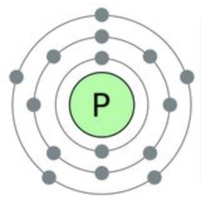
Phosphorus (P): Atomic number 15, commonly forms 3 or 5 covalent bonds due to its valence electrons.
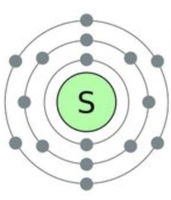
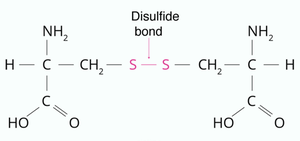
Sulfur (S): Atomic number 16, found in amino acids like cysteine, forms strong disulfide bonds in proteins.
Phosphorus and Sulfur in Biological Molecules
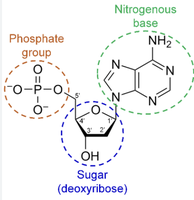
Phosphorus: Key component of nucleotides (building blocks of DNA and RNA) and ATP (adenosine triphosphate), the cell’s main energy currency.
Sulfur: Present in the amino acid cysteine, forms disulfide bonds that stabilize protein structure (e.g., keratin in hair).
Chemical Bonds and Interactions
Covalent and Non-Covalent Bonds
Atoms interact through chemical bonds, which can be classified as covalent (sharing electrons) or non-covalent (not sharing electrons).
Covalent Bonds: Atoms share electrons. If the sharing is equal, the bond is non-polar; if unequal, it is polar.
Non-Covalent Bonds: Include ionic bonds (transfer of electrons), hydrogen bonds (attractions between partial charges), van der Waals interactions, and hydrophobic interactions.
Electronegativity is the ability of an atom to attract electrons. Differences in electronegativity determine bond type:
Small difference: Non-polar covalent bond
Moderate difference: Polar covalent bond
Large difference: Ionic bond
Example: In water (H2O), oxygen is more electronegative than hydrogen, resulting in polar covalent bonds and a polar molecule.
Water: Structure and Properties
Polarity and Hydrogen Bonding
Water’s unique properties arise from its polar covalent bonds and ability to form hydrogen bonds between molecules.
Polarity: Oxygen’s higher electronegativity creates partial negative (δ−) and positive (δ+) charges.
Hydrogen Bonds: Weak attractions between the δ+ hydrogen of one water molecule and the δ− oxygen of another.
Emergent Properties of Water:
Cohesive behavior (surface tension, transpiration in plants)
Ability to moderate temperature (high specific heat, evaporative cooling)
Expansion upon freezing (ice is less dense than liquid water)
Versatility as a solvent (dissolves many polar and ionic substances)
Specific Heat and Temperature Moderation
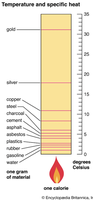
Water has a high specific heat, meaning it can absorb or release large amounts of heat with little temperature change. This property helps buffer organisms and environments against temperature fluctuations.
Specific heat of water: 1 cal/g/°C
Equation:
Evaporative Cooling
As water evaporates, the molecules with the highest kinetic energy leave, lowering the temperature of the remaining liquid. This process helps organisms regulate temperature (e.g., sweating).
Water as a Universal Solvent
Water’s polarity allows it to dissolve many substances, making it an excellent solvent for biological reactions. It forms hydration shells around ions and polar molecules, facilitating their movement and reactions in cells.
Acids, Bases, and pH
Dissociation of Water
Water can dissociate into hydrogen ions (H+) and hydroxide ions (OH−):
The concentration of these ions determines the pH of a solution:
Acidic solutions: Higher [H+], lower pH
Basic solutions: Lower [H+], higher pH
Buffers help maintain stable pH in biological systems by absorbing or releasing H+ as needed.
Functional Groups in Biological Molecules
Common Functional Groups
Functional groups are specific groups of atoms within molecules that confer characteristic chemical properties and reactivity. They are critical for the structure and function of biological macromolecules.
Functional Group | Structure | Example |
|---|---|---|
Hydroxyl | –OH | Alcohols, sugars |
Carbonyl | –C=O | Aldehydes, ketones |
Carboxyl | –COOH | Amino acids, fatty acids |
Amino | –NH2 | Amino acids |
Phosphate | –PO42− | Nucleotides, ATP |
Sulfhydryl | –SH | Cysteine (proteins) |
Methyl | –CH3 | Lipids, DNA methylation |
Macromolecules: Carbohydrates and Lipids
Carbohydrates
Carbohydrates are sugars and their polymers. They serve as energy sources and structural materials in cells.
Monosaccharides: Simple sugars (e.g., glucose, fructose) with the formula CnH2nOn.
Disaccharides: Two monosaccharides joined by a glycosidic linkage (e.g., sucrose).
Polysaccharides: Long chains of monosaccharides (e.g., starch, cellulose, glycogen).
Isomers: Compounds with the same molecular formula but different structures (e.g., glucose and fructose).
Lipids
Lipids are a diverse group of hydrophobic molecules, including triglycerides, phospholipids, and steroids. They are grouped together because they do not mix well with water.
Triglycerides: Energy storage molecules made of glycerol and three fatty acids.
Phospholipids: Major components of cell membranes, with hydrophilic heads and hydrophobic tails.
Steroids: Lipids with a characteristic four-ring structure (e.g., cholesterol, hormones).
Summary Table: Types of Bonds and Interactions
Bond/Interaction | Strength | Example |
|---|---|---|
Covalent (non-polar) | Strong | H–H, C–H |
Covalent (polar) | Strong | O–H in water |
Ionic | Moderate | NaCl |
Hydrogen bond | Weak | Between water molecules |
Van der Waals | Very weak | Between non-polar molecules |
Hydrophobic interaction | Varies | Lipid bilayer formation |
Additional info: This guide covers foundational chemistry concepts essential for understanding biological molecules and their interactions, as outlined in General Biology chapters on the chemical context of life, water, and macromolecules.
