 Back
The Chemical Context of Life: Atoms, Elements, and Chemical Bonds
Study Guide - Smart Notes
 Tailored notes based on your materials, expanded with key definitions, examples, and context.
Chapter 2: The Chemical Context of Life (Chemical Bonds)
Overview of Chemistry in Biology
Understanding the chemical basis of life is essential for studying biology. All living organisms are composed of matter, which is made up of elements and atoms that interact through chemical bonds. These interactions underlie the structure and function of biological molecules.
Atoms are the smallest units of matter that retain the properties of an element.
Chemical bonds are forces that hold atoms together in molecules and compounds.
Chemical reactions involve the making and breaking of these bonds.
Elements and Atoms
What Are Elements?
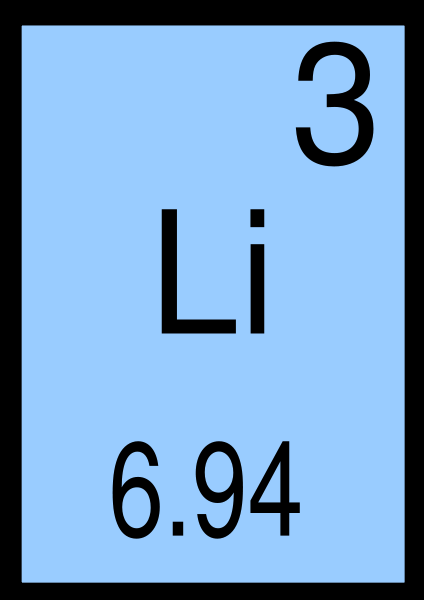
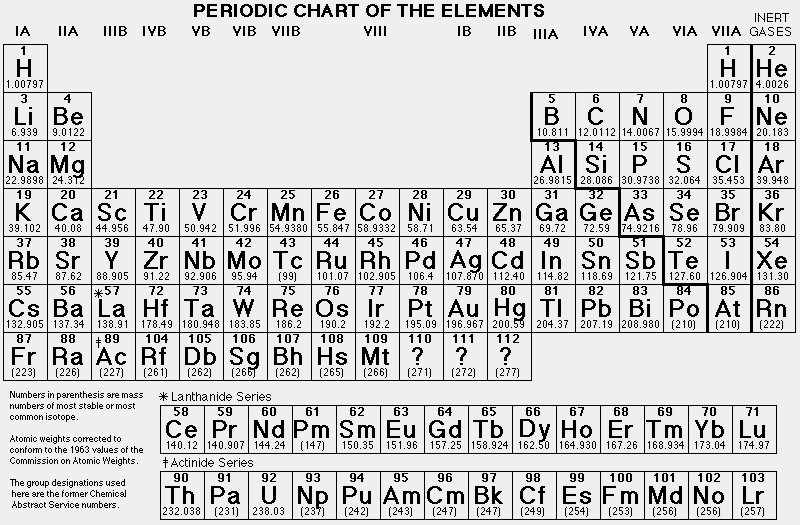
An element is a substance that cannot be broken down into other substances by chemical reactions. Organisms are composed of a limited number of elements, with only about 25 of the 92 naturally occurring elements required for life.
Essential elements: CHNOPS (Carbon, Hydrogen, Nitrogen, Oxygen, Phosphorus, Sulfur) make up the majority of living matter.
Trace elements: Required in minute amounts (e.g., iron, zinc).
Atoms: Structure and Properties
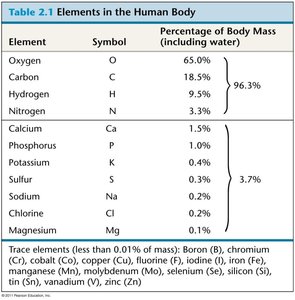
Atoms consist of a nucleus containing protons and neutrons, surrounded by electrons in electron shells. The number of protons determines the element's identity.
Proton: Positively charged particle in the nucleus.
Neutron: Neutral particle in the nucleus.
Electron: Negatively charged particle in electron shells around the nucleus.
Atomic Number and Atomic Mass
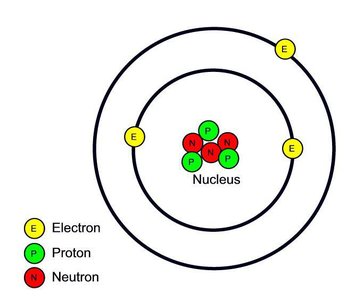
The atomic number is the number of protons in an atom, while the atomic mass is the sum of protons and neutrons. Atoms of the same element can have different numbers of neutrons, resulting in isotopes.
Atomic number = number of protons
Mass number = protons + neutrons
Isotopes: Atoms with the same number of protons but different numbers of neutrons
Elements in the Human Body
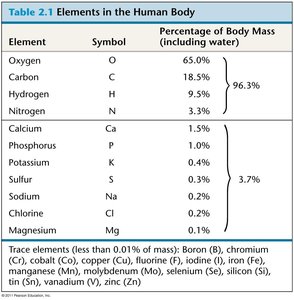
The human body is primarily composed of a few key elements, with oxygen, carbon, hydrogen, and nitrogen making up over 96% of body mass.
Classification of Matter
Types of Substances
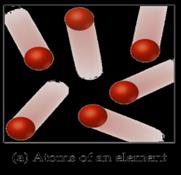
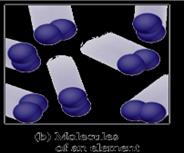
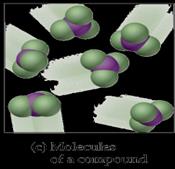
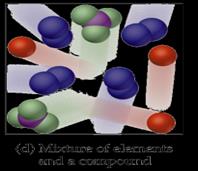
Element: Substance made of only one type of atom.
Molecule: Two or more atoms joined by chemical bonds.
Compound: Substance composed of two or more different elements chemically bonded.
Mixture: Combination of substances not chemically bonded (e.g., air, saltwater).
Electron Arrangement and Chemical Properties
Electron Shells and Valence Electrons
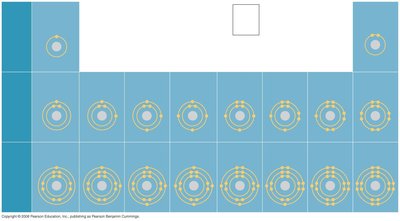
The arrangement of electrons in shells determines an atom's chemical behavior. The outermost shell, or valence shell, is most important for bonding. Atoms are most stable when their valence shell is full (octet rule).
First shell: up to 2 electrons
Second shell: up to 8 electrons
Third shell: up to 8 electrons
Valence and Reactivity
Atoms with incomplete valence shells are reactive and tend to form chemical bonds to achieve stability. The number of unpaired electrons in the valence shell determines an atom's valence (bonding capacity).
Chemical Bonds
Ionic Bonds
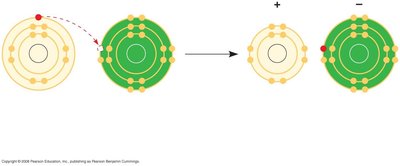
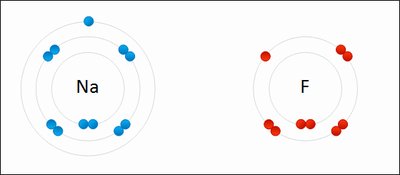
Ionic bonds form when atoms transfer electrons, resulting in oppositely charged ions that attract each other. For example, sodium (Na) donates an electron to chlorine (Cl), forming Na+ and Cl- ions, which combine to make sodium chloride (NaCl).
Cation: Positively charged ion (lost electron)
Anion: Negatively charged ion (gained electron)
Covalent Bonds
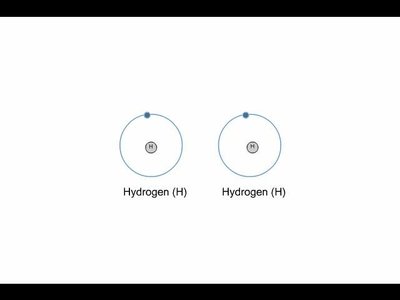
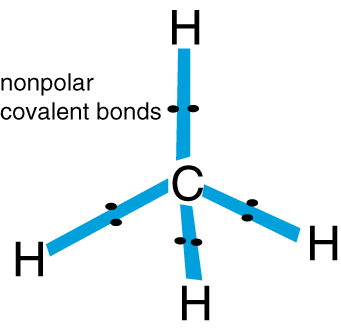
Covalent bonds form when atoms share pairs of electrons. These bonds can be nonpolar (equal sharing) or polar (unequal sharing due to differences in electronegativity).
Nonpolar covalent bond: Electrons shared equally (e.g., H2, O2)
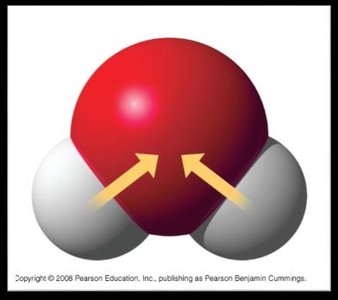
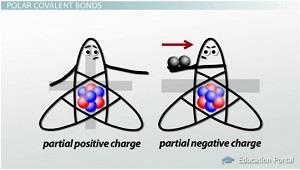
Polar covalent bond: Electrons shared unequally, creating partial charges (e.g., H2O)
Electronegativity
Electronegativity is an atom's attraction for electrons in a covalent bond. Atoms with higher electronegativity pull electrons closer, resulting in polar bonds.
Oxygen and nitrogen are highly electronegative, making water a polar molecule.
Hydrogen Bonds
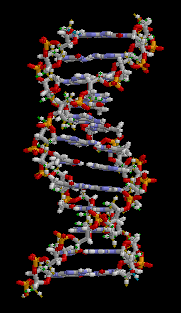
Hydrogen bonds are weak attractions between a hydrogen atom covalently bonded to an electronegative atom (like oxygen or nitrogen) and another electronegative atom. These bonds are crucial in stabilizing the structures of DNA and proteins.
Van der Waals Interactions
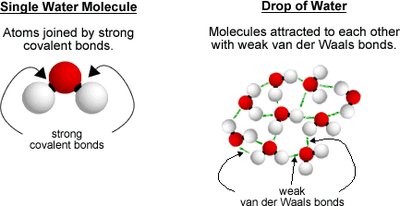
Van der Waals interactions are weak attractions between molecules or atoms that result from transient local partial charges. These interactions are important in large biological molecules, such as proteins and cell membranes.
Chemical Reactions
Making and Breaking Bonds
Chemical reactions involve the rearrangement of atoms by making and breaking chemical bonds. The substances present at the start are called reactants, and those formed are products. Matter is conserved in chemical reactions.
Example:
Summary of Key Concepts
Atoms are the fundamental units of matter, composed of protons, neutrons, and electrons.
Valence electrons determine how atoms bond to form molecules and compounds.
Chemical bonds (ionic, covalent, hydrogen, van der Waals) vary in strength and biological importance.
Chemical reactions rearrange atoms and are essential for life processes.
