 Back
The Chemical Context of Life: Atoms, Elements, and Chemical Bonds
Study Guide - Smart Notes
 Tailored notes based on your materials, expanded with key definitions, examples, and context.
Chapter 2: The Chemical Context of Life (Chemical Bonds)
Introduction to Basic Chemistry and Biochemistry
Understanding the chemical basis of life is essential for studying biology. All living organisms are composed of matter, which is made up of elements and atoms that interact through chemical bonds. These interactions underpin the structure and function of biological molecules.
Elements and Matter
Definition and Classification of Matter
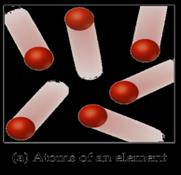
Element: A pure substance consisting of only one type of atom. Elements cannot be broken down into simpler substances by chemical reactions.
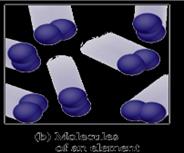
Molecule: A group of two or more atoms held together by chemical bonds.
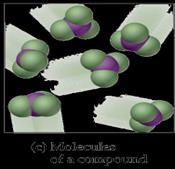
Compound: A substance composed of two or more different elements joined by chemical bonds.
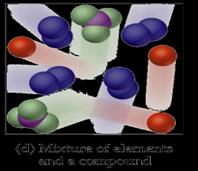
Mixture: A combination of two or more substances that are not chemically bonded (e.g., sugar mixed with salt).
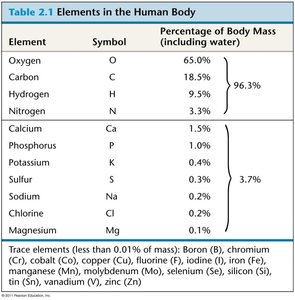
Essential and Trace Elements
Organisms are primarily composed of a small subset of elements, known as essential elements (CHNOPS: Carbon, Hydrogen, Nitrogen, Oxygen, Phosphorus, Sulfur).
Trace elements are required in minute amounts but are vital for proper physiological function.
Atoms: Structure and Properties
Atomic Structure
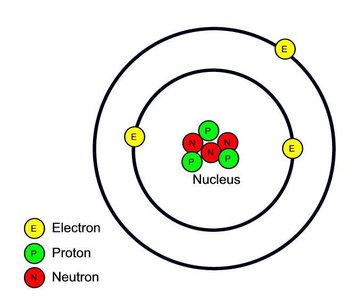
An atom is the smallest unit of an element that retains its chemical properties. Atoms are composed of subatomic particles:
Protons: Positively charged particles found in the nucleus.
Neutrons: Electrically neutral particles found in the nucleus.
Electrons: Negatively charged particles orbiting the nucleus in electron shells.
Atomic Number and Atomic Mass
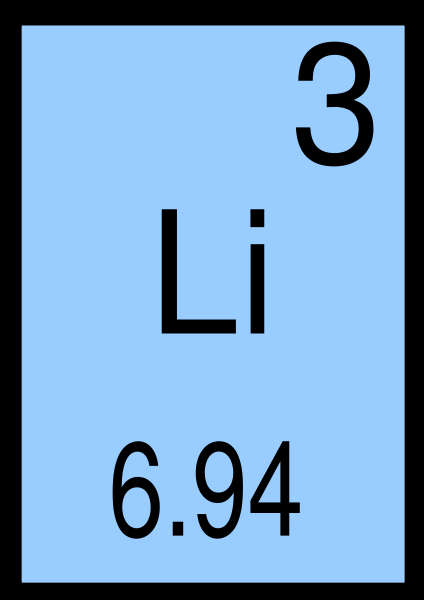
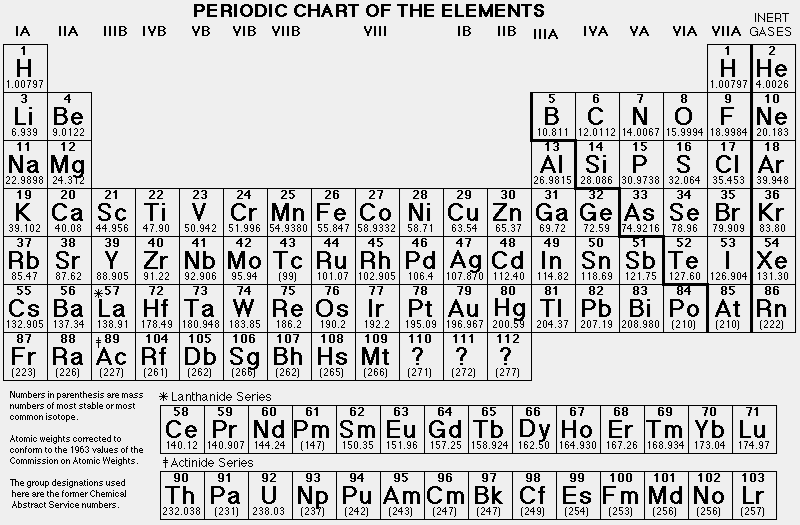
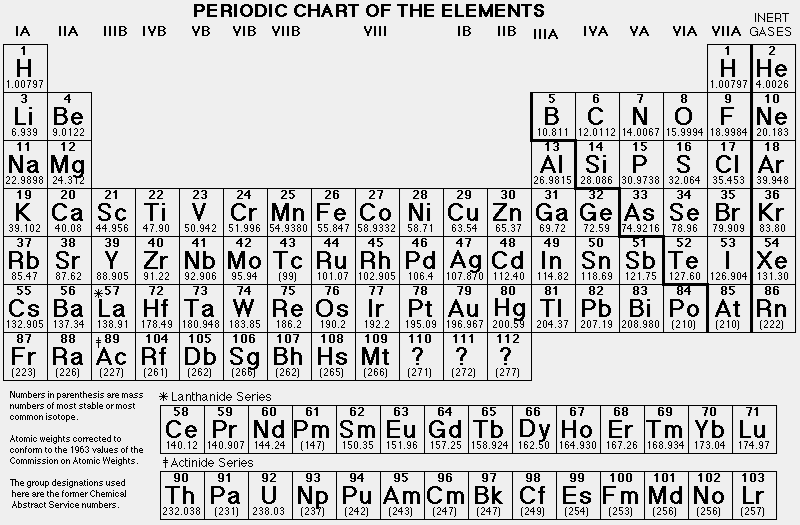
Atomic Number (Z): The number of protons in the nucleus; defines the element.
Atomic Mass: The total number of protons and neutrons in the nucleus.
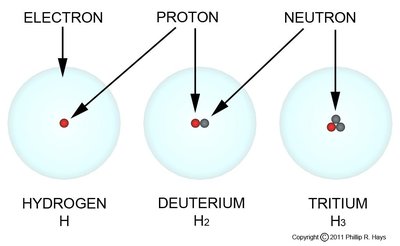
Isotopes: Atoms of the same element with different numbers of neutrons.
To calculate the number of neutrons:
Isotopes and Radioactivity
Isotopes have the same number of protons but different numbers of neutrons.
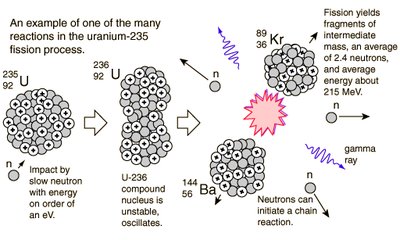
Radioactive isotopes have unstable nuclei that decay, emitting particles and energy.
Electron Configuration and Chemical Properties
Electron Shells and Valence Electrons
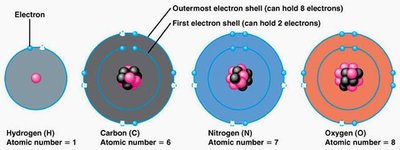
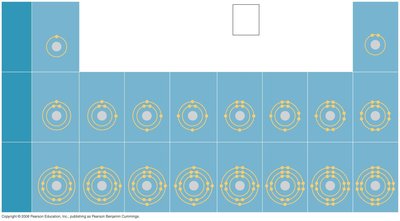
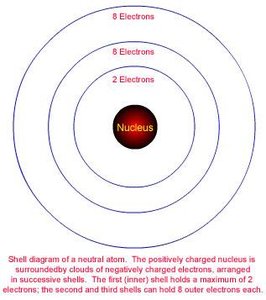
Electrons are arranged in shells around the nucleus. The first shell holds up to 2 electrons, the second and third up to 8 each.
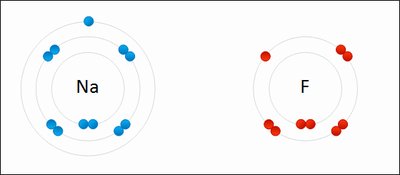
Valence electrons are electrons in the outermost shell and determine an atom's chemical behavior.
Atoms with full valence shells are inert (non-reactive), while those with incomplete shells are reactive.
Chemical Bonds
Types of Chemical Bonds
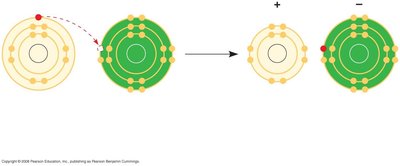
Ionic Bonds: Formed when atoms transfer electrons, resulting in oppositely charged ions that attract each other (e.g., NaCl).
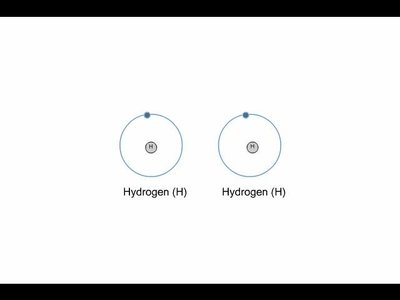
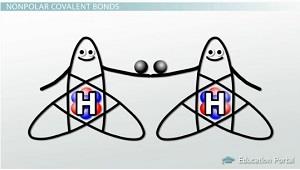
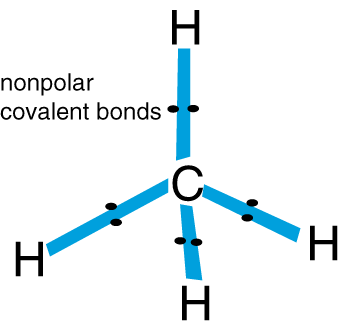
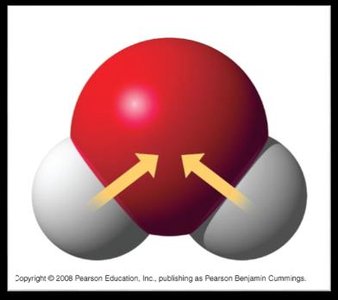
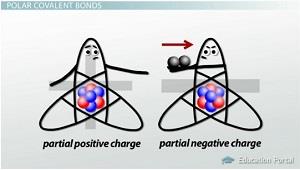
Covalent Bonds: Formed when atoms share pairs of electrons. Can be nonpolar (equal sharing) or polar (unequal sharing).
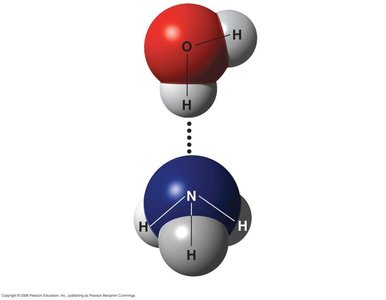
Hydrogen Bonds: Weak attractions between a hydrogen atom covalently bonded to an electronegative atom and another electronegative atom.
Van der Waals Interactions: Weak attractions due to transient local partial charges.
Electronegativity
Electronegativity is an atom's ability to attract electrons in a covalent bond.
Differences in electronegativity determine bond polarity: large differences lead to ionic bonds, moderate differences to polar covalent bonds, and small differences to nonpolar covalent bonds.
Chemical Reactions
Making and Breaking Bonds
Chemical reactions involve the making and breaking of chemical bonds, transforming reactants into products.
All chemical reactions obey the law of conservation of matter: matter is neither created nor destroyed.
Example: Formation of water from hydrogen and oxygen
Summary Table: Types of Chemical Bonds
Bond Type | Description | Relative Strength | Example |
|---|---|---|---|
Ionic | Transfer of electrons; attraction between oppositely charged ions | Strong (in dry conditions) | NaCl |
Covalent (Nonpolar) | Equal sharing of electrons | Strong | H2, CH4 |
Covalent (Polar) | Unequal sharing of electrons | Strong | H2O |
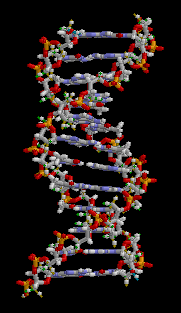
Hydrogen Bond | Attraction between H and electronegative atom (O, N) | Weak | Between water molecules, DNA strands |
Van der Waals | Transient attractions due to partial charges | Very weak | Between nonpolar molecules |
Key Takeaways
Atoms are the fundamental units of matter, composed of protons, neutrons, and electrons.
Valence electrons determine chemical bonding and reactivity.
Chemical bonds (ionic, covalent, hydrogen, van der Waals) are essential for the structure and function of biological molecules.
Chemical reactions rearrange atoms and bonds, following the law of conservation of matter.
