 Back
The Chemical Context of Life: Carbon and the Molecular Diversity of Life
Study Guide - Smart Notes
 Tailored notes based on your materials, expanded with key definitions, examples, and context.
Organic Molecules and the Importance of Carbon
Organic vs. Inorganic Molecules
Organic molecules are fundamental to life and are primarily composed of carbon atoms bonded to hydrogen, oxygen, nitrogen, and other elements. The distinction between organic and inorganic molecules is based on the presence of carbon-hydrogen bonds.
Organic compounds: Contain carbon and usually carbon-hydrogen bonds (e.g., carbohydrates, lipids, proteins, nucleic acids).
Inorganic compounds: Generally do not contain carbon-hydrogen bonds (e.g., metals, H2O, NaCl).
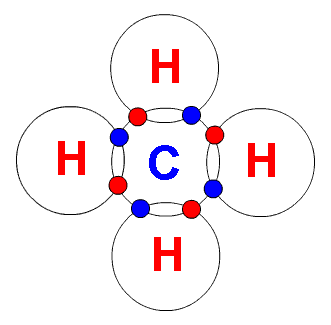
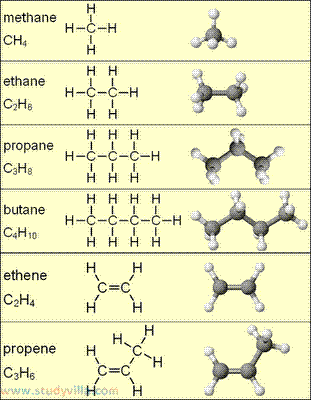
Example: Methane (CH4) is a simple organic molecule, while water (H2O) is inorganic.
The Unique Properties of Carbon
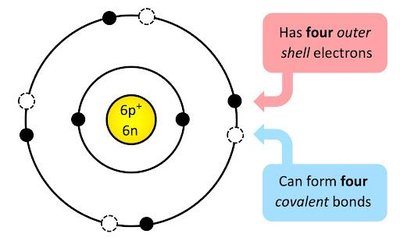
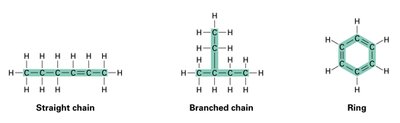
Carbon is the central component of organic molecules due to its ability to form four covalent bonds, allowing for a variety of stable structures such as chains and rings.
Can form single, double, or triple bonds.
Can bond with many different elements, more than any other atom.
Forms the backbone of organic molecules, enabling molecular diversity.
Valence and Bonding Capacity
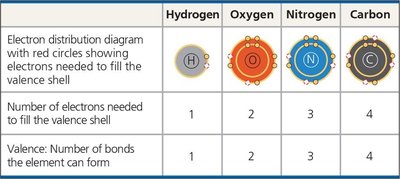
The valence of carbon (4) allows it to form stable covalent bonds with up to four other atoms, making it uniquely suited for building complex molecules.
Element | Valence Electrons | Valence (Bonds Formed) |
|---|---|---|
Hydrogen | 1 | 1 |
Oxygen | 2 | 2 |
Nitrogen | 3 | 3 |
Carbon | 4 | 4 |
Hydrocarbons and Functional Groups
Hydrocarbons are organic molecules consisting only of carbon and hydrogen. Functional groups are specific groups of atoms attached to the carbon skeleton that confer distinct chemical properties to molecules.
Hydrocarbons: Methane, ethane, propane, etc.
Functional groups: Hydroxyl, carbonyl, carboxyl, amino, phosphate, etc.
Macromolecules: Structure and Synthesis
Monomers, Polymers, and Macromolecules
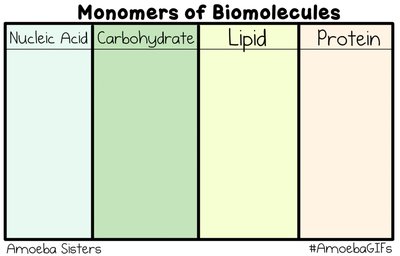
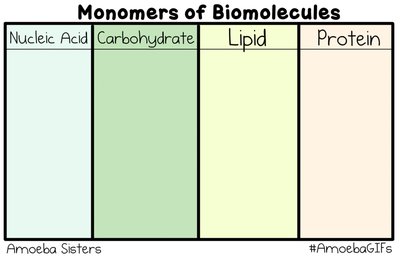
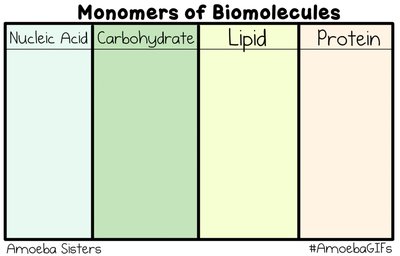
Macromolecules are large molecules composed of repeating subunits called monomers. Polymers are chains of monomers linked by covalent bonds. The four major classes of macromolecules are carbohydrates, lipids, proteins, and nucleic acids.
Monomer: The basic building block (e.g., amino acid, nucleotide, monosaccharide).
Polymer: A molecule made of many monomers (e.g., protein, nucleic acid, polysaccharide).
Macromolecule: A very large polymer (over 1,000 atoms).
Polymerization: Dehydration Synthesis and Hydrolysis
Polymers are formed by dehydration synthesis (condensation reaction), where a water molecule is removed for each bond formed. Polymers are broken down by hydrolysis, where a water molecule is added to break each bond.
Dehydration synthesis: Joins monomers by removing H2O.
Hydrolysis: Breaks polymers into monomers by adding H2O.
Carbohydrates
Structure and Function
Carbohydrates are organic molecules composed of carbon, hydrogen, and oxygen, typically in a 1:2:1 ratio (CH2O). They serve as energy sources and structural components.
Monosaccharides: Simple sugars (e.g., glucose, fructose, galactose). Think just one fruit and one galaxy for MONO.
Disaccharides: Two monosaccharides joined (e.g., maltose, sucrose, lactose).
Polysaccharides: Long chains of monosaccharides (e.g., starch, glycogen, cellulose).
Examples: Glucose (C6H12O6), starch (energy storage in plants), cellulose (plant cell wall structure).
Lipids
Structure and Function
Lipids are hydrophobic molecules mainly composed of carbon and hydrogen, with few oxygen atoms. They are the most concentrated energy source and serve as structural components of cell membranes and signaling molecules.
Triglycerides: Glycerol + three fatty acids; main form of stored energy.
Saturated fats: No double bonds, solid at room temperature, usually from animals.
Unsaturated fats: One or more double bonds, liquid at room temperature, usually from plants.
Phospholipids: Major component of cell membranes; hydrophilic head and hydrophobic tail.
Steroids: Four-ring structure; includes hormones and cholesterol.
Example: Triglycerides are the most abundant lipid in living organisms.
Proteins
Structure and Function
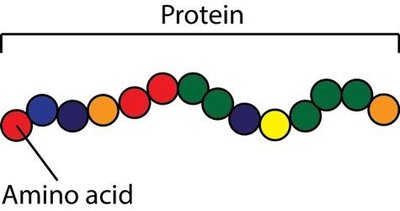
Proteins are polymers of amino acids linked by peptide bonds. They perform a vast array of functions, including structural support, catalysis (enzymes), transport, and regulation.
Amino acid: Monomer of proteins; contains amino group, carboxyl group, and side chain (R group).
Peptide bond: Covalent bond joining amino acids.
Polypeptide: Chain of amino acids; one or more polypeptides form a protein.
Examples: Hemoglobin (oxygen transport), antibodies (immune defense), enzymes (catalysis).
Nucleic Acids
Structure and Function
Nucleic acids are polymers of nucleotides and store and transmit genetic information. DNA and RNA are the two main types.
Nucleotide: Monomer of nucleic acids; composed of a pentose sugar, phosphate group, and nitrogenous base.
Nitrogenous bases: Adenine (A), Guanine (G), Cytosine (C), Thymine (T, in DNA), Uracil (U, in RNA).
Examples: DNA (deoxyribonucleic acid), RNA (ribonucleic acid).
