 Back
The Chemical Context of Life: Chapter 2 Study Notes
Study Guide - Smart Notes
 Tailored notes based on your materials, expanded with key definitions, examples, and context.
The Chemical Context of Life
Concept 2.1: Matter, Elements, and Compounds
Matter is the foundation of all biological systems, consisting of elements and compounds. Understanding the chemical nature of life is essential for studying biology.
Matter: Anything that takes up space and has mass.
Element: A substance that cannot be broken down into other substances by chemical reactions.
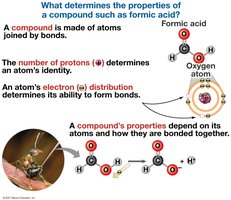
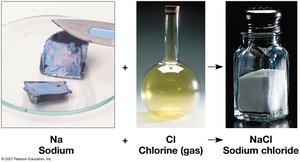
Compound: A substance consisting of two or more elements in a fixed ratio, with properties different from its constituent elements.
Emergent Properties: Compounds exhibit new properties not found in their individual elements.
The Elements of Life
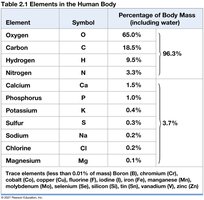
Only a subset of the 92 naturally occurring elements are essential for life. The most abundant elements in living organisms are carbon, hydrogen, oxygen, and nitrogen.
96% of living matter is composed of carbon (C), hydrogen (H), oxygen (O), and nitrogen (N).
The remaining 4% includes calcium (Ca), phosphorus (P), potassium (K), and sulfur (S).
Trace elements are required in minute quantities (e.g., iron, zinc).
Element | Symbol | Percentage of Body Mass |
|---|---|---|
Oxygen | O | 65.0% |
Carbon | C | 18.5% |
Hydrogen | H | 9.5% |
Nitrogen | N | 3.3% |
Calcium | Ca | 1.5% |
Phosphorus | P | 1.0% |
Potassium | K | 0.4% |
Sulfur | S | 0.3% |
Sodium | Na | 0.2% |
Chlorine | Cl | 0.2% |
Magnesium | Mg | 0.1% |
Case Study: Evolution of Tolerance to Toxic Elements
Some organisms adapt to environments containing toxic elements, such as plant communities thriving in serpentine soils.

Concept 2.2: Structure of Atoms and Subatomic Particles
Atomic Structure
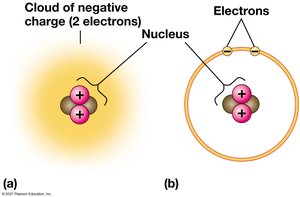
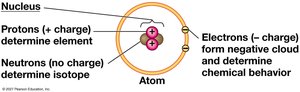
Atoms are the smallest units of matter retaining the properties of an element. They are composed of subatomic particles: protons, neutrons, and electrons.
Proton: Positive charge; determines atomic number.
Neutron: No charge; determines isotope.
Electron: Negative charge; determines chemical behavior.
Protons and neutrons form the nucleus; electrons form a cloud around the nucleus.
Atomic Number, Mass Number, and Isotopes
Atomic number: Number of protons in the nucleus.
Mass number: Sum of protons and neutrons.
Atomic mass: Approximate total mass of an atom.
Isotopes: Atoms of the same element with different numbers of neutrons.
Radioactive isotopes: Unstable isotopes that decay, emitting energy.
Applications of Radioactive Isotopes
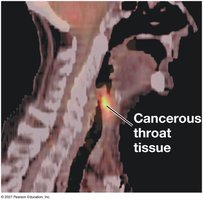
Used as radioactive tracers in medicine to track metabolism and diagnose diseases.
PET scans monitor cancer growth and metabolism.
Radiometric Dating
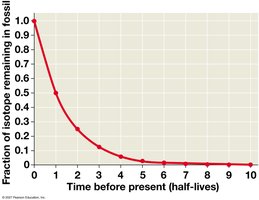
Radiometric dating uses the decay of radioactive isotopes to estimate the age of fossils and rocks.
Half-life: Time required for half the atoms of a radioactive isotope to decay.
Equation for radioactive decay:
Concept 2.2: Energy Levels of Electrons
Electron Shells and Potential Energy
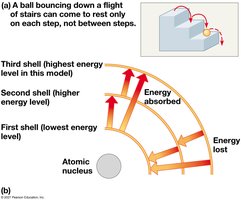
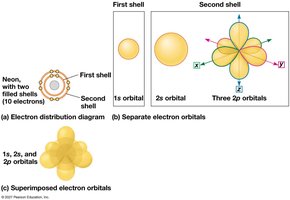
Electrons occupy specific energy levels (shells) around the nucleus. The energy of an electron depends on its distance from the nucleus.
Potential energy: Energy due to position or structure.
Electrons can only change energy levels in discrete steps.
Electron Distribution and Chemical Properties
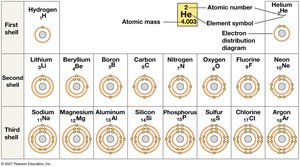
The periodic table organizes elements by electron configuration.
Valence electrons: Electrons in the outermost shell; determine chemical reactivity.
Elements with full valence shells are chemically inert.
Electron Orbitals
Orbital: 3D space where an electron is found 90% of the time.
Each shell contains a specific number of orbitals; no more than 2 electrons per orbital.
Concept 2.3: Chemical Bonding
Covalent Bonds
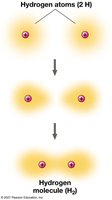
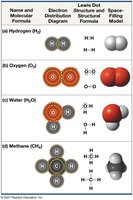
Covalent bonds involve the sharing of valence electrons between atoms, forming molecules.
Single bond: Sharing one pair of electrons.
Double bond: Sharing two pairs of electrons.
Valence: Bonding capacity of an atom.
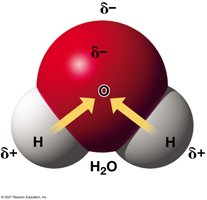
Electronegativity: Atom's ability to attract electrons in a covalent bond.
Nonpolar covalent bond: Equal sharing of electrons.
Polar covalent bond: Unequal sharing, resulting in partial charges.
Ionic Bonds
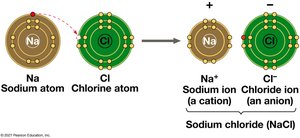
Ionic bonds form when electrons are transferred from one atom to another, creating charged ions.
Cation: Positively charged ion.
Anion: Negatively charged ion.
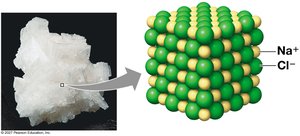
Ionic bond: Attraction between cation and anion.
Ionic compounds (salts): Stable when dry, dissociate in water.
Weak Chemical Interactions
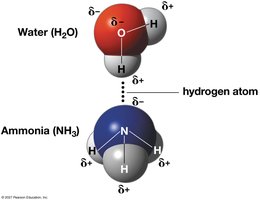
Hydrogen bonds: Attraction between a hydrogen atom covalently bonded to an electronegative atom and another electronegative atom.
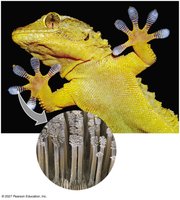
Van der Waals interactions: Weak attractions due to transient local charges.
Weak bonds are important for the structure and function of biological molecules.
Molecular Shape and Function
Molecular Shape
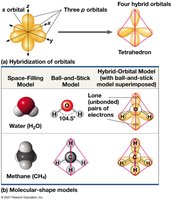
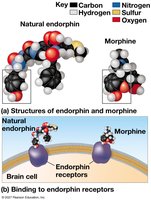
The shape of a molecule is determined by the arrangement of its atoms and orbitals, influencing its biological function.
Hybridization of orbitals creates specific molecular shapes.
Molecular shape determines recognition and response in biological systems.
Concept 2.4: Chemical Reactions
Making and Breaking Bonds
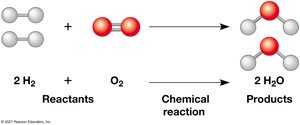
Chemical reactions involve the rearrangement of atoms by making and breaking chemical bonds.
Reactants: Starting molecules.
Products: Resulting molecules.
All reactions are reversible; equilibrium is reached when forward and reverse reactions occur at the same rate.
Photosynthesis as a Chemical Reaction
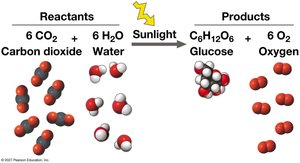
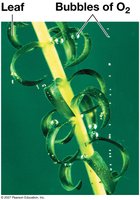
Photosynthesis is a key biological reaction powered by sunlight, converting carbon dioxide and water into glucose and oxygen.
Equation:
Chemical Equilibrium
Chemical equilibrium: State where the concentrations of reactants and products remain constant.
Indicated by double arrows in reaction equations.
Summary of Key Concepts
Atom Components
Protons determine element.
Neutrons determine isotope.
Electrons determine chemical behavior.
Covalent Bonds
Single and double covalent bonds are fundamental to molecular structure.

Example: Water Formation
Reactants:
Products:
Example: Photosynthesis
Reactants:
Products:
Additional info: These notes expand on the brief textbook points to provide a comprehensive overview of the chemical context of life, suitable for exam preparation in General Biology.
